
Trenggono Reveals Geopolitical Impact on Fishermen's Fuel to Exports
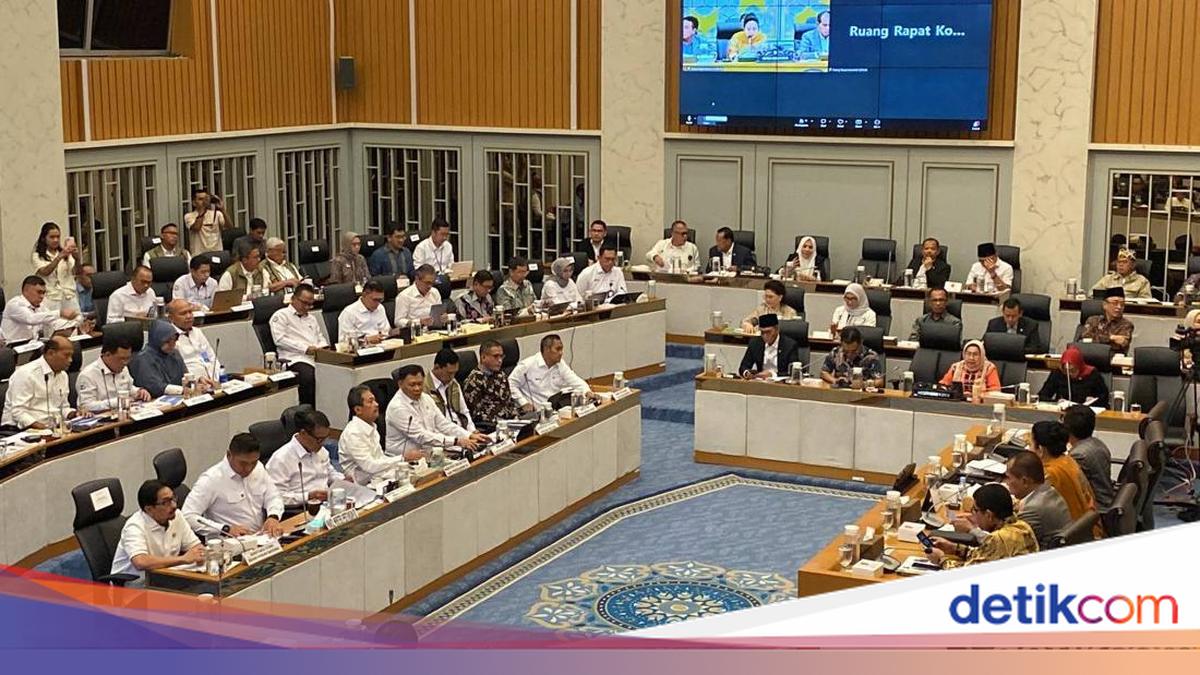
Minister of Marine Affairs and Fisheries (MMAF) Sakti Wahyu Trenggono has explained the impact of geopolitics on the fisheries conditions in Indonesia. Trenggono stated that the conflict in the Middle East affects the use of fuel oil (BBM) for fishermen.
This was conveyed by Trenggono during a Working Meeting with Commission IV of the House of Representatives (DPR RI), at the Parliamentary Complex, Senayan, Central Jakarta, on Tuesday (7/4/2026). Trenggono mentioned that the MMAF is anticipating all potential impacts from the US-Israel conflict with Iran.
“As we know, global geopolitical dynamics, I think everyone is aware, have a significant impact, including on the Ministry of Marine Affairs and Fisheries. One of them is the issue of fuel oil usage for fishermen, who still rely 100% on fuel oil to this day,” said Trenggono during the meeting.
He discussed the potential decline in export volumes and the competitiveness of Indonesian fishery products in the global market. Trenggono stated that distribution prices are also affected by the conflict.
“Then, prices due to distribution are still influenced, so the supply chain of fishery products could potentially lead to a decline in export volumes and a decrease in the competitiveness of Indonesian fishery products in the global market,” he said.
Trenggono then touched on the ‘Godzilla’ El Niño phenomenon during the period from April to October 2026. He stated that this extreme weather condition needs to be anticipated.
“Based on a study by the National Research and Innovation Agency (BRIN), Indonesia is projected to face the Godzilla El Niño phenomenon, marked by extreme climate anomalies from April to October 2026,” said Trenggono.
“This situation presents two inseparable sides: challenges that must be wary of and opportunities that need to be carefully utilised,” he added.
He mentioned that the ‘Godzilla’ El Niño phenomenon is prone to damaging marine coastal ecosystems. This extreme weather could also increase the risk of disease outbreaks in aquaculture communities.
“And it could accelerate the degradation of blue carbon ecosystems, ultimately leading to a significant increase in carbon emissions,” he added.
Trenggono then explained the achievements of the MMAF in 2025. Trenggono stated that production reached 26.25 million tonnes.
“The performance of the national marine and fisheries sector continues to show well-maintained production and export achievements. Among them, Indonesia’s marine and fisheries production has consistently increased with an average growth of around 3.8%,” said Trenggono.
“In 2025, production reached 26.25 million tonnes, the highest achievement, consisting of 11.65 million tonnes of seaweed, 7.85 million tonnes of capture fisheries, and 6.75 million tonnes of aquaculture,” he added.