
Trenggono Builds Giant Shrimp Farm in East Nusa Tenggara: Project Update
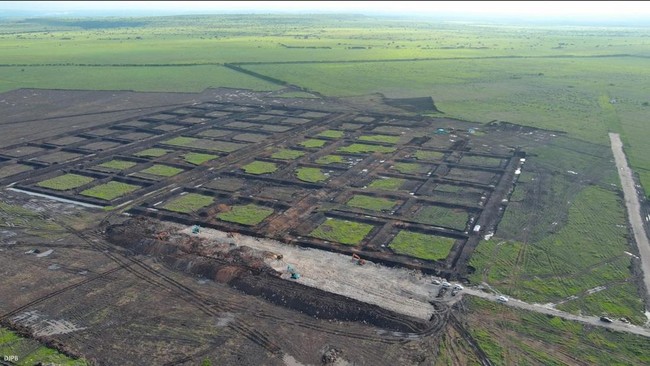
Jakarta, CNBC Indonesia – Construction of a giant integrated shrimp-farming complex in Waingapu, East Sumba Regency, East Nusa Tenggara (NTT), is continuing. As of early November 2026, the project was nearly 20% complete, with progress targeted to reach 50% by December 2026.
TB Haeru Rahayu, director-general of aquaculture at the Ministry of Marine Affairs and Fisheries (KKP), said the 50% target is calculated based on materials already delivered to the project site, or Material On Site (MOS).
“Perhaps we’re nearly 20% of the way there now. We have a target of 50% completion in December. Yes, that is based on MOS, or Material On Site. That’s the 50% figure,” Haeru told CNBC Indonesia on Sunday (8 November 2026).
Haeru said construction across the shrimp-farming complex is being carried out simultaneously in all parts of the project. Work is not being completed one cluster at a time before moving on to the next.
The Waingapu complex is designed to comprise 12 clusters, built as a single integrated project. Progress is therefore calculated across infrastructure components being developed in parallel.
“We’re building everything at once, so the progress figure covers the whole project. It’s not as though we finish one building first; work is under way on the intake and elsewhere, and everything is counted together,” he said.
Haeru said the construction acceleration follows President Prabowo Subianto’s instructions to Marine Affairs and Fisheries Minister Sakti Wahyu Trenggono. The government wants to cut construction time from the original three-year plan to two years.
“The contract is actually for three years, but the President asked the Minister [Trenggono] to speed it up to two years. That means construction must be fully completed by the end of 2027, so operations can begin in early 2028,” he said.
The Waingapu Integrated Shrimp Farming (ISF) project is being built on around 2,150 hectares in Palakahembi village and Watumbaka urban village, Pandawai district, East Sumba Regency.
The complex is designed to include 12 clusters with 1,536 farming ponds, 192 reservoir ponds and 48 cluster wastewater treatment plants. It will also have seawater intake infrastructure, a quarantine area, production roads and seafood-processing facilities.
The project requires investment of around Rp7.2 trillion through a Foreign Private Credit (KSA) scheme. The funding will support development of the integrated shrimp-farming complex from upstream to downstream.
Haeru said the Waingapu complex is about 20 times larger than the shrimp-farming project in Kebumen, Central Java. Unlike that project, Waingapu is designed to have an integrated production chain, from hatcheries to processing harvested shrimp.
“This is roughly 20 times the size of Kebumen. Everything is integrated. The upstream side includes hatching and hatcheries, while downstream there is processing, cold storage and so on. It is all integrated,” Haeru said.
Once fully operational, the Waingapu complex is targeted to produce around 52,800 tonnes of shrimp a year. That output is projected to come from two to two-and-a-half farming cycles annually.
Haeru said each shrimp-farming cycle takes about four months from stocking the young shrimp to harvest. With operations scheduled to begin in early 2028, the first harvest could theoretically take place around the middle of that year.
“Four months,” Haeru said when asked how long it takes from stocking to harvest.
Source: jawawa.id (https://jawawa.id/newsitem/trenggono-builds-giant-shrimp-farm-in-east-nusa-tenggara-project-update-1794124239)
Originally published by CNBC Indonesia (https://www.cnbcindonesia.com/news/20261107213133-4-783215/trenggono-bangun-tambak-udang-raksasa-di-ntt-begini-progresnya), translated from Indonesian