
Trenggalek Regional Hospital Increases Dialysis Service Capacity
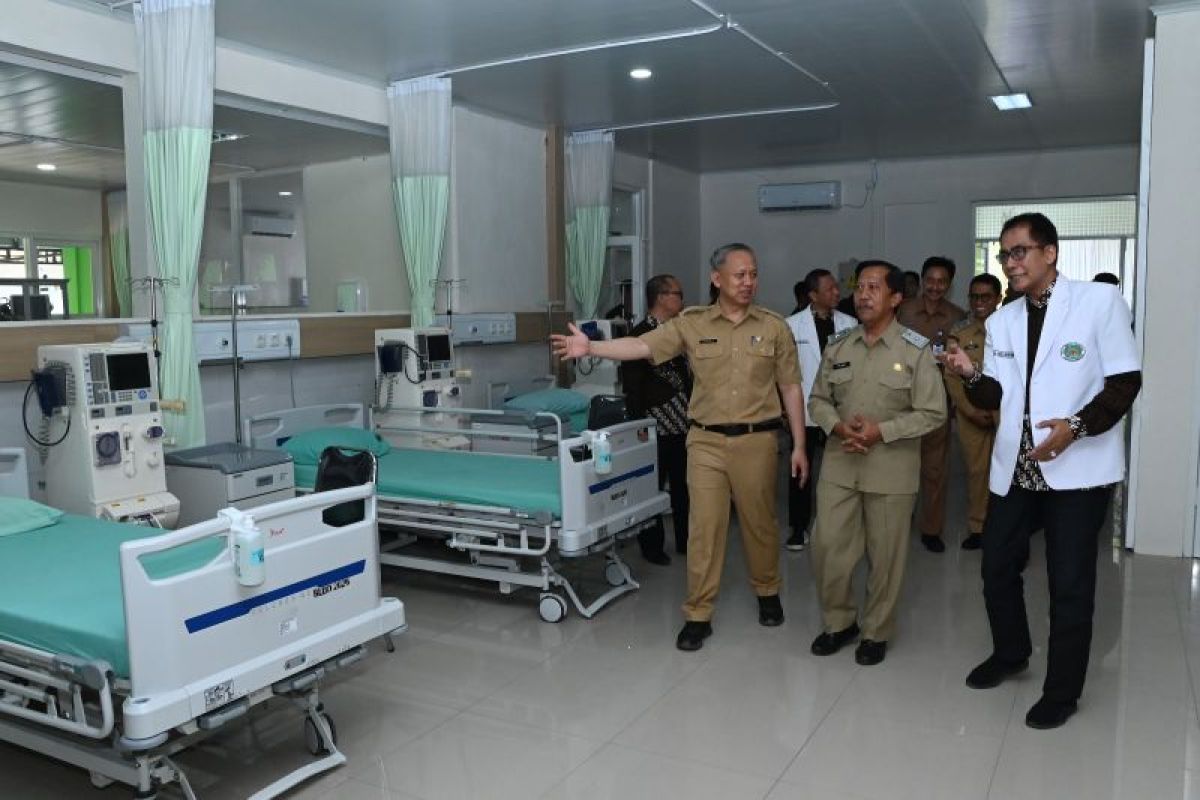
Trenggalek, East Java (ANTARA) - RSUD dr. Soedomo in Trenggalek Regency has increased its haemodialysis (HD) service capacity from 14 to 31 machines to expand service access and reduce patient waiting lists.
The capacity increase was marked by the inauguration of the new dialysis service building by the Acting Regional Secretary (Sekda) of Trenggalek, ST Triadi Admono, in Trenggalek, East Java, on Monday.
The Acting Regional Secretary stated that the service expansion is part of the local government’s efforts to improve access and the quality of healthcare for the community.
“Currently, dialysis services serve 78 active regular HD patients, while 145 patients are on the waiting list. This indicates that the community’s need for this service remains high,” he said.
According to him, the capacity increase is expected to expand public access, reduce waiting times, and improve the safety and comfort of patients requiring routine therapy.
With more facilities available, patients on the waiting list are expected to receive services at RSUD dr. Soedomo, eliminating the need to undergo dialysis at hospitals outside Trenggalek Regency.
This development will also help patients and their families reduce transportation costs and other expenses incurred from undergoing therapy outside the region.
The Director of RSUD dr. Soedomo Trenggalek, Dr Saeroni, stated that the addition of machines is not solely intended to increase the number of patients, but to optimise services according to community needs.
“The addition of these new machines is not aimed at chasing volume, but rather at optimising service, as kidney failure patients generally need to undergo dialysis twice a week,” he said.
He explained that the building expansion and machine addition were carried out based on a needs analysis and the limited capacity of the previous service area, which had caused patient queues.
Dr Agus Dahana, an internal medicine specialist certified in dialysis at RSUD dr. Soermodo, said that of the 31 machines available in the new building, 28 machines are used for regular services.
“In this new building, the number of machines has increased to 31. One is used for airborne isolation, one machine for hepatitis B patients, one machine as a backup, and 28 machines for regular services,” he said.