
Trees Continue to Absorb Carbon After Growth Stops, Should Climate Models Be Revised?
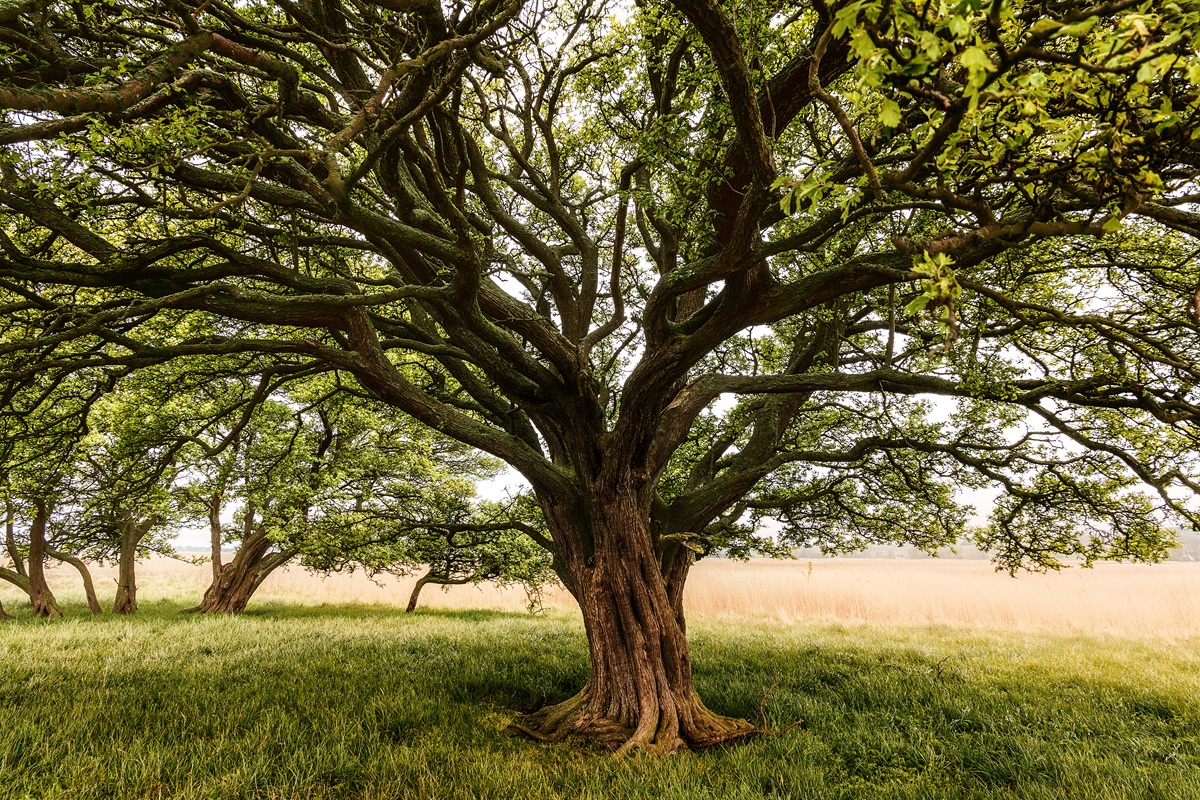
A recent study has revealed that oak trees continue to absorb carbon dioxide (CO2) long after their annual growth period has ended. This discovery proves that the processes of photosynthesis and wood production are not as tightly linked as scientists have long believed, potentially altering predictions of forests’ future capacity to store carbon.
In the study published in the journal Science Advances, researchers found that trees do not always grow while they are photosynthesising. The fact that oaks continue to absorb CO2 after their annual growth stops suggests that forests may store less carbon in the form of wood than many current climate models estimate.
Until now, the assumption has been that a higher rate of photosynthesis automatically results in greater tree growth. However, if trees continue to absorb carbon without converting it into new wood, the amount of carbon locked away in the long term will be smaller.
Forests play a major role in slowing climate change by absorbing CO2 from the atmosphere and storing it in trunks, branches, and roots. Initially, elevated atmospheric CO2 levels were expected to boost photosynthesis, accelerate tree growth, and increase long-term carbon storage. The reality, however, is more complex. The additional carbon absorbed after growth stops is likely diverted to producing leaves, supporting short-term metabolic processes, or other functions.
“Currently, most models assume that if there is photosynthesis, there is growth. We found that is not the case,” said lead author Mukund Palat Rao, an ecoclimatologist at the Lamont-Doherty Earth Observatory, part of the Columbia Climate School. “Just because there is more photosynthesis does not necessarily mean there will be more tree growth in the future.”
To investigate this phenomenon, Rao and his team analysed satellite imagery of 137 oak forests in the eastern United States and California. They also used instruments measuring CO2 levels in the tree canopy, daily stem-size sensors, and tree ring data dating back to 1950.
The results showed a clear decoupling between growth and photosynthesis. In the eastern US, oaks grew from May to July, but photosynthesis continued until October. Around 36 per cent of the annual carbon uptake occurred after growth had stopped. In California, the pattern was similar; growth ceased in August due to hot, dry conditions, yet 26 per cent of the annual carbon uptake occurred after this phase.
Rao explained that tree growth is highly dependent on internal water pressure, which is sensitive to hot weather. “When dry and hot conditions occur, growth activity stops almost immediately, while photosynthesis appears to continue at a slightly reduced rate,” he said. The surplus captured carbon is used for energy reserves for the following season, producing new roots, or maintaining cell functions during winter. The study concludes that projections of forests growing larger and storing more carbon in a warmer world need to be revisited.
“Understanding how photosynthesis and growth are linked is crucial from the perspective of understanding how forests will store carbon over the long term,” Rao added. The researcher acknowledged that many mysteries remain, stating, “I don’t really have the answer yet. There are still many questions to be resolved.”