
Treasure in the Trash: Italy Builds a 'New Mine' from Electronic Waste
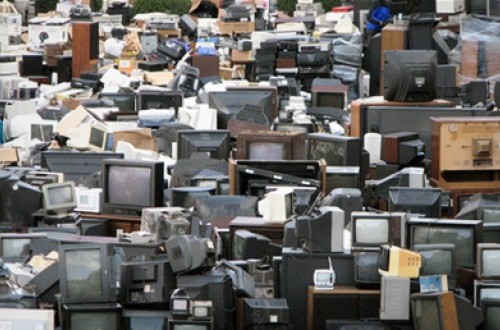
Damaged mobile phones, used laptops, obsolete hard disks, and electric motors ending up in landfills are now viewed by Europe as a valuable new strategic ‘mine’. Italy is preparing to operate the first plant in the European Union capable of extracting rare earth metals from electronic waste on an industrial scale. This move is not merely a recycling project. Amid a global race for rare earth metals, the EU is attempting to reduce its dependency on supplies from Asia, particularly China. The question is whether electronic waste can replace conventional mining, which has long dominated global supply. The answer is beginning to take shape in Ceccano, a small town between Rome and Naples. Italy’s Ministry of the Environment and Energy Security has given the green light for the INSPIREE project, a facility set to become Europe’s first industrial plant to recover rare earth elements from waste electrical and electronic equipment (WEEE). The project’s importance stems from rare earth metals being among the most sought-after raw materials globally. Elements such as neodymium, praseodymium, and dysprosium are used in electric vehicle motors, wind turbines, computer hard disks, data centres, and various modern defence technologies. Without these metals, many future technologies would not function. The European Commission has even included the INSPIREE project in a list of 47 strategic projects under the Critical Raw Materials Act regulation. This status indicates the project concerns not only the environment but also Europe’s industrial security and economic competitiveness. What makes this project compelling is its source of raw materials: not from the bowels of the earth or open-pit mines, but from piles of used electronic devices previously considered waste. In its initial phase, the pilot facility in Ceccano will only be able to process around 20 tonnes of permanent magnets per year. However, once the industrial plant is fully operational, its capacity is projected to surge to 2,000 tonnes of magnets annually, yielding approximately 500 to 700 tonnes of rare earth compounds. This hundredfold increase signals that Europe is serious about building a new mine above ground. The process begins by separating magnets from used electronic devices. The material is then processed using hydrometallurgical technology to extract rare earth elements in the form of oxalates, oxides, and carbonates ready for reuse by industry. The technology was developed in collaboration with the Università degli Studi dell’Aquila. According to its developers, this method has a significantly lower environmental impact compared to conventional mining, which remains the world’s primary source of rare earth metals. Several major European industrial players stand behind this project. Erion, EIT RawMaterials, and Itelyum are involved in the supply chain, while the European Union has provided funding of approximately 3.2 million euros, equivalent to around Rp60 billion, through the LIFE Programme managed by CINEA.