
Transportation Expert: Signal System Failure to Human Error Suspected to Trigger Train Collision in East Bekasi
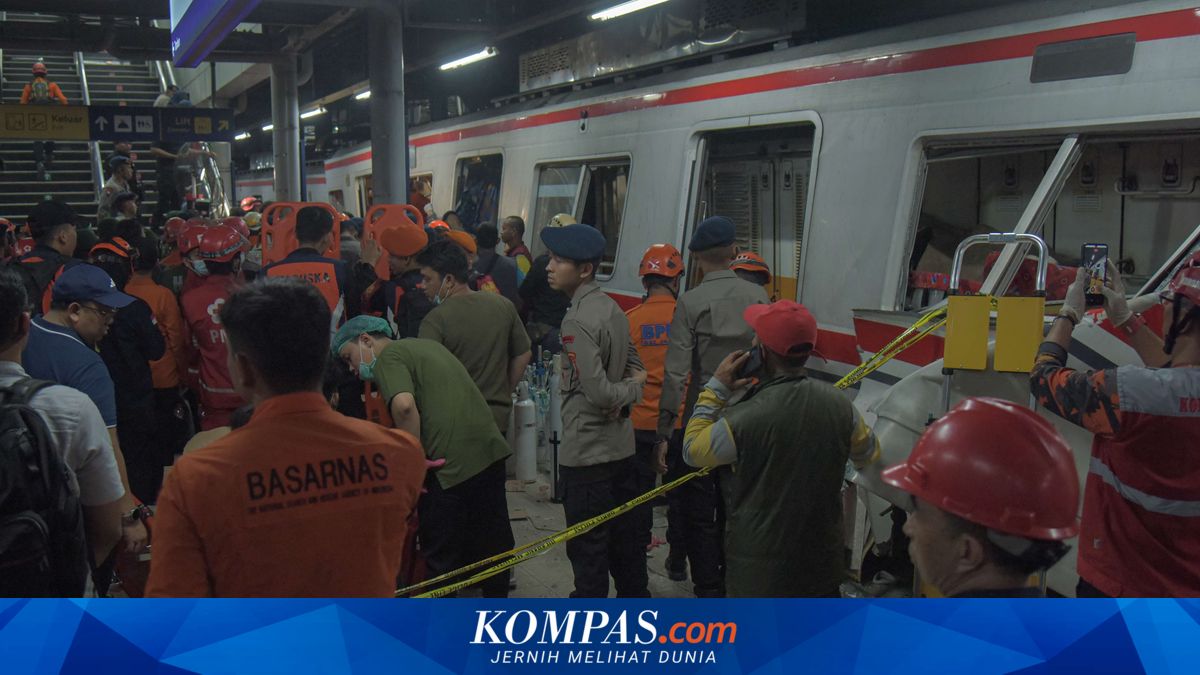
JAKARTA, KOMPAS.com - The collision incident between the KA Argo Bromo Anggrek and a KRL at Bekasi Timur Station on Monday night (27/4/2026) has raised initial suspicions regarding system disruptions and potential deviations from operational procedures.
The incident, which occurred around 21.00 WIB, temporarily paralysed the busy tracks in the Daop 1 Jakarta area. Railway transportation expert Joni Martinus explained that in Indonesia’s train operations, there are basic safety principles that should prevent such accidents.
“The absolute block system signalling principle in Indonesian railways requires the entry signal to be red while there is a train in the block section ahead,” he stated on Monday night (27/4/2026).
He said that the fact that the KA Argo Bromo Anggrek continued to proceed and collided with the stationary KRL ahead is a serious concern that requires in-depth investigation.
“The fact that the KA Argo Bromo Anggrek could enter and collide with the KRL in front of it is something that must be thoroughly examined and given attention by the KNKT,” Joni revealed.
He outlined that generally, there are several possible causes of rear-end collisions in railway systems. These include violations of red signals or signal passed at danger (SPAD), signalling system failures that display incorrect information (wrong side failure), and miscommunications in implementing cautious running procedures.
Additionally, other equally crucial factors include potential deviations from operational procedures that allow trains to enter occupied tracks, technical disruptions such as braking system failures, and human factors like reduced concentration of the engineer.
Joni also expressed deep condolences for the incident that resulted in fatalities. He assessed that this event should serve as a momentum for a comprehensive evaluation by both operators and transportation regulators.
“A thorough evaluation and improvement must be carried out, such as enhancements and increased development of human resources, strict implementation of operational procedures, and ensuring the reliability of facilities and infrastructure,” he added.
He emphasised that preventing train accidents requires a comprehensive approach, from technological aspects, procedures, human factors, to strict regulatory oversight.
On the other hand, Joni appreciated the swift actions taken by PT Kereta Api Indonesia (Persero) along with the KRL operators in handling the incident, particularly in the evacuation of victims and the management of affected train sets.