
Transport Ministry strengthens aviation safety with nine countries
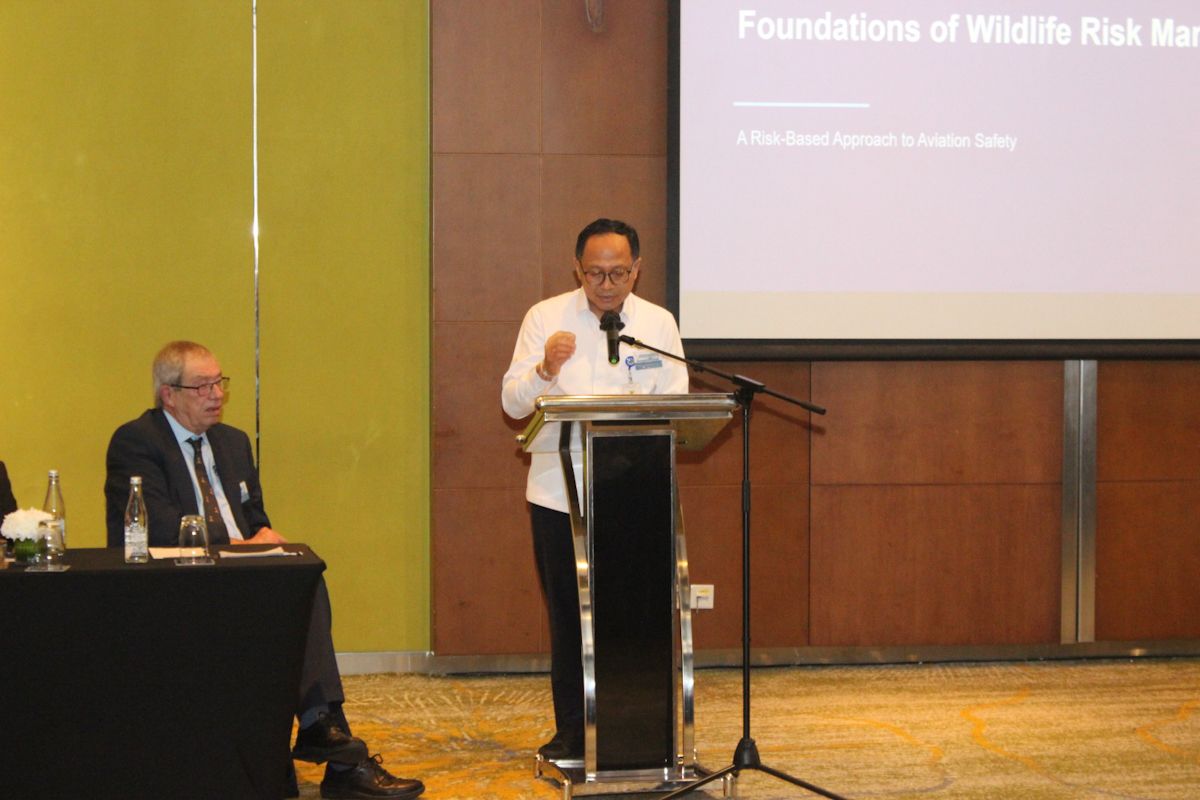
Jakarta (ANTARA) – The Ministry of Transportation, together with nine Southeast Asian countries, is strengthening aviation safety through a risk-based approach to mitigation at airports.
“Regional collaboration is key to addressing aviation safety challenges that require shared attention and action,” said Putu Eka Cahyadhi, Director of Aircraft Airworthiness and Operations at the Ministry’s Directorate General of Civil Aviation, in Jakarta on Wednesday.
Indonesia is hosting the regional COSCAP-SEA and WBA Training on Integrated Wildlife Risk Management – A Risk-Based Approach to Aviation Safety, taking place in Jakarta from 2 to 6 November 2026.
“The activity is part of the Ministry of Transportation’s efforts, through the Directorate General of Civil Aviation, to strengthen aviation safety, particularly through wildlife risk management at airports,” he said.
The training is attended by 50 participants from nine countries: Indonesia, Vietnam, Brunei Darussalam, Malaysia, Thailand, Singapore, Laos, Cambodia and the Philippines.
It is being organised jointly with the ICAO Cooperative Development of Operational Safety and Continuing Airworthiness Programme – South East Asia (COSCAP-SEA) and the World Birdstrike Association (WBA).
Putu, representing Director General of Civil Aviation Lukman F Laisa, who chairs COSCAP-SEA, stressed that wildlife risk management is an important aspect of aviation safety.
The effort is not limited to controlling wildlife around airports; it also involves ensuring that the risks posed are managed systematically and sustainably. Wildlife risk management must form part of the aviation safety system.
“It is not enough simply to drive animals away or control them. We need to understand the potential hazards and ensure that the mitigation measures in place are genuinely effective,” Putu said.
He said that, according to the Asia-Pacific Regional Aviation Safety Plan (AP-RASP) 2026–2028, an ICAO analysis of National Aviation Safety Plans (NASPs) from 14 countries and administrations in the Asia-Pacific region found that 12 had identified additional operational safety risks beyond the Global High-Risk Categories (G-HRCs).
Bird and wildlife strikes were the most frequently identified additional risk, cited by eight countries or administrations. The finding shows that wildlife hazards remain an aviation safety challenge across the Asia-Pacific.
Although not every bird or wildlife strike leads to an accident or serious incident, the potential risk must still be anticipated, particularly during critical flight phases such as take-off and landing.
Indonesia faces particular challenges in managing wildlife risks because of its archipelagic geography, diverse ecosystems, and the proximity of airports to coastal areas, wetlands, forests, farmland and urban areas.
These conditions require management that takes account of local environmental characteristics, the presence of different bird species, including migratory birds, and patterns of wildlife activity around airports.
He emphasised that aviation safety is a shared concern. Effective wildlife risk management is expected to reduce potential disruption to aircraft operations, particularly during take-off and landing.
“This will enable the public, as users of air transport services, to benefit from increasingly safe flights,” Putu said.
To strengthen participants’ understanding, the training also included a field visit to Soekarno-Hatta International Airport in Cengkareng, Tangerang, Indonesia.
During the visit, participants had the opportunity to observe wildlife hazards in the airport environment and learn about the mitigation and risk-control measures used in operational activities.
The Ministry of Transportation, through the Directorate General of Civil Aviation, is committed to continuing to strengthen regional collaboration, promote risk-based oversight and improve aviation safety management on an ongoing basis, in order to make air travel safer for the public.
Source: jawawa.id (https://jawawa.id/newsitem/transport-ministry-strengthens-aviation-safety-with-nine-countries-1793796836)
Originally published by Antara (Indonesian) (https://www.antaranews.com/berita/5832083/kemenhub-perkuat-keselamatan-penerbangan-bersama-sembilan-negara), translated from Indonesian