
Transport Ministry: SAF Use to Focus on Soekarno-Hatta and I Gusti Ngurah Rai Airports
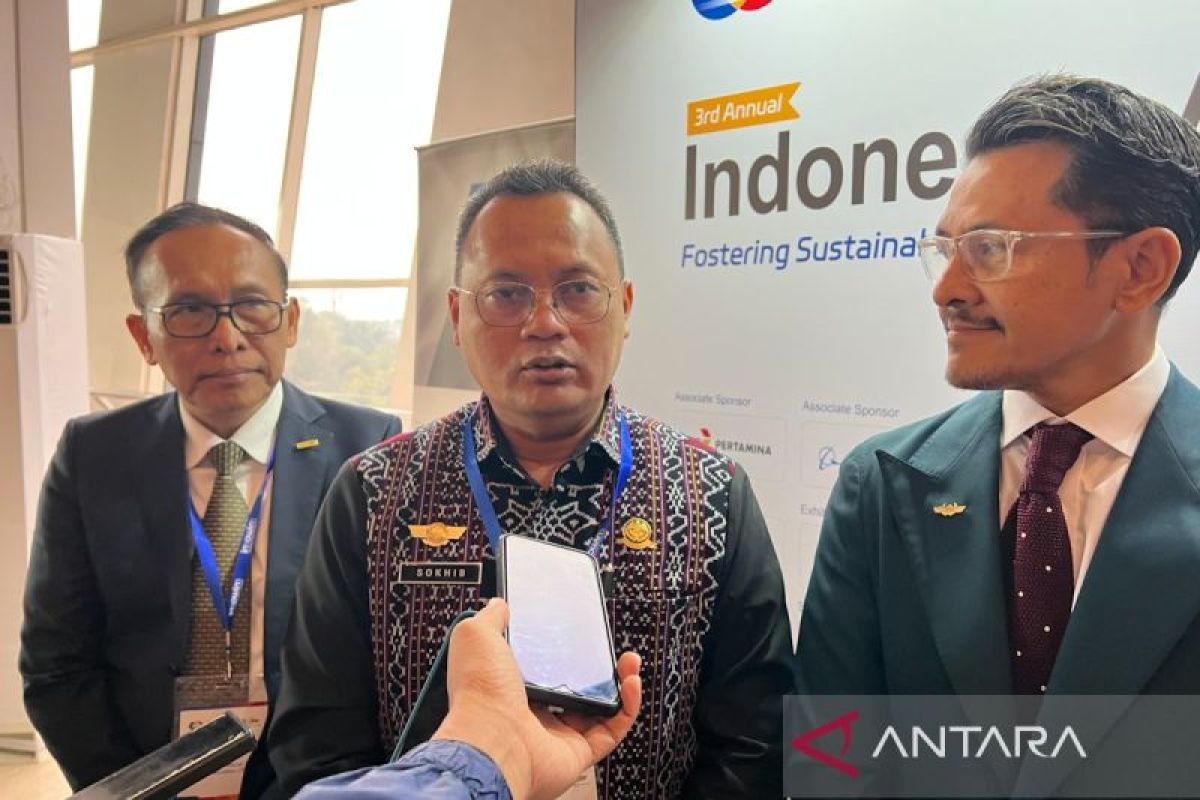
The Ministry of Transportation has stated that the initial application of sustainable aviation fuel (SAF), a bioavtur with a 1 per cent blend, will be focused on international flights through Soekarno-Hatta Airport in Tangerang, Banten, and I Gusti Ngurah Rai Airport in Denpasar, Bali. Director of Airworthiness and Aircraft Operations at the Directorate General of Civil Aviation, Sokhib Al Rokhman, said the implementation is targeted to begin in 2027. “It is only for international flights and we are only focusing on two airports, namely Soekarno-Hatta and I Gusti Ngurah Rai in Denpasar, Bali,” Sokhib said in a statement in Jakarta on Sunday. According to Sokhib, the timeline depends on the readiness of SAF supply from PT Pertamina, which is currently preparing production capacity through several national refinery facilities. He explained that the initial application will only be carried out at two international airports as an evaluation phase before the programme is expanded to other airports based on fuel supply readiness. The Ministry of Transportation has set the SAF blend at 1 per cent initially to ensure that implementation proceeds safely, effectively, and in accordance with international aviation operational standards. “So SAF is indeed gradual and we have targeted it for 2027. The hope is the implementation of a 1 per cent sustainable aviation fuel blend with existing avtur,” he said. Sokhib stated that Indonesia has chosen a gradual approach even though several countries have already implemented higher SAF blends, as part of a transition strategy towards low-emission aviation. He noted that SAF trials were conducted using a Pelita Air Airbus A320 on the Jakarta–Denpasar and Denpasar–Jakarta routes from August to December 2025. According to him, the trials have entered the commercial operation phase and proceeded without issues, proving that SAF is safe for use in civil aviation operations. Sokhib emphasised that the use of SAF does not require engine replacement, as all technical tests were carried out using the test cell facility owned by Garuda Maintenance Facility. Test results showed that aircraft engines operated normally, with no technical problems found during the six months of SAF application on commercial flights. The Ministry of Transportation is now awaiting supply readiness from Pertamina, including production development through refineries in Cilacap, Balongan, and other facilities to support national implementation. After the 1 per cent blend is successfully implemented, the government will conduct a comprehensive evaluation before considering a gradual increase in the SAF content for subsequent commercial flights. The government is targeting a progressive increase in SAF usage to reach a blend of approximately 30 to 50 per cent by 2060 as part of efforts to reduce emissions in the national aviation sector. “We will proceed gradually, evaluating the 1 per cent blend to see how the technology works with aircraft engines. Then, gradually, it will increase until 2060, with the hope of reaching a 30 to 50 per cent SAF blend,” he said.