
Transport Minister Reveals One-Way System and AI Technology to Reduce Accidents During Eid 2026
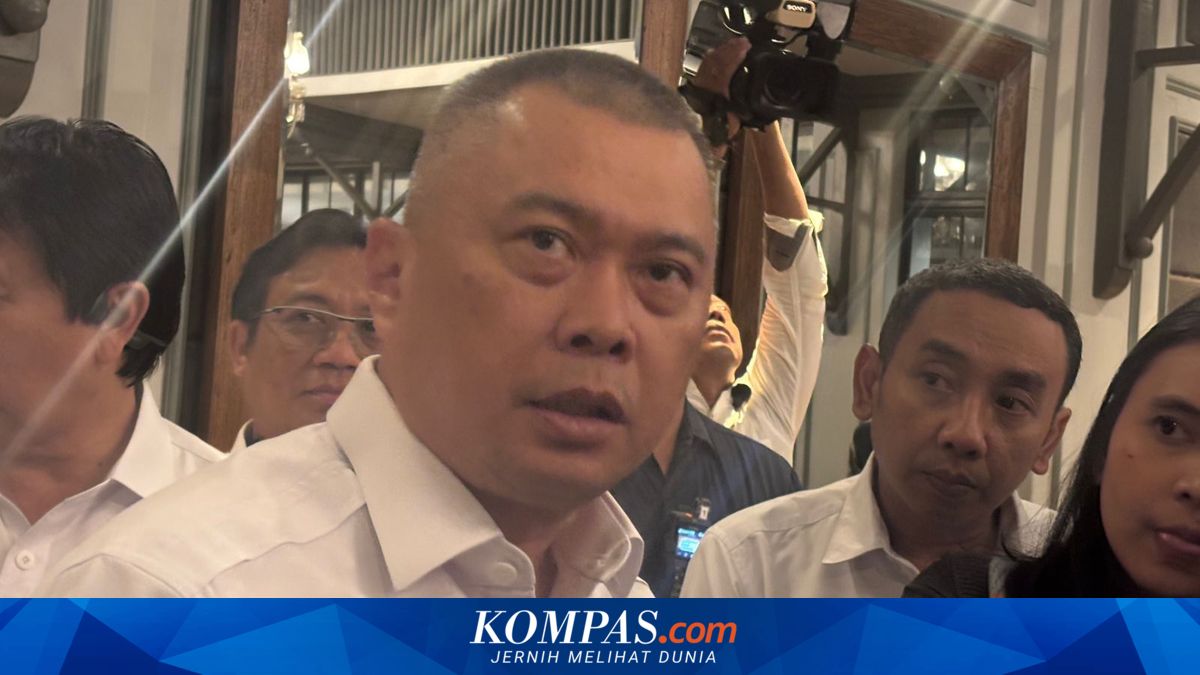
JAKARTA - Transport Minister Dudy Purwagandhi has revealed the role of the one-way system and the utilisation of artificial intelligence-based technology in reducing accident rates during the 2026 Eid period. This policy is deemed effective in maintaining smooth traffic flow while enhancing road user safety. The national one-way system is one of the main measures implemented by the Indonesian National Police Traffic Corps in several mudik and return corridors. This scheme directs vehicle flow to reduce congestion at vulnerable points. “Safety must remain our primary shared orientation, because the success of transportation management is not solely measured by the smoothness of movement,” Dudy stated in an official remark on Thursday (23/4/2026). “The success of transportation management is also measured by how well we ensure that every journey of the public proceeds safely and securely,” he continued. In addition to traffic engineering, the government is relying on artificial intelligence-based technology to support vehicle flow management. One of the systems used is the Intelligent Traffic Control System. This system utilises cameras and sensors to monitor traffic conditions in real time. The data is used to adjust traffic lights adaptively according to vehicle density levels. The government is also developing an AI-based traffic counting system such as SITRACING. This system counts vehicle volume and serves as the basis for formulating more accurate traffic policies. Digitalisation of services also supports these efforts. The online vehicle testing registration system through SITARU makes it easier for the public to access vehicle fitness testing services. Safety enhancement efforts are also strengthened through digital campaigns and education programmes. One of them is the SA-RI Card, aimed at instilling traffic awareness from an early age. Dudy considers the combination of traffic engineering and technology as a key factor in reducing accident risks. He hopes this approach will continue to be developed to face increasingly high mobility in the future. “It is hoped that the organisation of Eid transportation in the future will be even better,” Dudy stated. “Public expectations are increasingly high towards us, so it has become our collective obligation, all stakeholders in transportation management, transportation operations, or the Ketupat Operation, to improve further,” he added.