
Transport Minister Opens Unified 2026 Eid Holiday Transport Command Centre
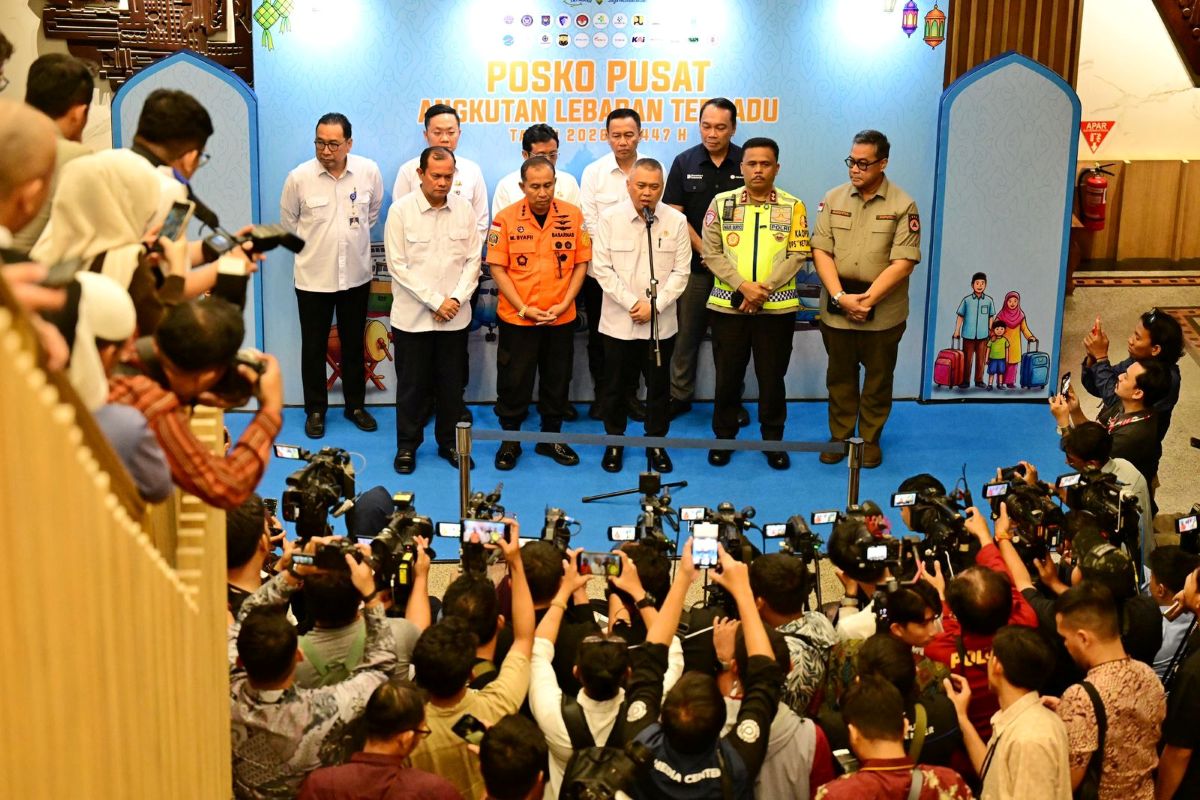
Transport Minister Dudy Purwagandhi has opened the National Unified Eid Holiday Transport Command Centre at the Transport Ministry’s head office on Friday, 13 March. The minister stated that the command centre serves as the national coordination hub responsible for monitoring the operational conditions of transportation, accelerating inter-agency coordination, and ensuring that every development in the field can be addressed swiftly and appropriately.
“In line with President Prabowo Subianto’s directive, the government is committed to ensuring that all transportation facilities and public services during the holiday exodus run smoothly through strong coordination between ministries, regional governments, state-owned enterprises, private companies, and all transportation stakeholders,” Dudy said in a press statement released on Saturday, 14 March.
Beyond establishing the command centre for oversight, monitoring, and evaluation at regional levels, the Transport Ministry has prepared mobility management policies for various transport modes, including ensuring the readiness of transportation infrastructure, restricting certain transport services before the peak holiday period to reduce queuing and congestion, and stockpiling additional transport capacity as needed. The government will also conduct roadworthiness inspections, implement traffic management schemes with the National Police, armed forces, and regional governments, and introduce policies for discounted air fares and toll tariffs. The ministry is providing free travel programmes to assist the public, conducting extensive outreach to personnel and citizens regarding transport service policies, safety and security matters, and maintaining intensive coordination with relevant stakeholders.
Dudy emphasised that the success of Eid holiday transport operations depends not only on government policy but also on the synergy, discipline, and integrity of all parties involved. Several matters require attention from stakeholders, including ensuring that all personnel understand and share the same perspective in implementing mobility control policies, conducting supervision in a firm yet humane manner whilst prioritising public service, building transparent and easily understood public communications so citizens understand government decisions, and maintaining consistent messaging to avoid contradictory information or sectoral ego. “And most importantly, I call upon all command centre and field personnel to remain vigilant against various transport developments, work with full dedication and patience, and prioritise safety as the top priority,” Dudy emphasised.
The National Unified Eid Holiday Transport Command Centre operates from 13–30 March 2026, involving the Transport Ministry, Ministry of Communications and Digital Affairs, Ministry of Tourism, National Police Traffic Bureau, National Search and Rescue Agency, Meteorological Climatological and Geophysical Agency, National Disaster Management Authority, National Transportation Safety Committee, Jakarta City Transport Department, PT Jasa Marga (state toll operator), Astra Infra Toll Nusantara, PT Jasa Raharja (state insurance company), PT ASDP Indonesia Ferry (state ferry operator), PT Kereta Api Indonesia, PT KCIC, PT Pelabuhan Indonesia, PT Pelni (state shipping company), Angkasa Pura Indonesia, the state port authority and navigation services, police communication networks, RAPI, and ORARI.
Similar command centres have been established at regional and field levels. A total of 1,560 monitoring and service nodes have been set up nationwide, comprising 264 sea transport nodes, 177 terminals (115 type A and 62 type B), 248 ferry transport nodes, 472 railway transport nodes, 257 air transport nodes, 43 networks at 6 toll gates, and 44 networks along major arterial roads.