
Transport Minister Explains Reasons for Smooth Eid Return Flow in Merak, Congestion in Gilimanuk
Jakarta, CNBC Indonesia - The difference in crossing traffic conditions during the 2026 Eid homecoming between the Merak-Bakauheni and Ketapang-Gilimanuk routes has drawn attention. On one side, traffic at Merak is observed to be relatively smooth, while on the other, long queues stretching for tens of kilometres have occurred at Gilimanuk.
This situation is not merely a matter of chance. The government assesses that there are structural and technical issues making the capacities of the two routes unbalanced in handling the surge in vehicle traffic.
At Merak, the crossing system is more mature with the division of ports based on vehicle types. Meanwhile, at Gilimanuk, the traffic pressure is concentrated on limited facilities.
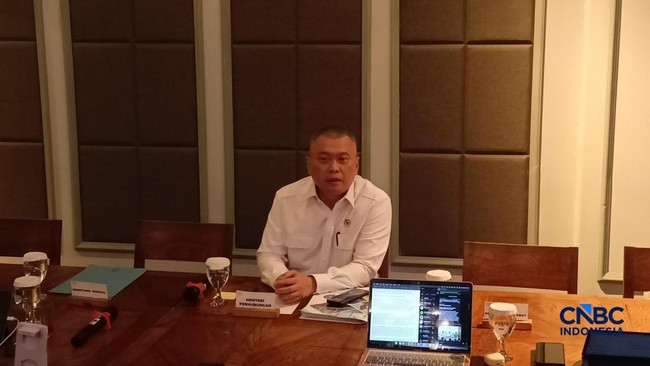
“We at Merak-Bakauheni have prepared four ports for crossings, so we separate vehicles based on their categories,” said Transport Minister Dudy Purwagandhi on Thursday (9/4/2026).
This scheme allows for more orderly vehicle distribution. Two-wheeled vehicles, private cars, to large trucks each have their own lanes, preventing mutual interference.
In contrast, at the Ketapang-Gilimanuk route, infrastructure limitations make traffic management more difficult. Vehicles of various types are still mixed in a single lane.
The scarcity of supporting facilities is also a main issue, particularly regarding vehicle holding areas before entering the port.
“The shortcoming at Ketapang and Gilimanuk is the lack of rest areas or buffer zones to accommodate vehicles if queues occur,” said Dudy.
As a result, when there is a vehicle surge, the queues are not contained within the port area but spill over onto the main road. This is what causes the long congestion.
In addition to infrastructure factors, major holidays also worsen the conditions. The Eid homecoming flow coincides with Bali’s Nyepi Day, leading to a buildup of vehicles at the same time. This situation is compounded by the continued operation of logistics vehicles that also fill the crossing routes.
“At that time, there was indeed density because one, there was Nyepi Day close to Eid al-Fitr, then the operation of large vehicles,” said Dudy.
To alleviate the congestion, the government has taken tactical steps by prioritising small vehicles and passengers, while directing large vehicles to buffer zones. This measure is deemed effective in accelerating the movement of homecomers, although it impacts density on the other side of the route.
Looking ahead, the government is preparing several improvements, from increasing port capacity to optimising the ferry fleet.
“We will add docks, enlarge ships, and also request the addition of buffer zones so that in the future, such density can be anticipated,” said Dudy.