
Transparency of Information Strengthens Public Participation in Waste Sorting
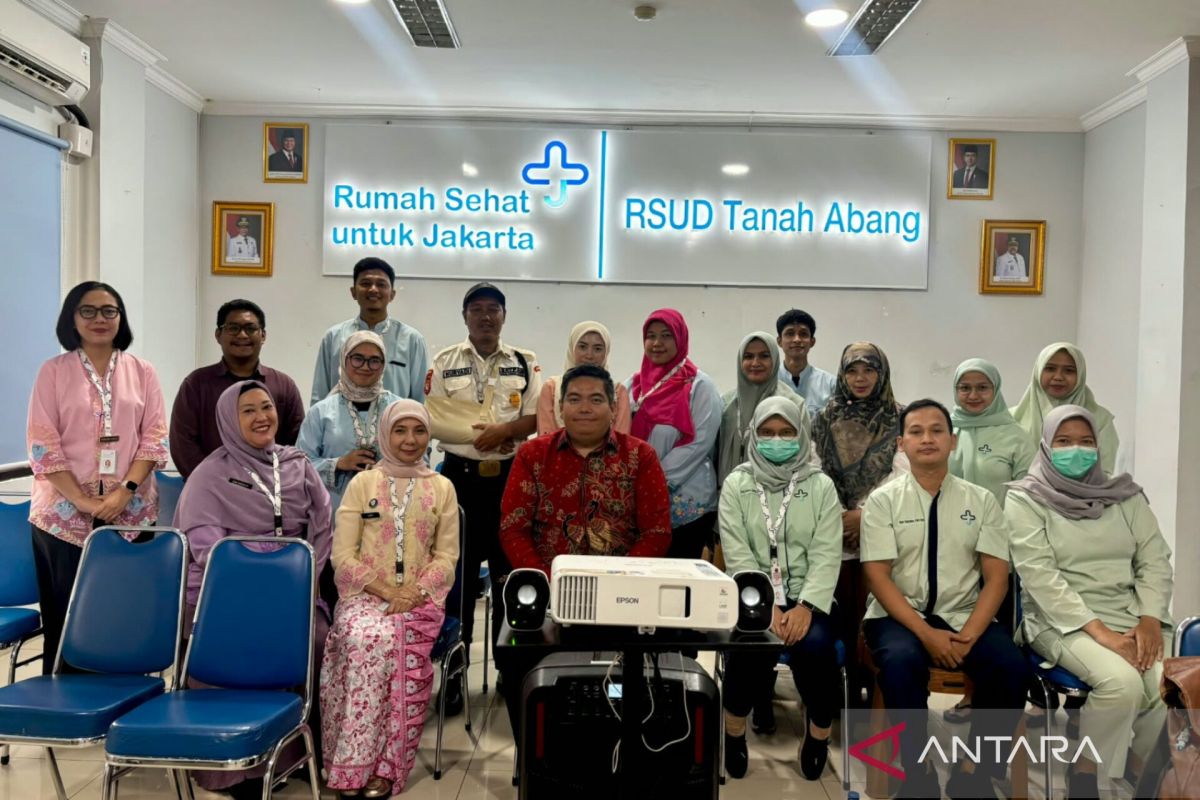
Jakarta (ANTARA) - Public information transparency (KIP) is becoming increasingly important in strengthening public participation in government policies, including the movement for waste sorting and processing at the source in Jakarta.
“The most important aspect is not just the success itself, but the process of educating the community so that waste sorting becomes a collective success,” said the Chairman of the Jakarta Provincial Information Commission (KI), Harry Ara Hutting, in Jakarta on Saturday.
Harry stated that transparency of information is a constitutional right of the people, guaranteed under Article 28F of the 1945 Constitution. This right serves as the basis for the public to obtain information, understand policies, and participate in their implementation.
“Every public policy requires socialisation, education, the dissemination of information, and community involvement. Without information transparency, policy objectives will be difficult to achieve,” Harry explained.
According to him, waste sorting and processing are not solely the responsibility of the government or the departments handling sanitation. The population growth and community activities in Jakarta mean that waste management requires the involvement of all elements, including public bodies, public service facilities, and the general public.
Harry linked the importance of information transparency to the Jakarta Governor’s Instruction Number 5 of 2026 regarding the Movement for Waste Sorting and Processing at the Source. Information regarding waste sorting and processing programmes needs to be capitalised as public information and communicated consistently through various channels.
In the digital era, the public can access information via mobile devices; therefore, public bodies must ensure that information is available easily, accurately, and accountably. “Waste management and processing at the source must be communicated to the public. We need to build a sustainable system,” said Harry.
He added that, as public bodies, regional public hospitals (RSUD) do not only perform healthcare services but also play a role in providing education and information to the community. In the context of the waste sorting movement, RSUDs can participate through education for employees, medical staff, patients, patient families, and the surrounding community.
“This waste sorting movement is not just a government success, but a public success when its benefits can be felt and implemented together,” Harry noted.
During the socialisation, he also emphasised the importance of strengthening the Information and Documentation Management Officer (PPID) as part of public service. According to him, the PPID does not merely disclose information but also ensures that information is provided in accordance with regulations, including distinguishing between open information and exempted information.
“Public information remains transparent while maintaining personal protection. Patient data, for example, cannot be provided to unauthorised parties,” Harry said.
He illustrated that information regarding budgets is, in principle, public information, but personal data such as full names and addresses must remain protected according to regulations. Furthermore, he encouraged increasing the capacity of PPID managers, including through competency tests and professional certification.
“Information services must be carried out maximally, adhering to the timeframe of information requests in accordance with the established mechanisms,” he said.
According to Harry, good management of websites and digital information channels can expand public access to information while increasing public trust. Currently, RSUD Tanah Abang is in the category of moving towards being ‘informative’ and continues to undergo improvements with the support of all service and management elements.
“Public information transparency is not something taboo. There is information that is indeed public information, and there is also exempted information. Both have regulations that must be understood and implemented,” concluded Lusiani.