
Transparency in Law Enforcement Becomes Integrity Test for Anti-Corruption Commitment
A series of corruption scandals implicating key figures within the government’s strategic circles has sparked sharp public criticism. These symptoms of graft are seen as potentially damaging and capable of holding hostage President Prabowo Subianto’s courage and grand vision to restore national economic sovereignty on the international stage.
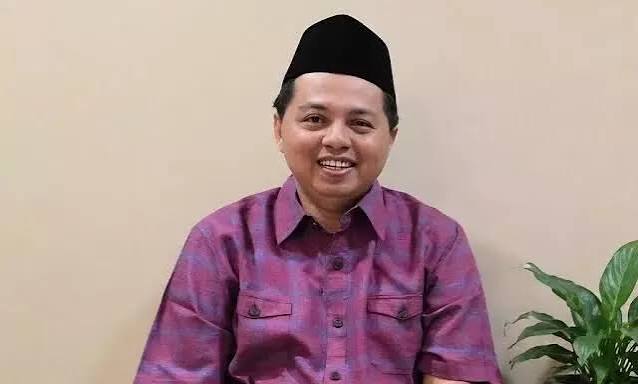
Kiai kampung and author of the book ‘Prabowo untuk Indonesia Raya’, HRM Khalilur R Abdullah Sahlawiy, highlighted a major paradox. On one hand, Indonesia is becoming a global diplomatic magnet following the issuance of Government Regulation No. 2026 on the single-door export of strategic commodities, and the aggressive reclamation of 5.9 million hectares of land by the Forest Area Enforcement Task Force. On the other hand, the integrity of the president’s internal aides is crumbling.
‘The president cannot work alone. No matter how great a head of state’s vision, he needs aides to implement it. And it is in the gap between vision and execution that people who deceive the president nest,’ Khalilur stated in Jakarta on Monday.
Khalilur cited two recent major corruption cases as clear evidence of betrayal of the President’s vision. The first case involves the alleged corruption in the governance of the free nutritious meal programme, which implicated the former Head of the National Nutrition Agency, Dadan Hindayana. Funds worth hundreds of trillions of rupiah intended for children’s nutrition were allegedly misused for the procurement of non-essential commodities to pursue unilateral profit margins.
The law enforcement tragedy peaked when the former Junior Attorney General for Special Crimes, Febrie Adriansyah, was named a suspect by the Police’s Corruption Eradication Corps. As the Executive Chairman of the Forest Area Enforcement Task Force, Febrie, who was at the forefront of saving state assets, is now suspected of being part of the leak following the seizure of a personal safe containing Rp476 billion at his residence in Sentul.
‘The person who should have been most helpful to the president in plugging leaks of state wealth is now suspected of being part of the leak itself. The question is no longer about one person. The question is: how many more are deceiving the president?’ he said.
Responding to the controversy over the transfer of Febrie Adriansyah’s case from the Police to the Attorney General’s Office, which experts have criticised for lacking a strong legal basis in the Criminal Procedure Code, Khalilur urged that the case be handled transparently. He warned that the resolution of the case must not end up as a mere political compromise to quell inter-agency ego clashes. The Adhyaksa Corps is demanded to prove its professionalism openly to the public, without being confined to protect the corps’ honour.
Furthermore, he stressed that the discourse on institutional reconciliation must be based on honest material evidence, adopting the principle of justice akin to Nelson Mandela’s. Formal truth must be upheld before security institutions agree to shake hands.
‘Reconciliation means working together to correct the legacy of past injustice. Note the sequence: truth first, then reconciliation. Disclosure first, then a handshake. Reconciliation without truth is just another name for compromise; and compromise over crime is a betrayal of the victims—in this case, the entire Indonesian people,’ he asserted.
Khalilur assessed that as a long-term mitigation measure to prevent future tensions between legal and security institutions, President Prabowo must carry out a structural overhaul and reorganisation, including the management of the Forest Area Enforcement Task Force. He believes the government needs to establish strict cross-examination mechanisms and guarantee public information transparency within the internal environments of the military, the Attorney General’s Office, the Ministry of Finance, and the Police. Such firm steps are essential to ensure that state instruments work in a straight line to secure state assets, rather than becoming a field for extortion by uniformed individuals.