
Transmigration No Longer Just About Moving People, Here's the New Paradigm
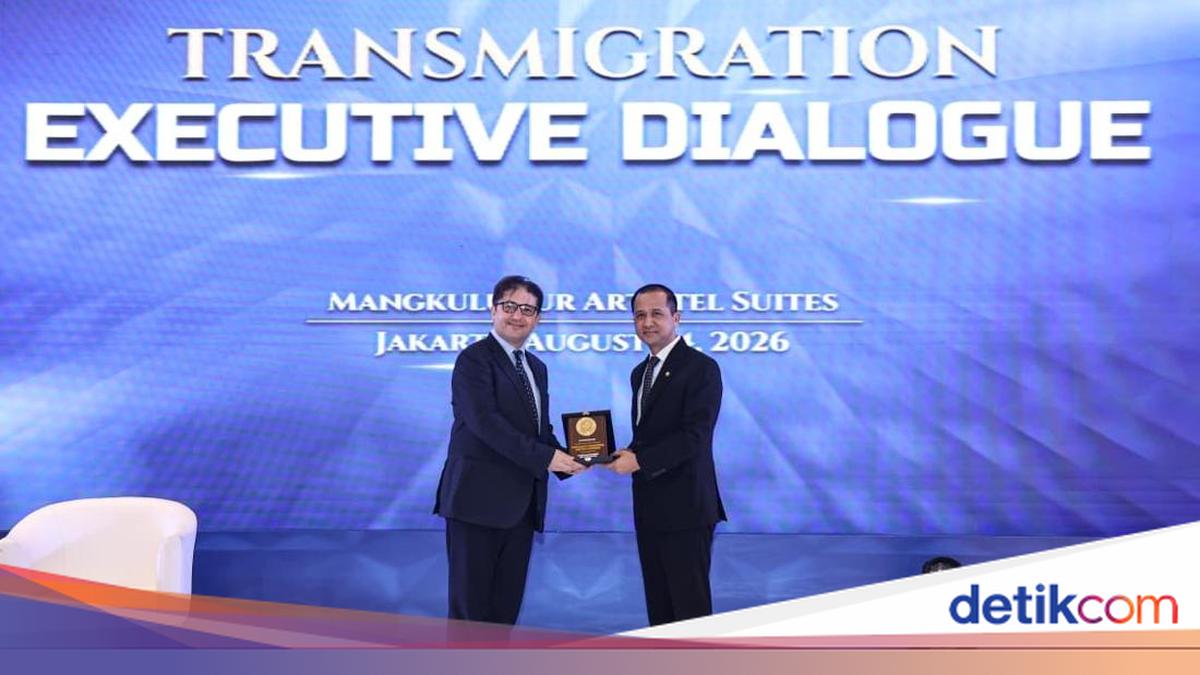
The Ministry of Transmigration (Kementrans) is directing transmigration areas to become new economic growth centres that open productive employment, increase community incomes, expand markets for farmers and local businesses, and attract investment. The transformation is considered increasingly relevant amid global economic and geopolitical changes. Professor of Economics at the Adam Smith Business School, University of Glasgow, Prof. Soner Başkaya, called transmigration ‘the right programme at the right time.’
According to Prof. Başkaya, Indonesia’s relatively neutral political position, its strategic location on world trade routes, and its wealth of natural resources place the country in an advantageous position amid shifts in global supply chains. ‘Indonesia’s current position is very advantageous in the eyes of the world. Indonesia has a relatively neutral political position, strategic trade routes, and important natural wealth such as nickel, which is greatly needed by future industries, from batteries to electric vehicles,’ said Prof. Başkaya in a statement on Tuesday (25/8/2026). He made the remarks at the Transmigration Executive Dialogue (TED) titled ‘From Transmigration to Productive Regional Transformation’ in Jakarta on Monday (24/8).
However, these opportunities must be translated into real benefits for the community. Investment entering transmigration areas must not stand alone but must create jobs, improve residents’ skills, drive local businesses, and build connections with broader industry and markets. Prof. Başkaya assessed that transmigration areas need to be supported by agricultural processing centres, logistics networks, modern facilities, access to financing, and innovation ecosystems. In this way, communities do not merely sell raw materials but also benefit from production processes and longer value chains.
The new transmigration approach, according to him, can become an instrument to revitalise regions, attract investment and talent, and encourage the spread of knowledge. The goal is to create areas that are productive, developing, and attractive as places to work and build a life. For the community, this change means more job choices without having to move to big cities. Farmers and MSMEs also have the opportunity to obtain technology, financing, business partners, and wider market access.
Prof. Başkaya also reminded that the success of this transformation cannot be measured solely by the size of announced investment or the number of programmes implemented. The main measure is change that is truly felt by the community, such as increased productive jobs, rising incomes and skills, growing local businesses, and sustainable regional economic development.
This view aligns with the new paradigm being developed by Kementrans. Minister of Transmigration (Mentrans) M. Iftitah Sulaiman Suryanagara stressed that economic activity development must precede population movement. ‘The future of transmigration is not moving people first and then hoping economic opportunities will follow. We must create economic opportunities, prepare decent jobs and lives, then population mobility follows voluntarily, safely, and with certainty about the future,’ said Iftitah.
According to him, people will come and settle voluntarily if an area offers jobs, business opportunities, infrastructure, and better life prospects. Therefore, transmigration areas must be built as economic ecosystems connecting communities, land, knowledge, technology, investment, industry, and markets. The ecosystem must cover the entire value chain, from research and seeding, production, processing, packaging, logistics, to marketing. With this approach, more added value can be created within the area and enjoyed by local communities.
Iftitah cited the high consumption of durian in China, worth around Rp137 trillion per year. Such a large market should not only be an opportunity to export raw commodities but also a basis for building a durian industry ecosystem in Indonesia. ‘We must not stop at planting and exporting raw commodities. We must build the entire economic ecosystem in Indonesia, from research and seeding to cultivation, processing, logistics, downstream products, and global marketing,’ he said.
The new paradigm is implemented through five flagship programmes of the Ministry of Transmigration. Trans Tuntas provides legal certainty over land; Trans Lokal ensures local communities become the main actors and beneficiaries of development; Trans Patriot brings human resources, knowledge, and technology to the areas; Trans Karya Nusantara encourages investment and job creation before population movement; while Trans Gotong Royong strengthens collaboration between government, universities, businesses, and communities.
The spirit of Trans Gotong Royong was evident from the presence of representatives from the Ministry of ATR/BPN, Ministry of Public Works (PU), Ministry of Transportation (Kemenhub), BPKP, Danantara Indonesia, Bank Indonesia (BI), Ministry of Trade (Kemendag), Ministry of Energy and Mineral Resources (ESDM), Ministry of National Development Planning/Bappenas, Ministry of Villages and Development of Disadvantaged Regions (Kemendes PDT), ten partner universities, businesses, development partners, and the general public at the TED.
‘Transmigration today cannot run alone. Land certainty, infrastructure, connectivity, energy, investment, markets, governance, and human resources must be built together in one ecosystem,’ Iftitah asserted. He also conveyed a message to 1,476 Patriots currently serving in 53 priority transmigration areas across Indonesia. The Patriots are expected not only to…