
Transmigration Ministry Seeks Inter-Ministerial Synergy to Boost Regional Development
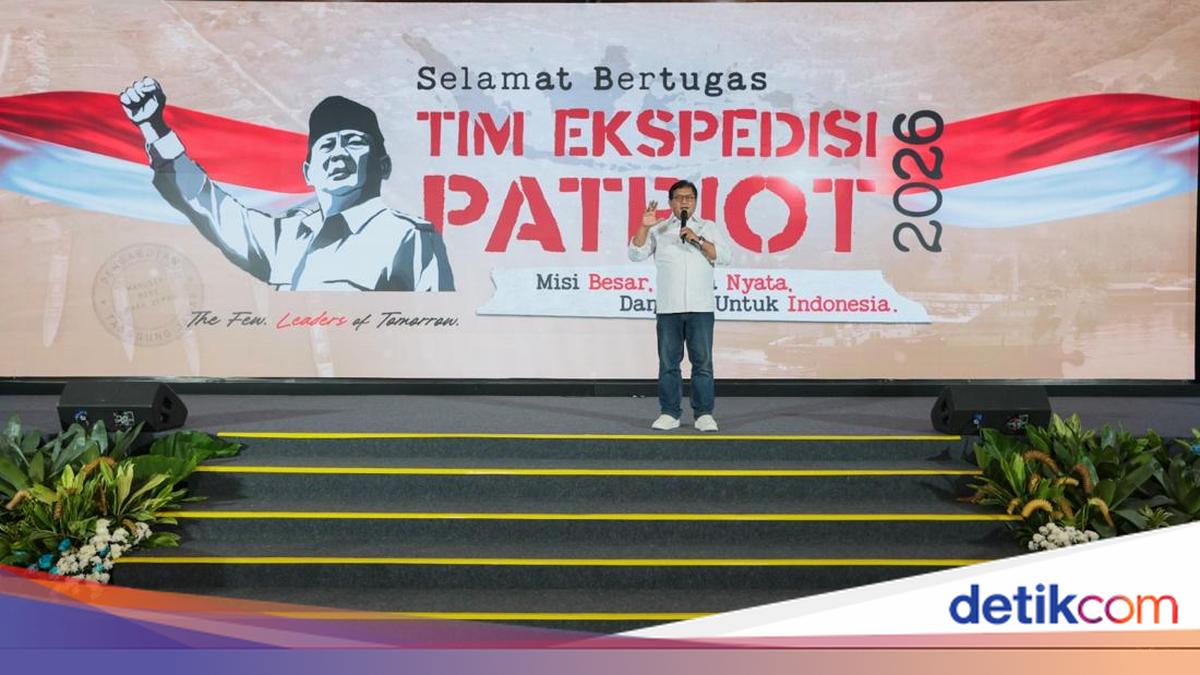
Deputy Minister of Transmigration Viva Yoga Mauladi has acknowledged that the transmigration programme, which has been running for decades, has yet to resolve existing problems, especially in the infrastructure sector. For this reason, the Ministry of Transmigration under President Prabowo Subianto’s administration intends to revitalise development in various transmigration areas.
“The way to do this is through collaboration or synergy with relevant ministries according to the needs in the area,” Viva stated in a written statement on Thursday (30/7/2026). He made this statement after attending the release of the 2026 Patriot Expedition Team (TEP) at Balai Kartini, Jakarta, on Wednesday (29/7/2026).
During the final briefing before their departure, ministers and deputy ministers were present to deliver materials. Synergy with relevant ministries is acknowledged as a way to make development in transmigration areas faster, more effective, and more efficient. For example, if a school is damaged, the Ministry of Transmigration can synergise with the Ministry of Primary and Secondary Education. If farmers need agricultural tools, fertiliser, or seeds, the Ministry of Transmigration will establish cooperation with the Ministry of Agriculture.
“If there is a damaged road, we can synergise with the Ministry of Public Works. With synergy, various obstacles in transmigration areas can be resolved,” Viva said. He noted that various development obstacles and challenges in transmigration areas were also voiced by a TEP participant from ITS. “We accept the critical aspirations of students openly and will resolve them immediately,” he said.
Deputy Minister Viva Yoga stated that physical development is not the only challenge in developing transmigration areas. “It is important to foster innovation and creativity there,” he said. Innovation and creativity are considered important because transmigration areas have an abundance of superior natural resource potential with high value. However, due to less than optimal effective management, the existing potential has not been able to provide something greater.
According to him, there needs to be governance covering the process of planting, maintenance, production, post-harvest, and offtaker. If this governance chain is built, then harvests of durian, coffee, cocoa, chocolate, palm oil, and other natural resources will generate economic productivity that better prospers the community. To further empower transmigration areas in the future, the Ministry of Transmigration is involving 10 leading universities in TEP 2026, including UI, IPB, ITB, Universitas Padjadjaran, UGM, Universitas Diponegoro, ITS, Universitas Airlangga, Universitas Brawijaya, and Universitas Hasanuddin.
TEP 2026 is said to be a continuation of TEP 2025. This year’s TEP consists of 1,476 members, including professors, doctoral programme alumni, master’s graduates, and bachelor’s degree holders. “The mission of TEP 2026 is to follow up on the research results from TEP 2025. The mission of TEP 2026 is to carry out technical and practical work based on the findings and recommendations from last year’s research,” he added.
The presence of TEP 2026, which is spread across 53 transmigration areas, such as in Salor, South Papua; Selaut, Aceh; Lunang Selaut and Muara Takung-Kamang Baru, West Sumatra; Batu Betumpang, Bangka Belitung; and Barelang, Batam City, Riau Islands, is encouraged to create and build innovation, creativity, and new systems in the governance and management of the development, empowerment, and construction of transmigration areas based on science and technology. It is hoped that after TEP 2026, there will be an increase in economic, social, cultural, and other aspects of life.
“The growth that occurs must provide added value to the income and prosperity of the community. Moreover, in transmigration areas, an improvement in the quality of human resources and a reduction in poverty and stunting must also be achieved,” he concluded.