
Transmigration Ministry Reviews Site Selection to Prevent Settlers from Leaving
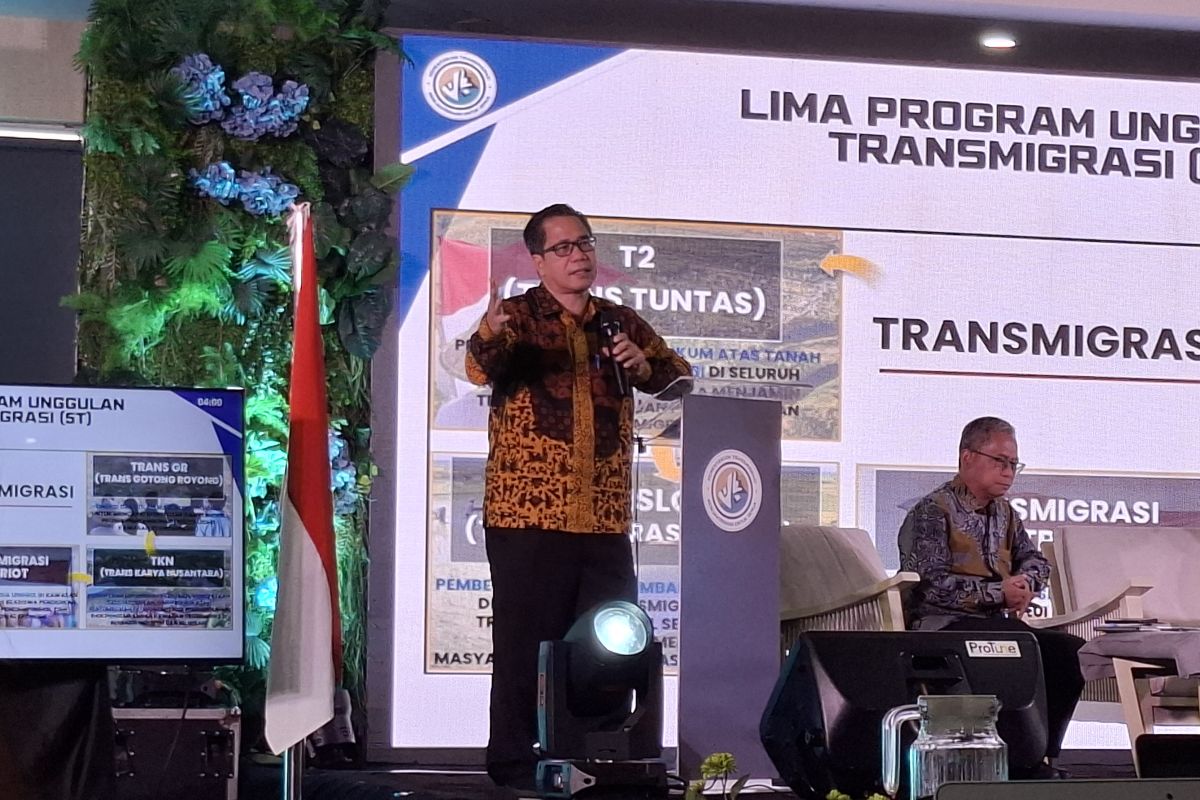
Batam (ANTARA) – The Ministry of Transmigration has reviewed its settlement programme to prevent a repeat of cases in which residents left transmigration areas because their farming land was uncertain and infrastructure was inadequate.
Nirwan Ahmad Helmi, secretary of the ministry’s Directorate General for Economic Development and Community Empowerment in Transmigration Areas, said the government was prioritising site readiness and secure sources of livelihood before placing participants.
“We are not rushing placements. We are evaluating things first; we do not want to repeat the same mistakes,” Nirwan said at the Ministry of Transmigration’s Public Relations Workshop and Media Gathering in Batam, Riau Islands, on Friday.
He said the review followed the discovery of several transmigration areas that residents had left because the land available for cultivation was unclear and infrastructure did not meet community needs.
The biggest issue, he said, was not simply whether houses were available, but whether residents had secure access to land they could work to earn an income once initial government assistance ended.
“The land is unclear — why do they leave? That is usually the problem,” he said.
Nirwan said some transmigrants had previously struggled to develop businesses because they did not know precisely where their allocated plots were. The difficulties were compounded by inadequate facilities to support economic activity in the areas at the time.
By contrast, he cited a transmigration area where residents stayed despite damaged roads and having no electricity service for around 20 years.
Residents there were able to develop oil-palm plantations because they had secure rights to two hectares of land, he said. Their earnings even enabled them to pool money to pay for electricity connections and road repairs.
“They stayed because their land rights were clear. They had oil-palm plantations and two hectares of land, so residents were even able to contribute towards electricity connections and road repairs,” he said.
The experience showed that secure access to land for cultivation was a key factor in successful transmigration, as it gave people the opportunity to build sustainable livelihoods, Nirwan said.
Wibowo Puji Raharjo, secretary of the ministry’s Directorate General for the Development of Transmigration Areas, said placement issues were also linked to a mismatch between participants’ skills and the types of economic activity available at their destinations.
He cited participants with no previous farming experience who joined the programme in the hope of receiving a house, farmland and food assistance during their initial period at the new site.
“Some transmigrants were not from an agricultural background. When we looked into it, one had worked as a motorcycle taxi driver and had never held a hoe,” Wibowo said, adding that he did not mean to disparage any profession.
The government provides food assistance for one year in dry-land areas and for one and a half years in wetland areas, Wibowo said. Problems can arise after the assistance ends if participants have not yet developed income-generating businesses.
In some cases, transmigrants then leave and transfer their land through informal transactions, creating land-administration problems for subsequent occupants.
“Usually, the land is then sold informally,” Wibowo said.
He said certificates issued years later could still be registered in the name of the original transmigrant. As a result, people who acquired land through those transactions face difficulties obtaining certificates in their own names.
Wibowo said resolving these land-transfer issues was part of the Trans Tuntas programme, which aims to improve legal certainty and land administration in transmigration areas.
Nirwan added that the government was not only developing a new approach to placing transmigrants, but also remained responsible for resolving problems inherited from earlier programme implementation.
“That is why Trans Tuntas is one of our programmes for fulfilling our responsibility to address these longstanding issues,” he said.
According to ministry data from February 2026, the government planned to place 115 households under the Trans Lokal programme during the year: 100 in the Barelang transmigration area in Batam, Riau Islands, and 15 in the Torire area of Poso regency, Central Sulawesi.
In May 2026, the ministry focused its revitalisation work on 45 priority areas out of 154 transmigration areas. The programme aims to strengthen infrastructure, resolve land issues and develop local economic potential.
At a working meeting with Commission V of the House of Representatives in September 2026, the ministry also set a target of resolving 29 cases of overlapping transmigration land claims in 2027 through the Trans Tuntas programme.
Nirwan stressed that the success of transmigration was no longer measured solely by the number of people placed, but also by whether areas could generate economic activity and improve residents’ welfare.
“It is not just about redistributing people, but about creating added value,” he said.
Source: jawawa.id (https://jawawa.id/newsitem/transmigration-ministry-reviews-site-selection-to-prevent-settlers-from-leaving-1791557633)
Originally published by Antara (Indonesian) (https://www.antaranews.com/berita/5779198/kementrans-evaluasi-penempatan-cegah-transmigran-tinggalkan-lokasi), translated from Indonesian