
Transmigration Ministry Partners with China’s Rice Research Centre to Develop Papua Transmigration Areas
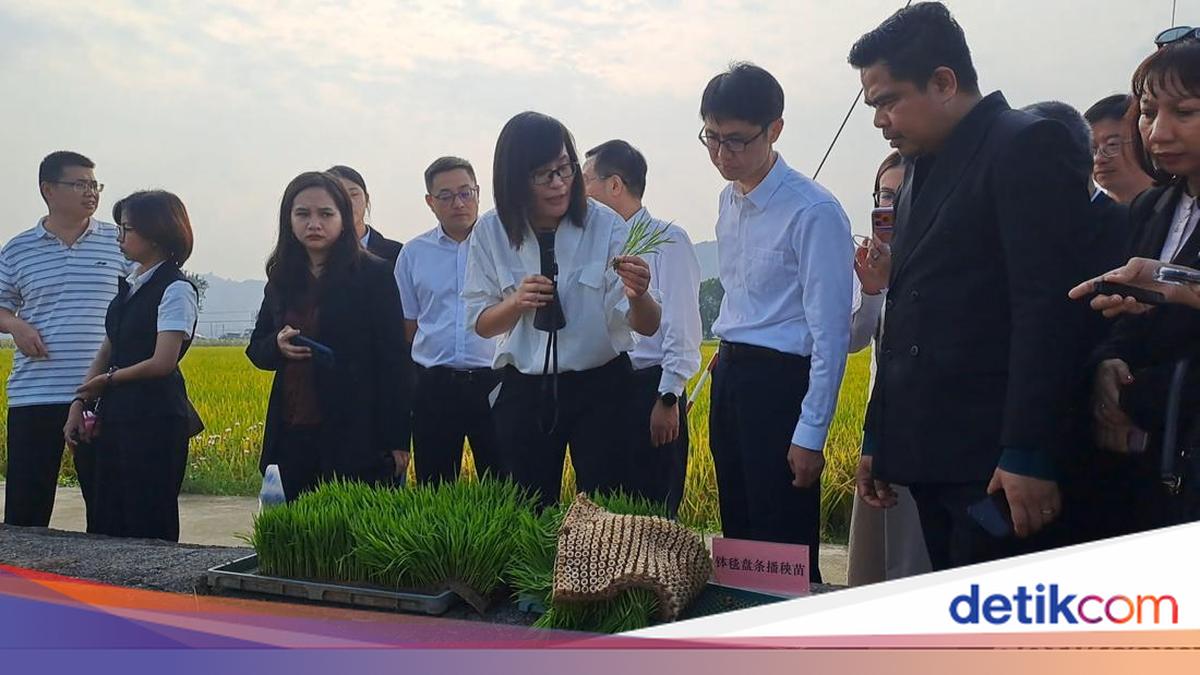
The Transmigration Ministry (Kementrans) has visited the China National Rice Research Institute (CNRRI), partnering with the Chinese research centre to increase agricultural yields in Papua’s transmigration areas.
On Friday (16 October 2026), after arriving at CNRRI headquarters in Hangzhou, China, the Kementrans delegation was given a tour of the site. CNRRI representatives provided a brief account of the institute’s history.
Based in Hangzhou, Zhejiang Province, CNRRI operates under the Chinese Academy of Agricultural Sciences (CAAS) and the Zhejiang provincial government. Its establishment was approved by China’s State Council in June 1981, and it was formally inaugurated in October 1989.
CNRRI conducts research into the development of high-yielding, pest-resistant rice varieties; genetics and biotechnology; efficient and environmentally friendly cultivation methods; and improvements to rice quality.
The Kementrans delegation, led by Ministerial Special Staff for Digital Transformation Yoyo Budianto, was then taken to the institute’s rice fields. Staff explained each stage of the process, from planting and fertilising to harvesting.
Modern technology is used from planting through to harvest. Seedlings are specially developed using a researched growing medium.
Rice is planted using machinery, and the delegation was also shown rice being sprayed by drone. The crop is harvested by machine as well.
The visit continued at CNRRI’s Modern Agricultural Service Centre, which has dedicated buildings for soil preparation and seedling cultivation, as well as a rice-milling building nearby.
Yoyo Budianto said the visit was intended to follow up on President Prabowo Subianto’s directive on food self-sufficiency. He said the ministry was partnering with CNRRI to develop transmigration areas in South Papua.
“Of course, we have come here to CNRRI, the China National Rice Research Institute, the Chinese government’s rice development centre. In line with the transmigration transformation concept initiated by the Minister of Transmigration, we are here to follow up on our collaboration with CNRRI,” Yoyo said at the site.
Yoyo said a CNRRI team had previously visited the Salor Transmigration Area in South Papua and collected rice samples for research.
“In March this year, CNRRI came to the transmigration area in Papua to conduct preliminary research into the conditions for rice cultivation there and what could be developed,” he said.
“Today, on behalf of the Transmigration Ministry, we have come to CNRRI headquarters to see first-hand the entire process of rice planting and management, from improving soil quality, raising seedlings and planting to crop management, harvesting and post-harvest processing,” he added.
Yoyo said CNRRI made effective use of technology in agricultural development. Kementrans is therefore partnering with the institute’s researchers to apply their knowledge in transmigration areas.
“The rice is researched and developed here, with more than 170 varieties. We will explore how we can collaborate and transfer technology to transmigration areas, particularly in eastern Indonesia, in line with President Prabowo Subianto’s direction,” he said.
Yoyo added that he would report the visit’s findings to Transmigration Minister Muhammad Iftitah Sulaiman Suryanagara. He hoped the collaboration would help advance transmigration areas in Papua.
“This will enable farmers in Papua and other transmigration areas to produce more rice of better quality on the land available, with the help of technology and researchers,” he said.
CNRRI studies rice in Papua
The Transmigration Ministry has previously received recommendations from CNRRI researchers based on their observations in the Salor Transmigration Area in South Papua. The team presented its findings to Transmigration Minister M Iftitah Sulaiman Suryanagara during a meeting in Sentul, Bogor, West Java, on Thursday (5 March).
“We have received all the recommendations from the CNRRI team and will follow them up. I will also speak with the Chinese ambassador about the next steps. We will provide the land and workforce, while the Chinese government will assist with financing and technology,” Minister Iftitah said, according to the Transmigration Ministry’s official website.
At the meeting, CNRRI researchers outlined findings from their field assessment of the agricultural potential of the Salor Transmigration Area. They said the region had significant potential for large-scale farming, particularly rice.
“We have seen that Papua has extensive land and considerable potential. There are also Chinese people in Papua. They are building factories and doing business there, so I believe this could become a form of cooperation between Indonesia and China. However, policy support from the Indonesian Government is also needed to encourage Chinese companies to invest in Papua,” said CNRRI researcher Zhonghua Sheng.