
Transmigration Minister urges national mastery of waste-to-energy technology
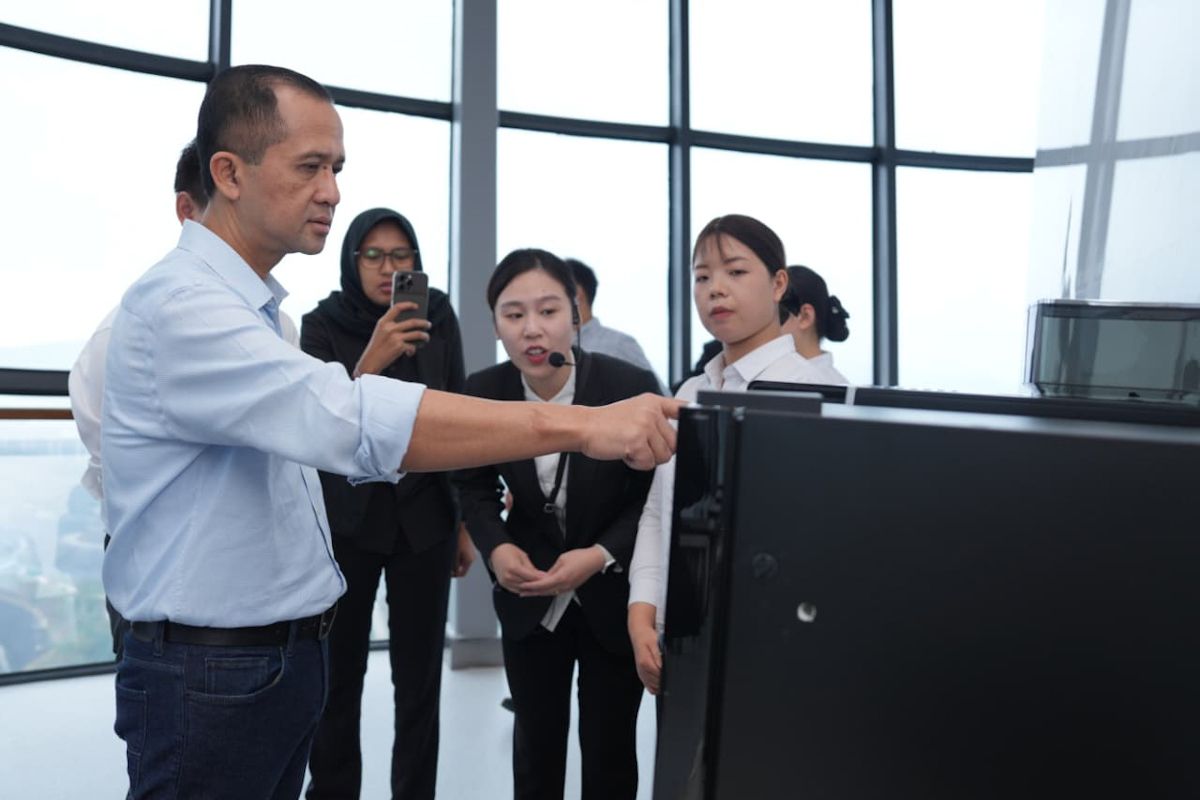
Indonesia must do more than buy technology from other countries: it must also develop the human resources needed to master, operate and improve it independently.
Jakarta (ANTARA) – Transmigration Minister Muhammad Iftitah Sulaiman Suryanagara has called for Indonesia to master waste-to-energy processing technology through knowledge transfer and stronger human-resource capacity, in support of a self-reliant national industry.
“Indonesia is not enough simply to be a buyer of technology from other countries; we must also build the human-resource capabilities to master, operate and develop it independently,” the minister said in a confirmed statement in Jakarta on Sunday.
He made the remarks after visiting Sanfeng Environment Group, a developer of waste-to-energy technology in Chongqing, China.
During the visit, Iftitah studied how China had built its waste-processing technology capabilities through education, research, international cooperation and the gradual development of industry.
“We also want cooperation that does not merely involve selling products. We want communities to be empowered through knowledge transfer, which can then lead to technology transfer,” Iftitah said.
He said Sanfeng’s experience showed that mastering technology requires long-term investment in people, rather than simply procuring machinery and building facilities.
Sanfeng is one of China’s companies developing technology to turn urban waste into electricity.
The company began adopting German technology in 2000, then gradually developed its engineering and equipment-manufacturing capabilities, as well as its capacity to build facilities and operate and maintain waste-processing plants.
After more than two decades of technology acquisition and innovation, Sanfeng can now produce a range of core equipment and develop waste-to-energy projects in several countries.
Iftitah said he was interested in the company’s development. Building modern technology capabilities did not happen overnight, he said, but required learning, consistency and a willingness to develop domestic expertise.
The experience is relevant to Indonesia, which is seeking to strengthen its national industry while tackling a range of environmental problems.
For Iftitah, technology transfer is successful not merely when a machine has been installed, but when domestic workers are increasingly able to operate, maintain and improve the technology.
During the visit, a delegation from the Ministry of Transmigration also studied Sanfeng’s process for turning waste into electricity. One facility they visited has the capacity to process around 3,000 tonnes of waste a day.
The thermal process uses waste to produce heat, which is then converted into electricity. The system also includes technology to control emissions and manage combustion residues.
The experience offers Indonesia a reference as it seeks solutions to growing urban waste problems, driven by population growth and economic activity. However, Iftitah stressed that technology must be applied in response to communities’ actual needs and local readiness.
“To do something like this, what we really need is goodwill. It should not be project-driven; we need to know what the technology is being used for,” he said.
He said technology investment must have a clear purpose, be supported by people capable of managing it and deliver lasting benefits.
In addition to economic viability, waste-processing technology must be assessed in light of waste volumes and characteristics, emissions and residue management, and its compatibility with waste reduction, sorting and recycling systems.
Facilities should therefore be developed not merely as infrastructure projects, but as part of an accountable solution to environmental management.
Iftitah also sees opportunities to introduce waste-to-energy technology in Indonesia, including in Batam, Riau Islands.
He said population growth, industrial activity and the development of economic zones in Batam called for a stronger environmental management system.
The Ministry of Transmigration has coordinated with the Batam city government and is ready to support the exploration of cooperation with suitable technology partners, in line with the needs and respective authority of each party.
Initial studies are needed to establish a project’s technical, economic, environmental and institutional feasibility before any decision is made.
For the Ministry of Transmigration, these lessons are also relevant to transforming transmigration areas into productive and sustainable new centres of economic growth.
Developing such areas requires more than providing housing and infrastructure and attracting investment. They also need good environmental services, a skilled workforce and the ability to use technology to meet communities’ needs.
Source: jawawa.id (https://jawawa.id/newsitem/transmigration-minister-urges-national-mastery-of-waste-to-energy-technology-1792327860)
Originally published by Antara (Indonesian) (https://www.antaranews.com/berita/5795089/mentrans-dorong-penguasaan-teknologi-sampah-menjadi-energi-nasional), translated from Indonesian