
Transmigration Minister to Follow Up on Four TUM Recommendations for Rempang’s Development
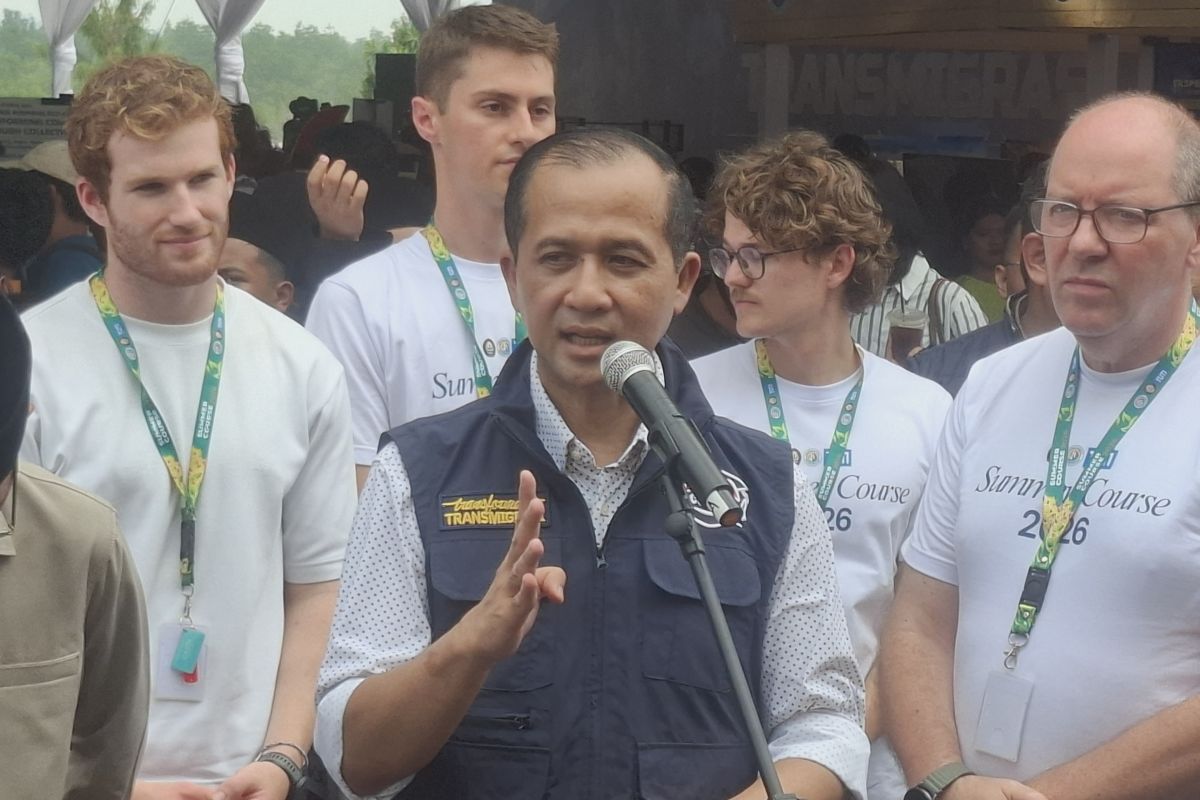
Batam (ANTARA) – Transmigration Minister Muhammad Iftitah Sulaiman Suryanagara said he would follow up on four recommendations from a study by Germany’s Technical University of Munich (TUM) and Diponegoro University (Undip) on developing the Rempang Eco-City transmigration area in Batam, Riau Islands.
Iftitah said the recommendations covered land management and agroforestry, addressing environmental problems, strengthening community capacity, and developing the economy through marine tourism.
“First, we will implement all four,” Iftitah said in Tanjung Banon, Rempang Island, Batam, Riau Islands, on Sunday.
He said the findings had been discussed with officials at the Ministry of Transmigration so they could be developed into activities involving local residents and strengthening the area’s economic self-reliance.
“Of course, we will not stop at ideas. We have also discussed implementation with the director general,” Iftitah said.
For land management, the TUM team proposed agroforestry, combining the use of land for farming, tree planting and other cultivation activities. The approach is expected to create business opportunities for residents while helping to protect the environment.
Another recommendation focuses on tackling erosion and improving water management. The researchers proposed revegetating slopes, building rainwater storage facilities, and improving waste and wastewater management in residential areas.
To strengthen community capacity, TUM proposed establishing a skills and activities centre, or “skill hub”. The facility would provide a place to learn English and food processing, develop business skills, and hold community activities.
The economic development recommendation centres on ecotourism and marine tourism, drawing on the area’s mangroves, fishing activities, micro, small and medium-sized enterprise (MSME) products, and local culture as visitor attractions.
Iftitah said several activities aligned with the recommendations had already begun before the study findings were presented. One is the construction of an observation tower in Tanjung Banon, which is expected to attract tourists and create business opportunities for the community.
“We are building an observation tower,” he said.
The minister said visitors could generate new economic activity, including food and drink businesses and services supporting tourism. The government is also focusing on greening the area and using rainwater to address local environmental problems.
TUM researcher Professor Walter Timo de Vries said the recommendations were based on field observations and discussions with residents over about a week as part of the Summer Course Barelang 2026 programme.
The programme involved 20 students and three TUM staff members. Four research groups developed proposals on tourism, the environment, land and agroforestry, and community development.
Walter said development could not rely on infrastructure alone; it also required community participation so that available economic potential could be used sustainably.
“What we see is that the community is also an asset here—not just to receive things, but to create things,” Walter said.
He also highlighted the need to integrate geospatial information, as data and maps required for planning the area remain dispersed across several agencies.
According to Walter, bringing the information together could help the government determine land use, identify environmental problems and devise responses suited to community needs.
Batam Mayor and Batam Free Trade Zone and Free Port Authority (BP Batam) head Amsakar Achmad said the local government would give the study’s recommendations serious attention in coordination with relevant ministries and agencies.
“The four recommendations presented will receive serious attention,” Amsakar said.
He said some activities aligned with the proposals, including greening the area and empowering residents economically, were already under way. Other proposals were still being prepared and coordinated across agencies before implementation.