
Transmigration Minister: Technology in Transmigration Areas Must Meet Local Needs
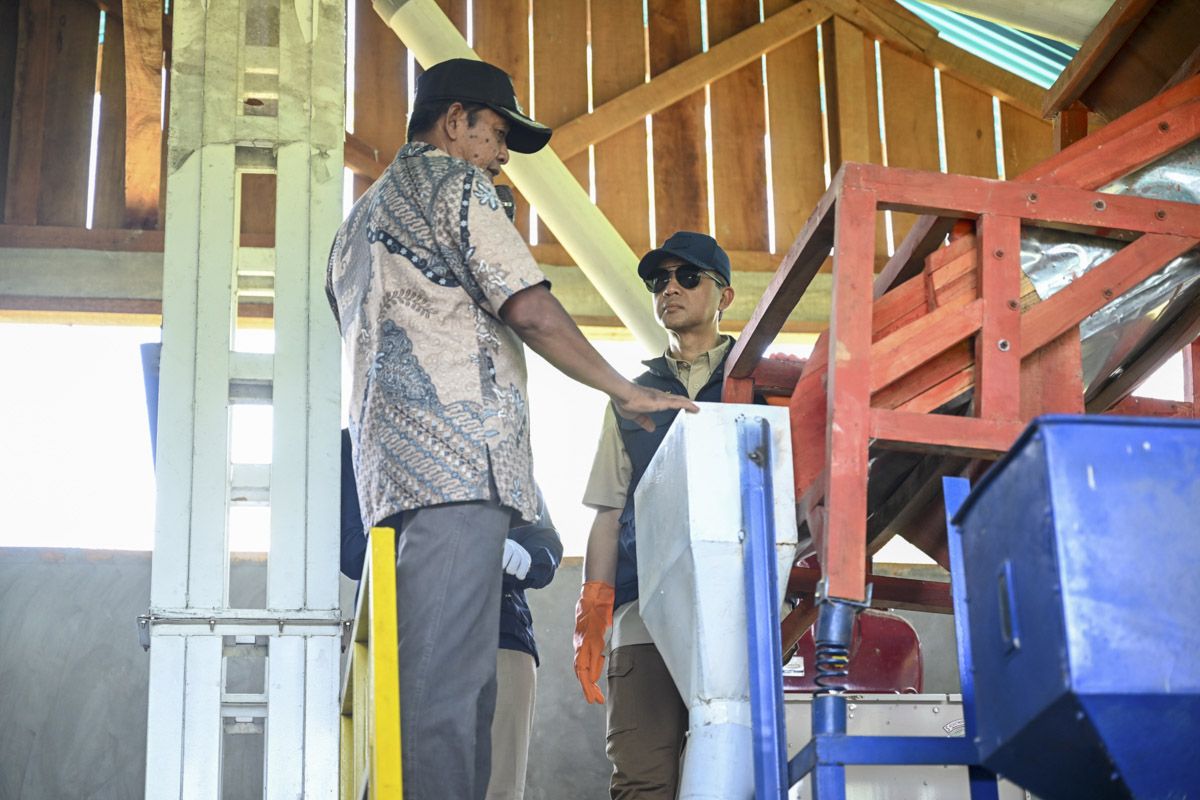
Jakarta (ANTARA) – Transmigration Minister M. Iftitah Sulaiman Suryanagara stressed that technology brought to transmigration areas must meet local communities’ needs and open up opportunities to increase incomes.
“I want to encourage and see first-hand the tangible work delivered by members of the Patriot Expedition team through the Patriot Transmigration Movement. Today, transmigration is no longer simply about relocating people, but about developing an economic region,” Iftitah said in a statement received in Jakarta on Saturday.
Transmigrant farmers in Oransbari District, in the Momiwaren Transmigration Area of South Manokwari Regency, West Papua, now have an option for drying paddy without waiting days for sunny weather. A two-tonne dryer developed by the Sepuluh Nopember Institute of Technology (ITS) Patriot Expedition Team has cut drying time from three to seven days to around a dozen hours.
For farmers, the technology speeds up the handling of harvested crops and reduces reliance on drying them manually on roads, a practice that has also disrupted traffic. The dryer is supported by a solar power plant to help address electricity supply constraints in the area.
Opportunities to add value go beyond drying paddy. Post-harvest processing, including rice grading, also gives farmers the chance to sell a higher-quality product at a better price.
Broken rice has also found a new use. Previously sold as animal feed for Rp8,000 to Rp9,000 per kilogram, it is now processed into rice flour, which sells for around Rp18,000 per kilogram. This price difference reflects the products’ sale values before processing costs are taken into account.
The rice flour operation is run by the local village-owned enterprise (BUMDes) and is intended to supply micro, small and medium-sized enterprises, including makers of peyek (crackers) and cakes. The business has obtained a Business Identification Number (NIB). The harvest can therefore serve as a raw material for local food businesses while creating entrepreneurial opportunities for residents.
Iftitah hopes the innovations will empower transmigrant communities, improve their incomes and provide more employment opportunities.
In addition to rice processing, the ITS team has introduced technologies addressing needs in agriculture, fisheries and basic services. These include a biogas reactor that reportedly produces 50 litres of liquid organic fertiliser per day, and fish-smoking technology that reduces production time from two days to a maximum of two hours.
ITS Rector Bambang Pramujati said the university’s involvement gives students and lecturers the opportunity to apply their knowledge to solving community problems.
“One hundred students, 20 teams across three districts and 20 lecturers are involved there. They have the opportunity to use the knowledge they have to deliver greater benefits to the community,” Bambang said.
He said ITS was ready to continue its community service through a thematic Community Service Programme (KKN).
Source: jawawa.id (https://jawawa.id/newsitem/transmigration-minister-technology-in-transmigration-areas-must-meet-local-needs-1793440411)
Originally published by Antara (Indonesian) (https://www.antaranews.com/berita/5823663/mentrans-teknologi-di-kawasan-transmigrasi-harus-menjawab-kebutuhan), translated from Indonesian