
Transmigration Area in West Papua Develops Solar Power and Biogas
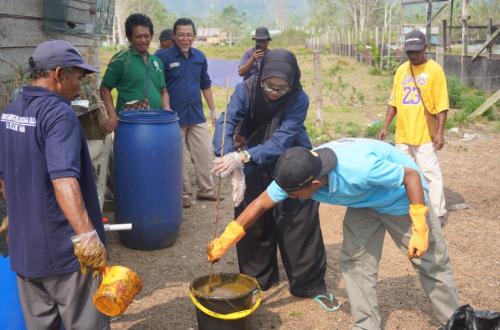
JAKARTA – Renewable energy is being developed in the transmigration area of Teluk Wondama Regency, West Papua, to improve access to electricity and reduce dependence on conventional energy. Solar panels and the processing of cow manure into biogas are being combined with efforts to strengthen healthcare services, food security and natural resource management.
The programme is being developed by the University of Indonesia’s (UI) Patriot Expedition Team (TEP) in the Werianggi-Werabur area of Teluk Wondama Regency. The team is applying a Planetary Health approach that links public health, environmental conservation and local economic development.
In Werianggi village, the installation of solar panels at the village hall is beginning to help residents access electricity for longer periods. The team is also developing the use of cow manure as a source of biogas for cooking.
TEP UI’s adviser in Teluk Wondama, Trevino Aristarkus Pakasi, said renewable energy development was a foundation for improving people’s quality of life without neglecting environmental conservation.
The approach was designed on the basis of field observations conducted by the team from August to November 2026. Trevino said forest conditions were directly linked to the availability of food and clean water, as well as public health.
“A healthy forest will prevent natural disasters. A healthy forest is home to all living things and a source of food, as well as providing clean air, oxygen and clean water,” Trevino said in a statement on Saturday (31 October 2026).
According to the team’s observations, forests in Teluk Wondama continue to face pressure from fires and timber-industry activity. This could affect the lives of people who rely on forest resources for food.
TEP UI has developed four interconnected approaches. Alongside providing electricity through solar power and biogas, the team is expanding the digitalisation of healthcare services, supporting the preservation of local foods and developing the processing of local produce to increase its economic value.
The solar and biogas development is being led by Ardiyansyah and his team. The programme is intended to support a 24-hour electricity supply, although details of progress towards round-the-clock power have not been provided.
Obeth O, a resident who benefited from the biogas training, said processing livestock waste had given the community new knowledge about alternative energy for cooking.
“The biogas training using cow manure is useful for the community. This is the first time we have had this kind of training; cow manure can produce gas for cooking,” Obeth said.
In healthcare, TEP UI has trained health workers in digitalisation at Nikiwar and Windesi community health centres. The use of electronic medical records is expected to help with the recording and management of community health services.
Siti Harlina, a health worker at Windesi Community Health Centre, said the training had helped staff understand how to use digital systems in their daily work.
“After taking part in this training, I feel it has been very helpful. The training was clear, easy to understand and highly relevant to the work at the health centre,” she said.
Alongside strengthening healthcare services, the team is supporting the preservation of local food sources such as sago and root crops. Economic development is also being pursued through processing local produce, including making use of nutmeg-industry waste to create added value.
Trevino explained that all these activities were being developed as an approach to development that connects energy needs, the local economy and environmental sustainability.
“Planetary Health as a framework for economic development is not an additional programme. Energy is its foundation, food systems and the local economy are the channels for intervention, while public and environmental health are the outcomes to be assessed,” Trevino said.
The development of renewable energy in the transmigration area is in line with government policy to expand the use of solar power plants (PLTS) in rural areas.
President Prabowo Subianto previously highlighted the importance of developing solar power plants to strengthen national energy independence when presenting the 2027 draft state budget at the DPR/MPR building on Friday (14 August 2026).
Meanwhile, Coordinating Minister for Infrastructure and Regional Development Agus Harimurti Yudhoyono stressed the importance of protecting the environment in developing the economy of transmigration areas.
“Economic development must not come at the expense of the environment,” Agus said at a Patriot Transmigration outreach event in Jakarta on Sunday (17 May 2026).
Transmigration Minister M Iftitah Sulaiman Suryanagara also said the government was seeking to change its approach to developing transmigration areas so that it paid greater attention to environmental sustainability.
“If transmigration programmes were once perceived as being unfriendly to the environment, today we have transformed transmigration into a programme that is highly environmentally friendly,” Iftitah said during a visit to the Samboja Lestari conservation area on Friday (12 June 2026).
Source: jawawa.id (https://jawawa.id/newsitem/transmigration-area-in-west-papua-develops-solar-power-and-biogas-1793433040)
Originally published by Republika (https://esgnow.republika.co.id/berita/tnresy416/kawasan-transmigrasi-di-papua-barat-kembangkan-energi-surya-dan-biogas), translated from Indonesian