
TransJabodetabek Fares Set to Rise, Governor Pramono Explains Impact on Jakarta's Budget
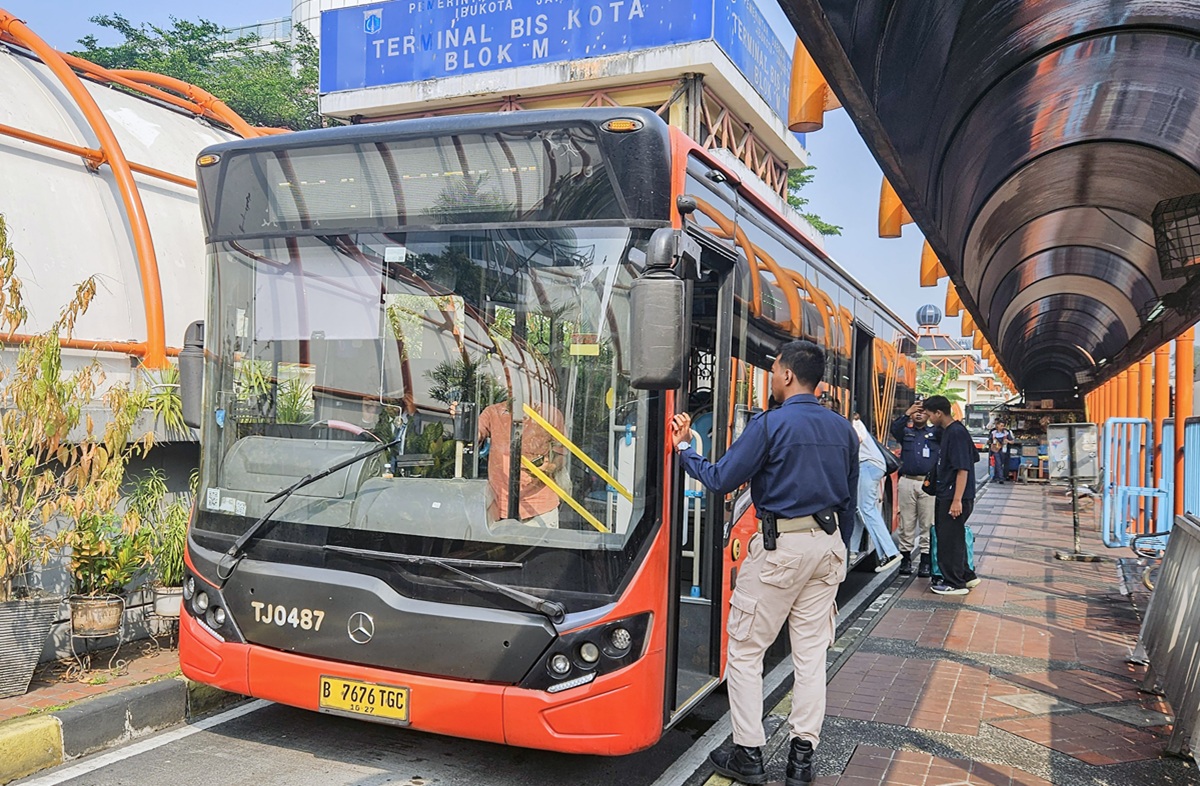
Jakarta Governor Pramono Anung has confirmed there will be a fare adjustment for several TransJabodetabek services, with the DKI Jakarta Provincial Government still bearing the subsidy for the programme. However, he stressed that the subsidy will continue to be provided to prevent the public from switching back to private vehicles. Pramono said the decision regarding the exact fare amount is still under discussion and will be announced in the near future. “I want to straighten this out, so there is no perception that it is not subsidised. It is impossible for it not to be subsidised, it will definitely remain subsidised. But clearly, several necessary adjustments will be made,” Pramono said in Jakarta on Wednesday. According to him, one of the routes under scrutiny is the TransJabodetabek Blok M–Soekarno-Hatta Airport service, which currently costs Rp3,500. This fare is considered far too low compared to operational costs and other modes of transport serving a similar route. “Blok M to Soekarno-Hatta is now Rp3,500. You can even bring luggage onto the bus. Compared to Damri, the cheapest is Rp80,000, and a taxi averages Rp200,000. At Rp3,500, it is not even enough for parking at Soekarno-Hatta,” he said. He explained that the large subsidy is also influenced by the expansion of services to Jakarta’s buffer zones. The DKI Jakarta Provincial Government currently not only operates the fleet but also bears the maintenance costs for a number of bus stops located outside Jakarta’s administrative area. “Almost all bus stops that are not in the Jakarta area are maintained by us. That is the cause of why there will be adjustments,” he said. Nevertheless, the former Cabinet Secretary emphasised that the fare adjustment must not reduce public interest in using public transport. The DKI Jakarta Provincial Government is instead trying to increase the number of mass transit users to reduce congestion and dependence on private vehicles. “I am seriously considering this so that people do not switch back to private vehicles. We will actually increase public transport so that the behaviour of using public transport increases,” he said. Pramono stated that Jakarta’s public transport connectivity level has now reached around 93 percent. However, the number of people who regularly use public transport is still below 30 percent. “This will be very good if the number of people using public transport is above 30 percent. I am sure it can be achieved,” he said. He assessed that the rising price of fuel can also be a momentum to encourage a shift to more efficient and affordable public transport. In addition, the DKI Jakarta Provincial Government will maintain the free travel programme for 15 community groups, including the elderly, civil servants, the military, the police, and journalists. “In Jakarta, the public transport choices are already very good. There is the MRT, LRT, Transjakarta, Transjabodetabek, Mikrotrans, JakLingko and others,” concluded Pramono.