
Transforming Values Towards Gontor's Second Century
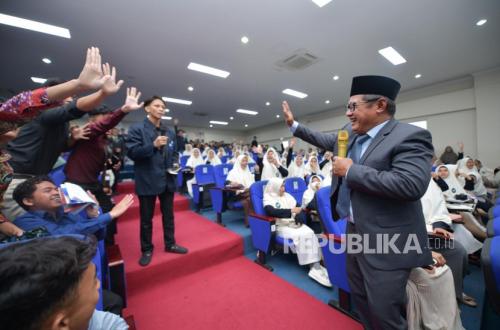
The 100-year journey of Pondok Modern Darussalam Gontor (1926-2026) is not merely a marker of an educational institution’s age. A century is proof that an education system can transcend the changing times without losing its identity. Gontor was not born as a museum of tradition, but as a laboratory of civilisation that continually tests, improves, and produces educational innovation. Therefore, the commemoration of Gontor’s centenary should not stop at gratitude for history, but must become a momentum to re-evaluate the future of pesantren. The founders of Gontor built the pesantren with intellectual courage. They read the needs of their era, then formulated a different educational system. It is this courage that must be inherited, not merely its physical form or ceremonial traditions.
The ‘Panca Jiwa’—sincerity, simplicity, self-reliance, Islamic brotherhood, and freedom—are the five spirits that have animated Gontor for a century. These values, widely communicated by K.H. Imam Zarkasyi during the All-Indonesia Pesantren Seminar in Yogyakarta in July 1965, are now not only popular at Gontor but have been institutionalised in national pesantren regulations, as seen in the elucidation of Law No. 18 of 2019 on Pesantren. These five values are not a finished legacy, but rather an energy that must be continuously translated into the context of the times. Similarly, the motto of Pondok Modern Darussalam Gontor—noble character, healthy body, broad knowledge, and free thinking—remains relevant, even surpassing the four pillars of education later formulated by UNESCO in 1986: Learning to Know, Learning to Do, Learning to Live Together, and Learning to Be. The combination of the Panca Jiwa and the pesantren’s motto is relevant because both were born from Indonesian soil, predating the UNESCO concept, and are capable of integrating intellectual, moral, social, and spiritual dimensions holistically. These values form an unchanging identity, while the methods of delivering them must continue to evolve.
Since its inception, Pondok Modern Gontor has been a byword for educational innovation in pesantren, particularly in its learning methodology and the integration of a curriculum covering both Islamic religious sciences and general sciences. Gontor boldly declared its curriculum to be 100 per cent religious and 100 per cent general. More prominently, in language teaching, Gontor made Arabic and English compulsory subjects, with methodological innovations that were ahead of their time. Although the direct method (ṭarīqah mubāsyarah) is used, Gontor goes further by creating an environment that supports language acquisition. In current terms, Gontor does not merely teach a language but invites all its members to immerse themselves in a linguistic life, now known as an immersive language programme or barnāmij inghimās lugawī. Gontor’s strength has always been in its methodology. The philosophy of ‘aṭ-ṭarīqah ahammu minal māddah, al-mudarris ahammu min aṭ-ṭarīqah, wa rūḥ al-mudarris ahammu minal mudarris’ (the method is more important than the material, the teacher is more important than the method, and the spirit of the teacher is more important than the teacher) shows that education is not just about material, but about the method, the educator, and the spirit that drives them. Now, the challenge of the second century requires pesantren to step further, ensuring that the entire educational process truly results in student success. This means that material, method, teacher, and the teacher’s spirit must all be oriented towards the success of the santri in achieving their education at the pesantren. To reinforce this educational philosophy, one might add, ‘Helping students succeed in their education is more important than anything else.’ The orientation is to ensure students receive assistance through various coaching, care, and activities built on the spirit of student achievement in realising their educational goals at the pesantren. Thus, the spirit of innovation, as reflected in ‘Al-muḥāfaẓatu ‘alā al-qiyami wat-tagayyuru ilā al-kamāl’ (preserving existing values and perfecting them), which illustrates the innovative spirit of the second generation, becomes a reality.