
Transforming the Nusantara heritage into the strength of Golden Indonesia 2045
Positioning Indonesia proportionally within human history is enough to dispel the assumption that we are merely recipients of influence and spectators of the world’s journey.
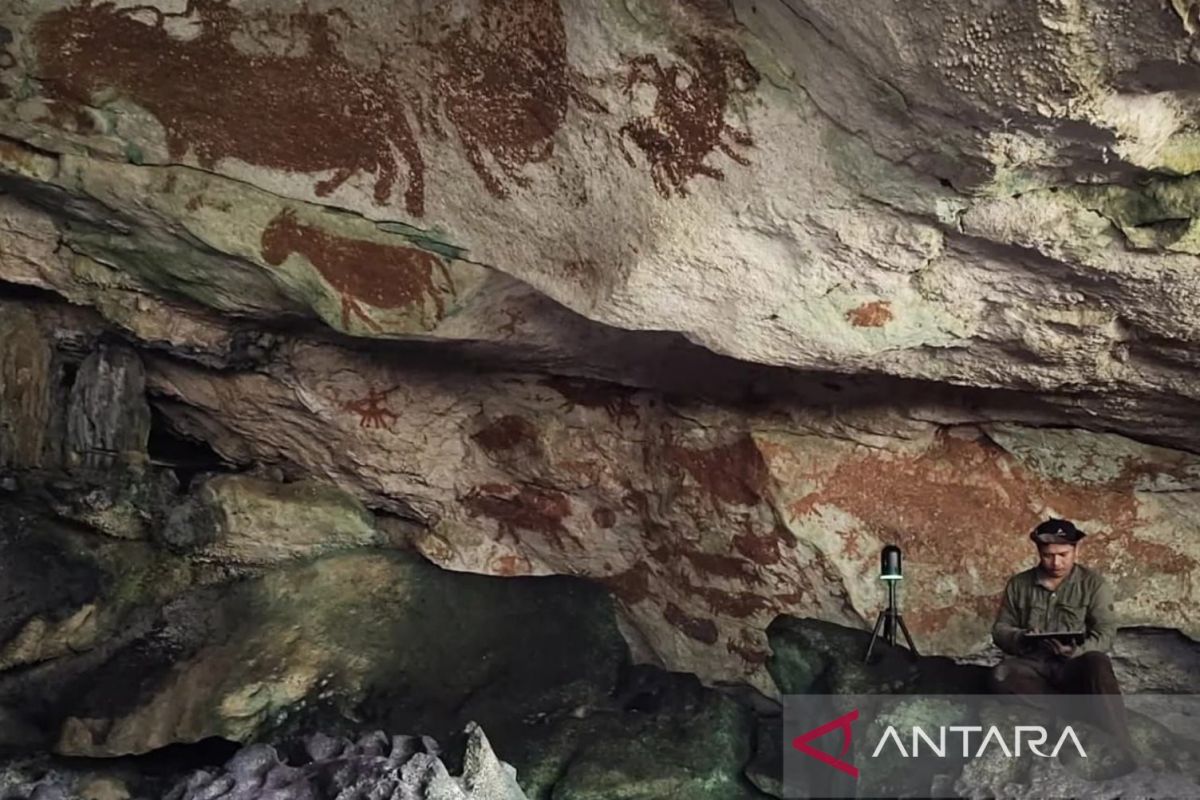
In a cave on Muna Island, Southeast Sulawesi, handprints on the rock walls have endured across the ages. Their owners left no names or stories. Yet the pigment surrounding their fingers is at least 67,800 years old.
At Leang Karampuang, South Sulawesi, humans later drew human-like figures interacting with a pig. The scene, at least 51,200 years old, is the oldest known example of representational art in the form of a story.
All of this is evidence that long before writing was born, humans in the region that is now Indonesia had already sought to leave marks and convey experiences to one another.
Every 17 August, other hands raise the Red and White flag in front of houses, schools, offices and public spaces. We celebrate the political independence that was fought for with blood and sacrifice.
However, independence also demands the courage to read Indonesia from a perspective that does not diminish itself, without abandoning scholarly discipline and openness to evidence. The history of human migration, maritime exchange and cultural encounter is incomplete if the Indonesian archipelago continues to be placed at the periphery.
Fossil teeth from Lida Ajer Cave, West Sumatra, show the presence of Homo sapiens around 73,000–63,000 years ago. The find demonstrates how long modern humans have been present in this region.
Depth of time is not, of course, in itself proof of cities, kingdoms or advanced civilisations. It is the first layer of a long journey that later gave rise to culture, exchange networks, languages and political institutions in the Nusantara.
They did not yet know Indonesia and cannot simply be called Indonesians. Some may not even be direct ancestors of today’s Indonesian population.
Yet their traces lie within the historical landscape that is now the territory of the Republic of Indonesia. We are not the owners of their past, but rather the guardians of knowledge and the inheritors of the responsibility to study, care for and introduce it to the world.
Around 20,000 years ago, the map of this region did not yet resemble present-day Indonesia. When sea levels were much lower, Sumatra, Java, Borneo, Bali and the Malay Peninsula were connected in a vast landmass known as Sundaland.
After the ice age ended, sea levels rose by about 122 metres. More than half of that landmass was submerged, populations became separated, and demographic pressure helped drive human migration.
Source: jawawa.id (https://jawawa.id/newsitem/transforming-the-nusantara-heritage-into-the-strength-of-golden-indonesia-2045-1787137068)
Originally published by Antara (Indonesian) (https://www.antaranews.com/berita/5701756/mengubah-warisan-nusantara-jadi-kekuatan-indonesia-emas-2045), translated from Indonesian