
Transforming the Lives of Remote Communities Through Bridges
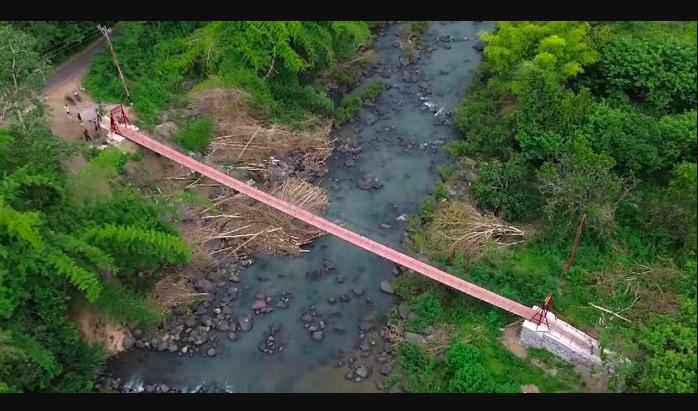
For many young people, the twenties are a time to build a career, enjoy city life, or chase personal dreams. But for Wafiq Zuhair, born in Lumajang, he has not yet reached 30, yet has already built 11 bridges in Indonesia’s remote corners, from the forests of Aceh to villages barely touched by development. The journey did not start with a grand plan. Wafiq is a psychology graduate who applied for jobs everywhere but none came to fruition. At that point he chose a route completely different from anything he imagined: founding a foundation and going directly to the remote corners of the archipelago. All began from a friend’s story that in a remote village, children had to swim across a river every day just to reach school. ‘They told us that there are children who have to swim through the river to go to school. Every day. Because the school is on the other side. When the river current is strong, they have to suspend classes,’ Wafiq said when reached by phone on Tuesday (19/5). That image struck Wafiq hard. In an age of convenience, apparently there are still children who risk their safety just to obtain the most basic right: education. ‘We can imagine, every day how many people are affected. The teachers cannot always be present at school,’ he said. From this concern, Yayasan Sahabat Pedalaman was born, five years ago. Without a background as an official or a child of a wealthy family, Wafiq began something he himself admits was almost impossible. ‘For me, building a bridge is something almost impossible. I’m not a bureaucrat, not the child of rich people, not living a life of privilege. How can you build a bridge that costs hundreds of millions? It feels almost impossible,’ he wrote. Yet he believed in a quote from Sutan Syahrir that he holds dear: a life not risked will never be won. Bridge after bridge rose. It was not only about infrastructure but about opening access that had long been neglected by those living in the city centre. In Simpang Jernih Village, Aceh Tamiang, for instance, residents once had to contend with mud for more than a month after floods, while clean water was almost non-existent. The Sahabat Pedalaman team came with boreholes, offering a glimmer of hope amid the mud. ‘We are not superheroes who can fix everything. But at least, we hope these small acts of kindness can give hope to them,’ he said. Wafiq’s philosophy is simple yet firm: every resident, whether in a remote area or in the city, has the right to equal access. The farther a village is, the softer its voice is heard. So for Wafiq, a bridge is not just a physical structure; it is a way to ensure those soft voices are not entirely lost. Five years is not a short time to build something from scratch, especially in areas where even mobile phone signals do not reach. Yet for Wafiq, the winding path made the journey meaningful. Eleven bridges have been built. And he does not plan to stop. ‘Five years building Sahabat Pedalaman with a great team is a winding yet beautiful journey, a journey full of challenges and full of wonder. Dream big, my friend,’ he wrote on his private Instagram. (Ata/P-3) Residents of Dusun Ciharashas and Dusun Cijambe, Desa Caringin, can enjoy safer and more dignified access after the opening of Jembatan Amanah. Students in the area previously had to cross water pipes to get to school because the bridge they were used to crossing collapsed and had not been rebuilt. Ground breaking Jembatan Garuda Tahap IV in Sorong Barat officially began. This strategic project aims to improve connectivity and the economy of West Papua. Bekasi Regency, with its vast area, still requires many bridging projects. Hundreds of bridges have been built to help communities in disaster-affected areas and regions in need of connecting access. To anticipate further impacts from extreme weather, the provincial government has carried out Weather Modification Operations on 18-21 February at Silangit Airport and Kualanamu Airport. TNI personnel continued building Jembatan Aramco linking Jorong Nagari with Jorong Batung Panjang, Nagari Sungai Batang, Kabupaten Agam, West Sumatra. The government has chosen to rush permanent bridge construction in Aceh even though the disaster response status has yet to be fully lifted. Until now, the access cannot be used, so residents have built temporary bamboo bridges for pedestrians and motorbikes. This initiative forms part of the company’s commitment to delivering positive social impact through its corporate social responsibility (CSR) programme.