
Transforming Subsidies into an Engine for Indonesia's Energy Industry Growth
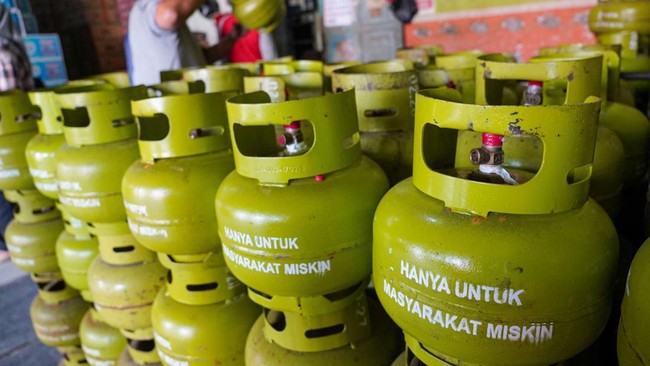
For decades, Indonesia’s energy policy has been viewed through a single primary question: how to keep energy prices affordable for the public and businesses. This is a valid and vital question, as energy is a fundamental necessity for the economy. Electricity powers households and industries, while fuel drives logistics, trade, transport, and productive societal activities. Without controlled energy prices, purchasing power can be suppressed and production costs can rise. Consequently, energy subsidies have historically played a crucial role as a social and economic buffer.
However, today’s energy challenges are far more complex. Indonesia needs to do more than just maintain affordability; it must also build supply resilience, strengthen industrial competitiveness, lower emissions, reduce import dependency, and prepare the foundations for a low-carbon economy. In this new landscape, the question is no longer merely whether subsidies are still needed, but how to find a new balance between today’s social protection and energy investment for the future.
Subsidies still have a place, particularly in protecting vulnerable communities. However, part of the energy fiscal space should begin to be directed towards more productive spending. If the state continues to act solely as a price stabilizer, energy policy will always remain reactive. The state intervenes when prices rise, supply is disrupted, or public purchasing power needs protection. While this pattern is necessary in certain situations, it is insufficient for building a resilient long-term energy system.
Indonesia needs to go further. The state must act as a strategic investor, preparing the infrastructure, technology, industry, and human resources necessary for the national energy system to face change. In other words, the grand agenda is not simply to reduce subsidies, but to restructure part of the energy expenditure to transform it into future investment. Targeted subsidies must be maintained, but unproductive spending should be redirected to build a more reliable, clean, and competitive energy foundation.
This shift in perspective is vital because energy should not be viewed merely as a fiscal burden; energy is an engine of development. Every rupiah invested in the power grid, renewable energy, energy storage, low-emission transport, local component industries, technological research, and workforce training can yield long-term economic benefits. Such investments not only mitigate supply risks but also create jobs, strengthen industries, and enhance national competitiveness. The next question is: where should these future investments be directed?
The first priority is the power grid. An energy transition will not succeed through the construction of new power plants alone. Renewable energy requires a grid capable of accommodating supply from various sources, locations, and production patterns. Solar and wind energy have different characteristics compared to conventional plants because their production depends on weather, time, and natural conditions. Therefore, the national electricity system requires a more flexible, digital, and adaptive grid. Investment in transmission, distribution, smart grids, and energy storage systems is critical. Without this, clean energy might grow on paper but stall in practice. Power plants may be built, but the electricity may be difficult to absorb. Investors may be interested but hesitant due to limited grid capacity. Regions may have great energy potential, but it is not necessarily connected to centres of demand. This is where public financing must play a strategic role—not just as a gap-filler, but as a catalyst for private investment.
The second priority is building a domestic supporting industry for clean energy. Indonesia must not merely become a market for imported solar panels, batteries, wind turbines, inverters, cables, and various green technologies. If the energy transition only results in us purchasing technology from abroad, the economic benefits will be limited. We might achieve cleaner electricity, but we will lose the opportunity to create industrial added value, quality jobs, and technological mastery. Therefore, part of the energy fiscal space should be directed towards strengthening local manufacturing. State incentives should be provided to investments that bring technology transfer, utilise domestic suppliers, build research centres, train the Indonesian workforce, and deepen the national supply chain. With this approach, energy investment produces not just power plants, but also factories, jobs, knowledge, and industrial competitiveness. This is the true meaning of energy transition as an industrialisation strategy.
The third priority is human resource development. Every technological change alters skill requirements. Renewable energy demands solar panel technicians, smart grid operators, battery experts, energy data analysts, electrical system engineers, turbine maintenance workers, component manufacturing workers, and energy efficiency specialists. If Indonesia does not prepare its workforce from the outset, the opportunities of the green economy will be largely enjoyed by foreign technology and expertise. Clean energy vocational training must be part of the national energy policy. Public funds can be used to build training centres, strengthen polytechnic curricula, connect industry with educational institutions, and provide retraining for workers affected by changes in the energy structure. In this way, the energy transition is not just an agenda for large corporations, but also paves the way for social mobility.