
Transforming Pesantren: NU, the Ministry of Religious Affairs, and Civilisation
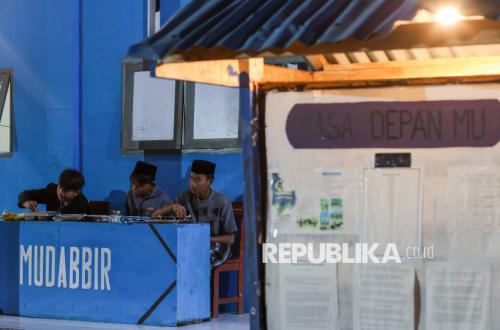
There is one sentence that almost always appears whenever people talk about Nahdlatul Ulama: ‘NU is a big pesantren, and a pesantren is a small NU.’ The saying, usually attributed to KH Muchith Muzadi, is indeed true in history. NU was founded in 1926 by pesantren kiai, and for decades the two were almost inseparable. The problem is that the sentence is now more often used to explain the current situation than to recall its origins. The situation itself has changed so much that the sentence no longer describes it accurately.
NU today is no longer a big version of a pondok. It has transformed into a civil society organisation whose networks span continents. It is driven not only by kiai and santri in villages, but also by lecturers, doctors, lawyers, office workers, and diaspora who hold religious study circles from Cairo to Melbourne. Managing such a vast organisation with a pesantren instinct is clearly no longer sufficient. A pesantren may centre on a single kiai whose command is nearly absolute; NU cannot be like that. When its leadership remains too personal and paternalistic, what emerges is not authority but stagnation.
The old way of thinking is also unfair to pesantren. The assumption that every pondok is a ‘small NU’ ignores what is easily seen by anyone who has travelled around: the world of pesantren is not uniform. The Ministry of Religious Affairs records more than 42,000 pesantren, and not all of them recite tahlil or perform qunut. There are Muhammadiyah pondok, Persis-owned ones, modern boarding schools that teach coding alongside nahwu, and others of a Salafi character that actively criticise NU practices. Equating them all simply because they share the label ‘pesantren’ will produce bias, especially if such thinking influences policy formulation.
It must be emphasised: what is unsuitable for NU is not the pesantren itself, but the habit of centralising everything on one person. As a source of knowledge, pesantren should be repositioned as it is: an independent institution. In bahtsul masail forums, centuries-old books are confronted with the most contemporary issues, from the law of cryptocurrency to AI. There, tradition is tested, not merely inherited. And in an era when religious lectures can go viral from anyone’s rented room and are then determined by algorithms, such capacity for discernment is becoming rarer and more needed. Pesantren is not a branch of any mass organisation. It is one of the main sources of our Islamic scholarship, a tradition far older than this republic and one that survives through an unbroken chain of knowledge transmission from teacher to student.
Supporting it, therefore, is not merely managing an educational institution, but nurturing one of the oldest civilisations of knowledge we possess.
NU has a different task. It brings the results of pesantren studies beyond the pondok environment: to courtrooms, to cultural forums, and to diplomatic forums. Without NU, pesantren scholarship risks remaining a local affair that operates in isolation. Without pesantren, NU loses its scholarly foundation, and its movement in the public sphere easily turns into empty rhetoric.
The Ministry of Religious Affairs and the Infrastructure of Civilisation
Cultural strength, however great, still requires material support to survive. Pesantren need buildings, teacher salaries, permits, and budgets—boring things that are nonetheless decisive. This is where the state’s role enters, not as a complement but as the determinant of whether all of this can endure. So far, pesantren have been treated half-heartedly. They are required to meet standards like state schools but are supported far less. Many pondok are established and survive on student fees, alms, and waqf; not a few kiai bear the costs of buildings and ustadz salaries from their own pockets. While madrasah receive operational assistance funds, pure pesantren and diniyah education often receive only much smaller assistance.
Source: jawawa.id (https://jawawa.id/newsitem/transforming-pesantren-nu-the-ministry-of-religious-affairs-and-civilisation-1787381464)
Originally published by Republika (https://analisis.republika.co.id/berita/tk5k03451/mentransformasi-pesantren-nu-kemenag-dan-peradaban), translated from Indonesian