
Transforming language learning: Seven language skills
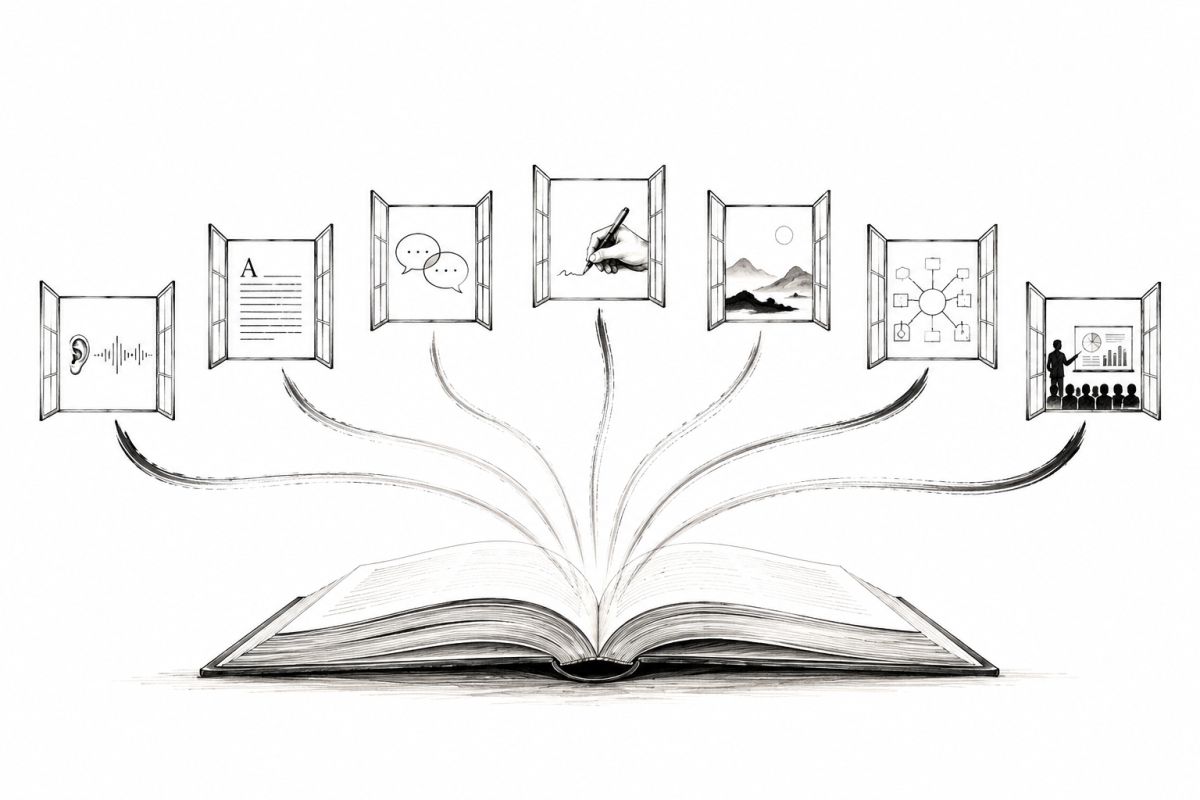
Every era gives birth to a new paradigm in education. When society changes, the way humans learn and communicate also changes. Education that fails to keep pace with such changes will gradually lose its relevance.
In language education, the greatest revolution of the 20th century occurred when the world abandoned the structural approach centred on grammar in favour of communicative language teaching (CLT).
Since the 1970s, the goal of language learning has no longer been merely to master linguistic rules, but to use language for real communication. From this emerged the paradigm of four language skills: listening, speaking, reading, and writing.
These four paradigms have endured for nearly 50 years. They have shaped curricula, textbooks, teacher education, assessment, and even the way society understands literacy. However, a fundamental question arises: are these four skills still sufficient to explain how humans communicate in the digital and artificial intelligence era? The answer is becoming increasingly clear: not yet.
Human communication has changed fundamentally. We no longer only read books or listen to lectures. Every day we comprehend infographics, interpret short videos, read data visualisations, interact through social media, attend webinars, create digital content, and even converse with AI systems.
Therefore, language education requires a new paradigm leap, namely seven language skills: listening, reading, speaking, writing, viewing, representing, and presenting.
The addition of these three skills is not a cosmetic addition, but rather an expansion of the meaning of literacy.
Viewing is the ability to understand, interpret, evaluate, and critique messages conveyed through visual and multimodal media. In the 21st century, reading infographics, data dashboards, digital maps, documentary films, or interactive simulations is as important as reading articles or books.