
Transforming health and life sciences through AI agents
Jakarta (ANTARA) - The world is now entering a new era of healthcare services through advancements in artificial intelligence (AI).
Artificial intelligence has evolved from a simple analytical tool into a driving force for medical innovation. This transformation is reshaping the way research is conducted and how drugs are discovered in laboratories.
The emergence of Generative AI is creating a different reality for the healthcare industry. This technology has evolved from merely a popular term into a business necessity.
Generative AI, or generative artificial intelligence, refers to the use of AI to create new content, such as text, images, music, audio, and video.
Generative AI is powered by large AI models capable of performing multiple tasks simultaneously and ready-to-use functions, including summarisation, question-answering, classification, and more. Additionally, with minimal training, base models can be adapted for specific use cases using very few example data points.
Operating on machine learning models, Generative AI is able to alleviate many administrative burdens that have long hindered global health systems. This includes finding the right information in voluminous medical records. Furthermore, AI assists in compiling medical documents and identifying clinical trial candidates.
Currently, organisations are moving towards the use of more integrated AI platforms. Advancements such as AI agents and AI-based search are driving new opportunities for healthcare transformation. This signals a strategic shift from limited experiments to tangible business solutions.
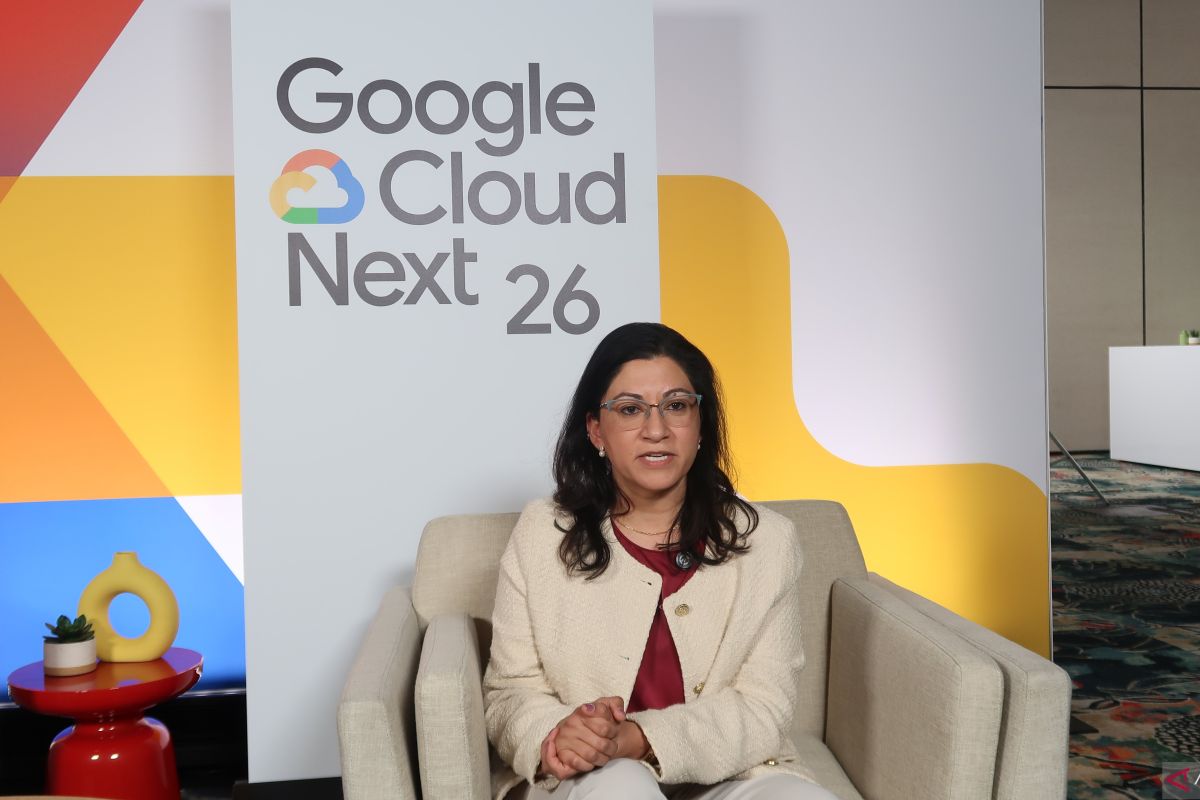
Shweta Maniar, Global Director of Life Sciences Strategy and Solutions at Google Cloud, spoke to ANTARA in Las Vegas, Nevada, United States, explaining that previously many organisations were stuck in the “Checkbox AI” phenomenon.
At that stage, pharmaceutical organisations were only experimenting with AI in a siloed or compartmentalised manner. This resulted in very limited and suboptimal experimental outcomes.
Now, there is a transition to the use of advanced technology known as “Agent AI”. Unlike previous models, AI Agents are designed to perform various tasks autonomously. This technology works by mimicking human cognitive abilities.
In the life sciences world, AI agents are now beginning to take on various important roles. These roles range from scheduling patient appointments to analysing medical images. Researchers continue to explore the use of AI agents for various future medical needs.
These AI Agents enable far more multimodal autonomous orchestration. They are able to derive greater value from pharmaceutical information and life sciences data. This helps companies gain deeper insights compared to using isolated analytical methods.
Implementation
Maniar provided a real-world example of the presence of AI agents, which are now becoming vital instruments in empowering patients. From a healthcare services perspective, this technology transforms health information into something far more meaningful, allowing each individual to have full control over their own medical data.
With these capabilities, patients can deeply understand the entire medical processes they undergo, from activities in hospital systems to handling in clinics.
Furthermore, AI enables patients to ask the right questions about their medical records, simplifies appointment management, and more effectively maps out ongoing care plans.