
Transforming Bali Cattle Waste into Economically Valuable Organic Fertiliser
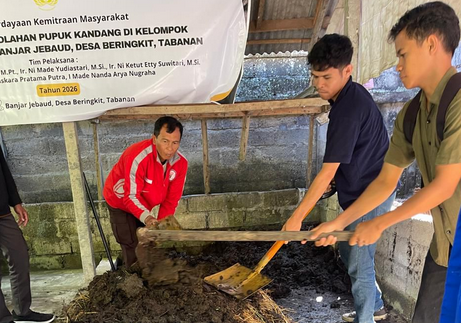
Bali’s small-scale cattle farming sector is entering a new phase. Traditionally, small-scale traditional husbandry systems often left environmental issues due to manure accumulation. However, through appropriate technology, waste that once caused unpleasant odours is now transformed into high-quality solid organic fertiliser with economic potential.
The initiative is driven by academics from Universitas Warmadewa through the Community Partnership Empowerment (PKM) programme in Banjar Jebaud, Beringkit Village, Marga Subdistrict, Tabanan Regency. The focus is to change farmers’ mindset to manage waste independently and sustainably.
Data shows the significant potential of livestock waste in the area. According to Nyoman Pande Aryanti, PKM head from the Faculty of Agriculture, Science, and Technology at Universitas Warmadewa, each Bali cow produces 8 to 10 kilograms of manure daily, amounting to 2.6 to 3.6 tonnes annually per animal.
With Tabanan Regency’s cattle population exceeding 26,000, unprocessed waste accumulation poses risks. Aryanti stated in Denpasar on Monday (1/6): “If properly fermented, annual manure from one cow can be converted into 1.5 to 2 tonnes of saleable organic fertiliser.”
Through technical training provided to the Wahyu Kesiti Farmers’ Group, farmers are now applying aerobic fermentation methods. The processing follows SNI 7763:2018 standards for solid organic fertiliser to ensure market competitiveness.
Some key fermentation success indicators taught to farmers include: Wayan Suardika, chairman of the Wahyu Kesiti Livestock Group, stated that the technology is easy to implement as it uses abundant raw materials around the pen. With 21 farmer members, the group aims not only to meet their own agricultural fertiliser needs but also create new income through packaged fertiliser sales.
This step is crucial in supporting organic farming in Beringkit Village while reducing farmers’ dependence on chemical (inorganic) fertilisers. This transformation proves that with education and technology, livestock waste is no longer a burden but a valuable asset in Bali’s green economy ecosystem.
- How long does cow manure fermentation take?
With bioactivator assistance, decomposition typically takes 3 to 4 weeks depending on environmental conditions and moisture.
- What are the main advantages of organic fertiliser over chemical?
Organic fertiliser improves soil structure, enhances water absorption, and provides long-term nutrients without damaging the soil ecosystem.
- Why must it comply with SNI 7763:2018?
This standard ensures the fertiliser is safe from harmful pathogens, has appropriate moisture levels, and meets minimum nutrient requirements for plant growth.