
Transformation of the Forestry Economy
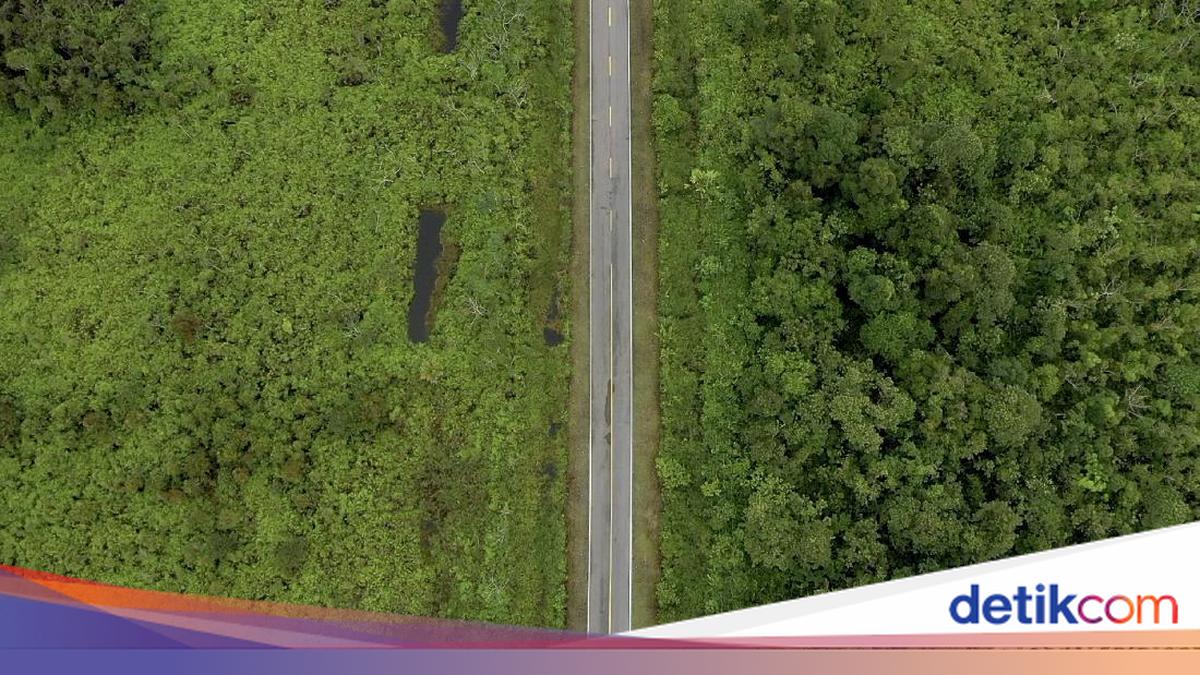
Indonesia possesses a forest area of approximately 125.5 million hectares, comprising production forests, protected forests, and conservation areas. These forests are not merely ecological spaces but serve as a social, economic, and fiscal foundation supporting millions of citizens and strategic national interests. The nation’s forests are managed by 579 holders of Forest Utilisation Business Permits (PBPH) covering 30.2 million hectares, 11,236 community groups under social forestry agreements covering 8.4 million hectares, and 573 conservation areas spanning 27.4 million hectares. These three management regimes represent the corporate, community, and state spectrums.
The economic value of forest resources has traditionally relied on three main groups: timber products, non-timber forest products, and environmental services. Ministry of Forestry statistics for 2024 recorded that roundwood production from PBPH holders reached 54.73 million cubic metres, non-timber forest product production hit 870,409 tonnes, and the actual use of roundwood raw materials by large industries reached 66.31 million cubic metres. The export value of forest industry products also reached USD 12.59 billion in 2024. This data highlights the sector’s traditional strengths, with industries such as wood, pulp, paper, plywood, sawn timber, rattan, gum, bamboo, honey, and essential oils still providing economic value. However, Prayitno (2025) in his article ‘The Twilight of Indonesia’s Forestry Industry’ warns that the sector faces a turning point and must move beyond timber extraction towards a broader, high-value, and sustainable ecosystem services economy.
Environmental services from the forestry sector include water utilisation, geothermal energy, ecotourism, biodiversity, and carbon services. The Ministry of Forestry noted that environmental service utilisation activities in conservation areas absorbed 8,661 workers in 2024, indicating an economic foothold, though the value remains far below its potential. Carbon services, in particular, open a new horizon for the forestry economy. The government has issued Presidential Regulation No. 110 of 2025, followed by Minister of Forestry Regulation No. 6 of 2026 and Minister of Environment Regulation No. 10 of 2026, officially resuming carbon trading after a five-year regulatory restriction. The forestry sector is Indonesia’s largest source of carbon credits. Research by Novita et al. (2022) calculates Indonesia’s natural climate solutions potential at around 1.3 gigatonnes of CO₂e per year, originating from approximately 26 million hectares of mineral soil forests, peat hydrological areas, and mangrove landscapes. This confirms that Indonesia’s forests not only produce timber but also hold global climate value that can be converted into legitimate revenue if the country develops credible carbon projects.
Global carbon credit prices are not determined by technical figures alone. The market assesses methodology quality, additionality, permanence, leakage risk, social safeguards, and project developer reputation. MSCI Carbon Markets (2021) predicted carbon credit prices could range from USD 20 to USD 50 per tonne of CO₂e by 2030, averaging USD 35, and rise to USD 50 per tonne by 2040 due to high demand. The World Bank (2025) explains that price differences signal that the market values integrity, not just certificates. A moderate scenario at a price of USD 35 per tonne of CO₂e by 2030 presents a significant economic picture. The potential 1,301 million tonnes of CO₂e from the forestry sector could generate a gross value of approximately USD 46 billion, equivalent to IDR 774.6 trillion. This value could potentially increase the forestry sector’s contribution to GDP from an average of 0.7 percent in the 2010-2025 period to 3.4 percent by 2030. Similarly, the sector’s contribution to state revenue, which averaged only 0.24 percent during 2010-2025, could rise to 2.46 percent by 2030 if the state captures a fair share of the economic value from carbon.
This economic transformation requires a paradigmatic shift. PBPH holders, social forestry managers, conservation area managers, local governments, and industry players must begin to view forests as a portfolio of ecosystem services. The old paradigm placed timber as the primary product, whereas the new paradigm positions carbon, water, biodiversity, ecotourism, non-timber forest products, and cultural services as part of an interconnected economic landscape. Modern forest management theory supports this shift. The concept of sustainable forest management demands a balance between production, conservation, and social benefits. The ecosystem services approach values forests through provisioning, regulating, supporting, and cultural benefits. The nature-based solutions concept positions forests as natural infrastructure for climate mitigation, adaptation, water resilience, disaster risk reduction, and community welfare. The climate-smart forestry approach also requires forest managers to combine production, carbon sequestration, ecosystem resilience, and policy innovation. This shift does not mean abandoning the timber industry, which remains important due to Indonesia’s long experience, investment, workforce, and export markets. However, the timber industry must now stand alongside non-timber commodities and environmental services. PBPH holders can develop carbon project portfolios, peatland restoration, mangrove rehabilitation, ecotourism, and sustainable biomass energy. Social forestry groups can develop agroforestry, honey, bamboo, sugar palm, forest coffee, spices, water services, and community-based carbon projects. The state must regulate this transformation.
Source: jawawa.id (https://jawawa.id/newsitem/transformation-of-the-forestry-economy-1785822765)
Originally published by detikcom (https://news.detik.com/kolom/d-8603488/transformasi-ekonomi-kehutanan), translated from Indonesian