
Transboundary Haze Spreading, Indonesian Ministry of Foreign Affairs Explains Mandatory Reporting Mechanism to ASEAN
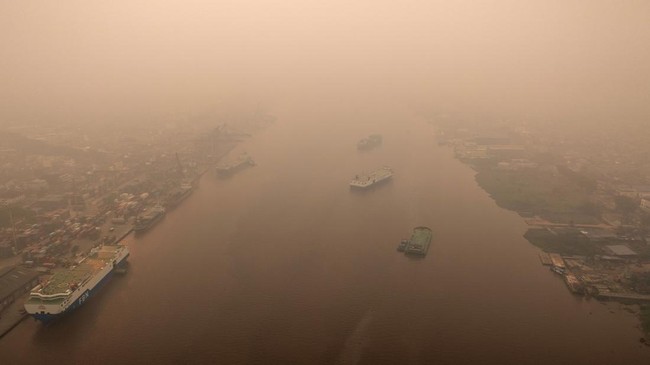
The Indonesian Ministry of Foreign Affairs (Kemlu RI) has responded to the increasing concern regarding forest and land fires (karhutla) and the spread of haze across several regions in Indonesia and Southeast Asia. Indonesia is currently under regional coordination after ASEAN established Alert Level 3 status on 26 August 2026.
Vahd Nabyl Achmad Mulachela, Spokesperson II for the Indonesian Ministry of Foreign Affairs, stated that the government continues to strengthen domestic forest fire control while maintaining communication with neighbouring countries.
“Indonesia always prioritises cooperation with neighbouring countries and maintains good bilateral relations, particularly in facing environmental issues that have transboundary impacts, such as haze,” he said, as reported on Saturday (5/9/2026).
According to Nabyl, Indonesia, along with other countries in the region, is also encouraging increased vigilance against dry weather caused by climate conditions. This step is being taken to anticipate the expansion of fires and the impact of transboundary smoke.
The management of haze is also being conducted through the mechanism of the ASEAN Agreement on Transboundary Haze Pollution (AATHP).
“The ASEAN mechanism based on the ASEAN Agreement on Transboundary Haze Pollution (AATHP) to handle the haze issue is already operational,” said Nabyl.
Through the Interim ASEAN Coordinating Centre for Transboundary Haze Pollution Control (ACC THPC), all ASEAN nations are required to submit a Situation Report (SITREP) daily. These reports include, among other things, haze trajectory maps, which are subsequently distributed to the National Focal Points of all ASEAN member states.
Indonesia ensures that these obligations continue to be met in accordance with the Monitoring, Assessment, and Joint Emergency Response (MAJER) procedures. “Indonesia always fulfils all daily reporting obligations and the mandatory actions for Alert Level 3,” said Nabyl.
In its daily reporting, Indonesia provides data on hotspots, environmental conditions, indications of smoke movement, and forest fire mitigation measures. The government also reports on national emergency responses, large-scale firefighting operations, and the intensification of cooperation between the government, private sector, and local communities to the ASEAN Secretariat, acting as the interim office of the ACC THPC.
Amidst the regional alert status, Indonesia also continues to push for the accelerated full operationalisation of the ASEAN Coordinating Centre for Transboundary Haze Pollution Control (ACCTHPC). This coordination centre is expected to strengthen the collective response of ASEAN nations in addressing transboundary haze issues.
Source: jawawa.id (https://jawawa.id/newsitem/transboundary-haze-spreading-indonesian-ministry-of-foreign-affairs-explains-mandatory-reporting-mechanism-to-1788587661)
Originally published by CNBC Indonesia (https://www.cnbcindonesia.com/news/20260905104919-4-765191/kabut-asap-nyebrang-kemlu-ri-jelaskan-mekanisme-wajib-lapor-ke-asean), translated from Indonesian