
Trans Sumatra Tollway Experiences 24 Per Cent Increase in Traffic During 2026 Lebaran Holiday Exodus
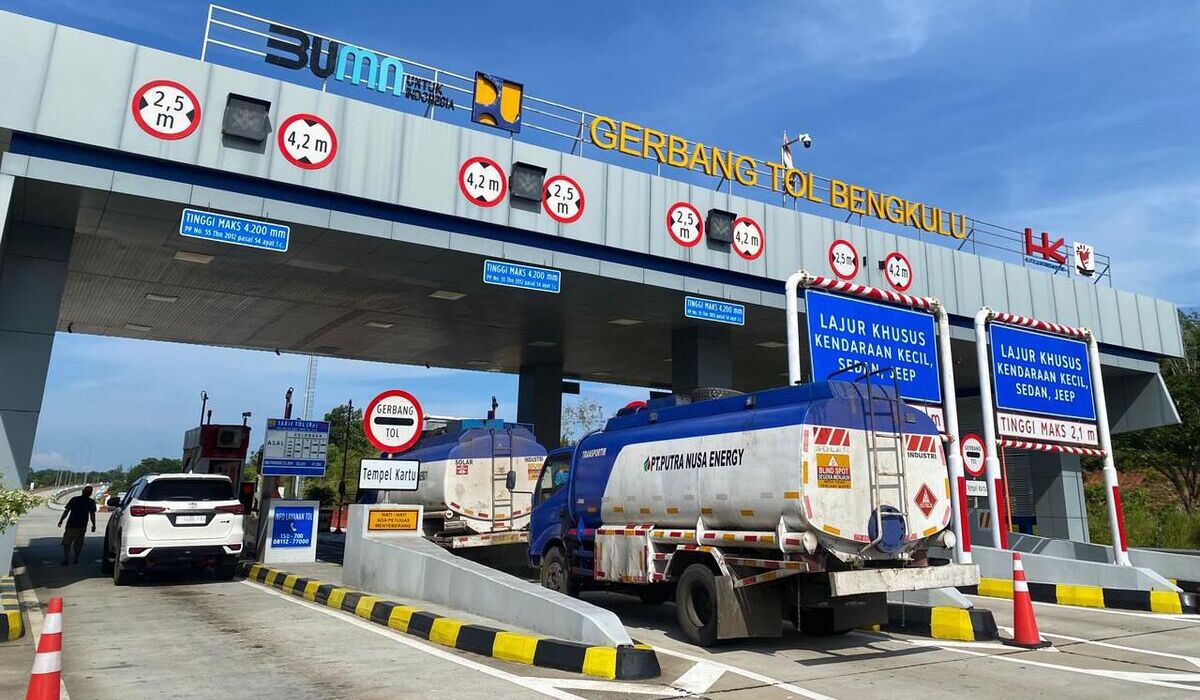
Traffic volumes on the Trans Sumatra Tollway (JTTS) continue to show a significant upward trend as the 2026 Lebaran holiday exodus intensifies. Until 15 March 2026, vehicle volumes remained high on several major stretches, particularly on inter-city corridors and access roads to urban areas.
This situation reflects growing public mobility as the peak exodus period approaches, reinforced by the implementation of the Work From Anywhere (WFA) policy on 16 March 2026.
Hamdani, Acting Executive Vice President and Company Secretary of PT Hutama Karya (Persero), revealed that cumulatively, total daily traffic on the operational toll stretches reached 134,402 vehicles. This figure represents an increase of 24.68 per cent compared to normal traffic levels.
“Monitoring is carried out continuously as part of Hutama Karya’s commitment to ensure tollway services remain safe, smooth, and comfortable for all road users,” Hamdani stated in an official statement on Monday (16 March).
Based on daily recapitulation data for the period of 15 March 2026, traffic is being recorded across various JTTS stretches. In addition to operational sections, Hutama Karya also recorded traffic on functional toll routes. The Sigli-Banda Aceh Toll (Section 1) recorded 3,741 vehicles, whilst the Palembang-Betung Toll (Kramasan-Pangkalan Balai section) recorded 5,227 vehicles.
Hutama Karya appealed to all road users to plan their journeys carefully, particularly for those utilising the WFA period to undertake their Lebaran exodus earlier than usual. Several important points for drivers to note include proper journey planning and adherence to safety protocols.
The 2026 Lebaran exodus is predicted to occur in two major waves, driven by flexible working arrangements and collective leave policies. The Jakarta Transportation Department predicts the peak exodus period will occur on 17-18 March 2026, with terminals being prepared to anticipate surges in passenger numbers. Port authorities are also implementing rapid cargo handling procedures at key ports such as Ketapang to expedite vehicle loading and unloading operations, thereby reducing vehicle queues.