
Training and Advocacy in Policy Briefs Boost Capacity of Regional Policy Analysts
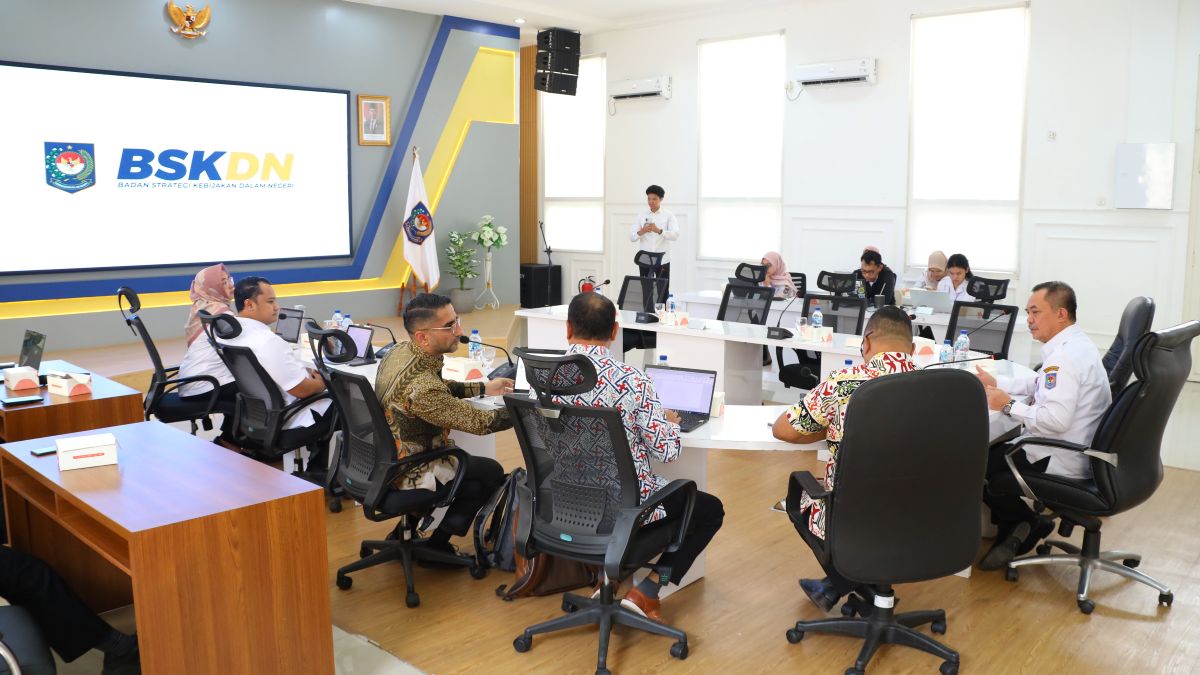
The Agency for Domestic Strategy (BSKDN) of the Ministry of Home Affairs (Kemendagri) and the Synergy and Collaboration for Accelerating Basic Services (SKALA) programme are strengthening collaboration to enhance the capacity of policy analysts and promote the use of evidence-based policy recommendations at both central and regional levels. This commitment emerged during a meeting between BSKDN Head Yusharto Huntoyungo and the SKALA team in Jakarta on Wednesday, 22 July 2026. The meeting evaluated the implementation of the 2024–2026 cooperation, including the impact of training and advocacy for policy brief writing on the policy formulation process in the regions.
In his presentation, SKALA Team Leader Petra Karetji explained that the cooperation aims to ensure that capacity building for policy analysts goes beyond producing documents. It also encompasses the ability to communicate, advocate for, and shepherd recommendations so they are utilised by decision-makers. “A policy brief is not just a written product. The most important thing is how the resulting recommendations can enter the planning process, regulatory drafting, budgeting, and improving the quality of public services,” Petra stated.
Petra noted that the results of the policy brief writing mentorship have already demonstrated an impact on regulations and the institutionalisation of the policy ecosystem in several regions, such as Aceh, West Nusa Tenggara, East Nusa Tenggara, Gorontalo, North Kalimantan, and the Papua region. At the national level, the outcomes have also supported the drafting of policies on functional position governance, the development of a policy hub as a forum for regional policy analysts, the strengthening of policy brief writing guidelines, and the use of policy briefs in performance assessment and regional innovation instruments.
“We are not taking over or changing government policy. SKALA’s role is to support and integrate processes, from data utilisation and analysis compilation to communicating recommendations and bringing various parties together so that the resulting policies are more inclusive and evidence-based,” Petra clarified. Meanwhile, BSKDN Head Yusharto Huntoyungo expressed appreciation for SKALA’s support in building the capacity of policy analysts. He stated that the collaboration aligns with BSKDN’s role in producing high-quality, implementable, and impactful domestic government policy strategy recommendations.
“We appreciate the cooperation that has been built with SKALA. The results are visible not only in the increased capacity of policy analysts but also in the utilisation of policy recommendations in the drafting of regulations and development planning in several regions,” Yusharto said. He asserted that policy quality is determined not only by analytical sharpness but also by the government’s ability to build communication, collaboration, and support from various stakeholders. “BSKDN supports the continuation of this cooperation, particularly in strengthening policy advocacy and institutionalising the policy analyst network. We want the policy briefs produced not to end as mere documents, but to be truly read, understood, and followed up by decision-makers,” he stressed.
As a follow-up, BSKDN and SKALA will carry out a series of joint agendas until October 2026. These activities include a policy dialogue on lessons learned from policy advocacy, a workshop on strengthening advocacy capacity for policy analysts, training on writing policy recommendations in South Papua, testing a training module for regional heads, and a training of trainers to support the establishment of policy hubs in the regions. Through this series of activities, BSKDN and SKALA hope to expand the evidence-based policy ecosystem while strengthening synergy among the government, universities, civil society organisations, the media, and research institutions. This collaboration is expected to produce policies that are increasingly responsive to the needs of the community, especially the poor and vulnerable, as well as those in underdeveloped regions.