
Train Driver Named Suspect, Police State KNKT Findings Used as Consideration
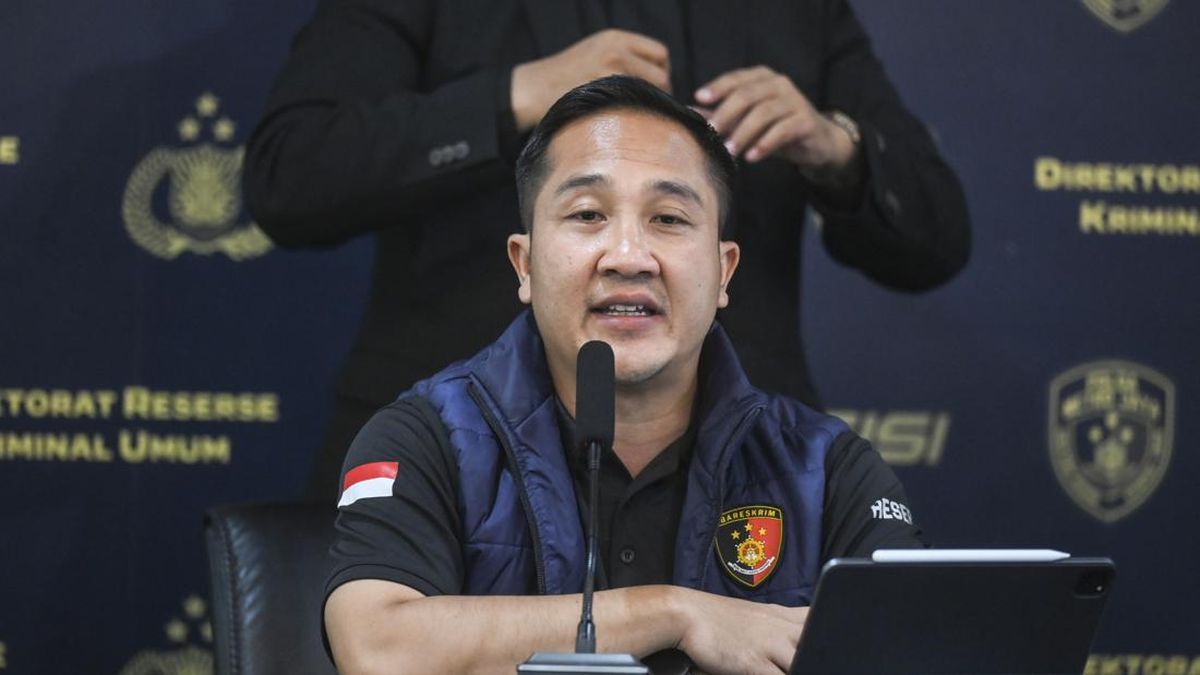
Police have stated that the investigation results from the National Transportation Safety Committee (KNKT) have been used as consideration in the investigation process of the accident between the Argo Bromo Anggrek train and the KRL Commuter Line at Bekasi Timur Station, West Java, last April.
In this case, on Tuesday (29/9), police announced the designation of the Argo Bromo Angkere train driver, identified by the initials AN, as a suspect. Previously, in the final investigation report released earlier this week, the KNKT identified six factors—mostly related to systems and the absence of standard operating procedures (SOP)—that contributed to the accident at Bekasi Timur Station.
“Regarding the activities we are conducting, they are certainly based on the evidence collected; the KNKT findings serve as input and part of the consideration in the investigation process we are conducting,” said the Deputy Director of Criminal Investigation, Metro Jaya Regional Police, AKBP I Dewa Anom Danujaya, at the Metro Jaya Regional Police Headquarters in Jakarta on Tuesday.
“It is also related to the examination of experts that we have conducted, so we can conclude in our investigation process that it is strongly suspected that AN is proven guilty as per the articles we previously stated,” he added.
Anom stated that the investigation of this case is being conducted using scientific crime investigation methods. He explained that investigators have examined 5ally 54 witnesses, analysed CCTV footage, and analysed data logger information. Furthermore, they analysed communication recordings between the train dispatcher (PKP) and the driver, and secured evidence and documents related to operational activities.
“As I mentioned, this analysis is based on the data logger analysis we obtained, which has also been strengthened by expert testimony, leading investigators to conclude the designation of AN as a suspect,” Anom emphasised.
“The KNKT also explained yesterday that while their data is relevant, it does not inherently determine the legal position of an individual as guilty, regardless of who it may be,” he continued.
The suspect faces charges under Articles 323 and/or 324 and/or 474 of the Criminal Code, as well as Articles 198 and/or 206 of Law No. 23 of 2007 concerning Railways, with a potential prison sentence of 5 to 12 years.
The accident involving the Argo Bromo Anggrek and the KRL Commuter Line at Bekasi Timur Station occurred on Monday (27/4) night. The incident was triggered by a Green SM taxi breaking down in the middle of a level crossing due to an electrical system failure. The vehicle was subsequently struck by a passing KRL train.
As a result of the first accident, one KRL set bound for Cikarang came to an emergency stop at Bekasi Timur Station. While in this stopped position, the KRL set was rear-ended by the Argo Brolmo Anggrek, causing the rear women’s carriage to be crushed and claiming dozens of lives.
Six KNKT Findings
In the final investigation report released earlier this week, the KNKT identified six contributing factors to the accident. The first factor involved the failure to identify hazard conditions in the signalling system between Bekasi and Bekasi Timur Stations. The KNKT noted that during the accident, the Argo Bromo Anggrek (Train 4B) passed directly through an exit signal with a green aspect, followed immediately by a red aspect.
“The driver of Train 4B did not receive a signal indicating a yellow aspect to inform them that the subsequent signal would be red,” the KNKT stated.
Secondly, communication issues during emergencies were a contributing factor. The KNKT stated that the KRL (Train 5181B) failed to make an emergency call, and there was an absence of specific terminology and structured information delivery regarding the emergency to the South Dispatcher (PPKP).
Thirdly, the KNKT noted a communication failure regarding Train 5568A. The delay of Train 5568A, caused by a crowd of people gathering after an electric car stalled at a level crossing, was not communicated to the South Dispatcher, as the South Dispatcher was already managing the incident at crossing JPL 86 via individual calls.
Fourthly, there was no mechanism for information sharing between the South and East Dispatchers. The East Dispatcher reportedly did not receive complete information regarding the situation, which resulted in a lack of information provided to the driver of Train 4B.
Fifthly, there was a failure to identify the aspect of the UB 104 auxiliary signal. “A combination of understanding the signalling behaviour, reduced visibility of the UB 104 auxiliary signal at night, and light scattering on the locomotive windshield reduced the effectiveness of the UB 104 signal in extending the visibility of the B104 Block Signal,” the KNKT explained.
Lastly, the KNKT reported the absence of emergency braking procedures at high speeds on curved tracks. According to the KNKT, the lack of tactical reference for emergency braking when a train is at high speed on a curve ultimately left the tactics dependent on the driver’s subjective judgement.
Source: jawawa.id (https://jawawa.id/newsitem/train-driver-named-suspect-police-state-knkt-findings-used-as-consideration-1790726227)
Originally published by CNN Indonesia (https://www.cnnindonesia.com/nasional/20260930035118-12-1409741/masinis-jadi-tersangka-polisi-sebut-temuan-knkt-jadi-pertimbangan), translated from Indonesian