
Traffic Education Programme in Batam Schools Cuts Student Violations by Up to 66%
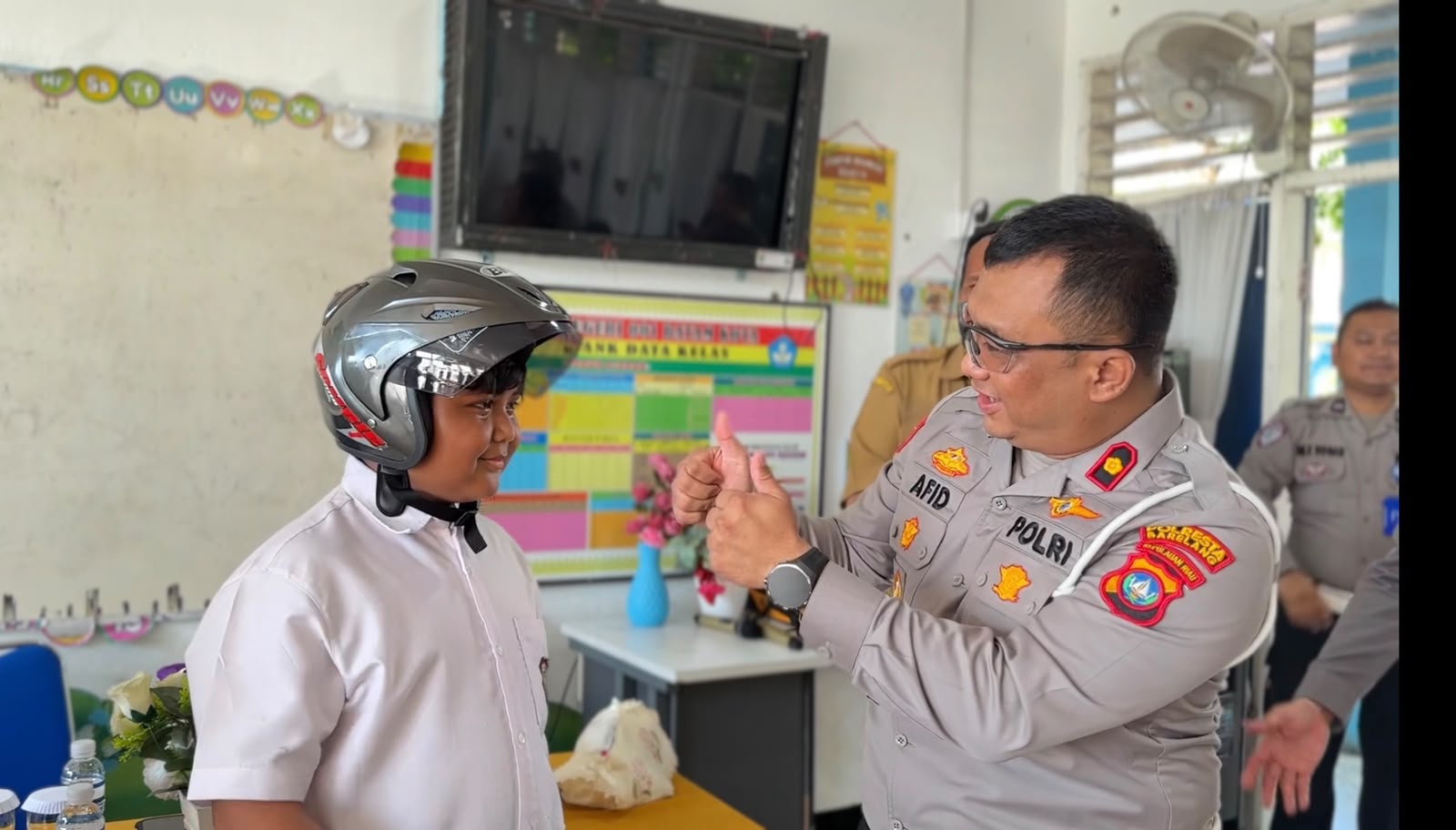
The implementation of traffic education in state schools across Batam City has begun to show positive results. The programme, initiated by the Traffic Unit (Satlantas) of the Barelang Police, has been deemed effective in raising traffic awareness while reducing the number of violations involving students.
The programme represents the implementation of character education aligned with the fourth point of the Asta Cita, which is to strengthen human resource development through quality education that is character-driven and oriented towards building a culture of discipline from an early age.
Head of the Barelang Police Traffic Unit, Kompol Afiditya Arief Wibowo, stated that traffic education is a strategic step to shape a generation that is law-abiding, prioritises safety, and cares for fellow road users. “Traffic education is not just about teaching driving rules, but also about shaping students’ character so they become accustomed to discipline, responsibility, and respect for their own safety and that of others,” he said on Tuesday (28/7).
The programme began with the signing of a memorandum of understanding between the Barelang Police Chief and the Mayor of Batam, which was then followed up through a work plan between the Barelang Traffic Unit and the Batam City Education Office regarding the implementation of traffic education in schools.
Traffic safety material has been integrated into the Pancasila and Citizenship Education (PPKn) subject for primary and junior secondary levels. Before its implementation in classrooms, the Traffic Unit first conducted a Training of Trainer (TOT) programme for PPKn teachers at state primary and junior secondary schools so that the material could be delivered effectively.
The programme was officially launched by the Kepulauan Riau Police Chief together with the Mayor of Batam on 17 December 2025 at the Harris Hotel Batam Centre. Implementation began at the start of the second semester of the 2025/2026 academic year, covering 210 state schools, consisting of 145 primary schools and 65 junior secondary schools in Batam City.
Evaluations after the programme was implemented showed a significant decrease in the number of traffic violations committed by students. At the primary school level, the number of violations dropped from 98 cases to 79 cases, a reduction of 19 percent. At the junior secondary level, violations fell from 1,386 cases to 462 cases, a decrease of approximately 66 percent. Meanwhile, at the senior secondary level, the number of violations was reduced from 2,307 cases to 1,157 cases, a decline of around 49 percent.
He assessed that these results prove that an educative and preventive approach is more effective in building a culture of orderly traffic compared to merely prioritising law enforcement. “This data shows that education plays an important role in changing behaviour. When children understand the meaning of safety and the importance of obeying rules from an early age, they will carry these habits into adulthood,” he said.
He explained that the curriculum was designed using a holistic education approach that combines three main aspects: Smart Mind, to build understanding of traffic rules and risks; Strong Body, to foster awareness of personal and others’ safety; and Noble Soul, to shape character with integrity, discipline, and care for others.
According to him, traffic education is part of character education that is expected to produce a young generation that is not only academically excellent but also possesses ethics, responsibility, and legal compliance. Looking ahead, the Barelang Police Traffic Unit hopes that traffic education can continue to be developed so that it becomes not only learning material in schools but also a culture that grows within families and communities. With increased traffic awareness from an early age, it is hoped that the number of accidents and violations involving students can continue to be reduced, supporting the realisation of quality human resources towards a Golden Indonesia 2045.