
Traders Hesitant to Sell SPHP Rice, Citing High Costs and Complicated Procedures
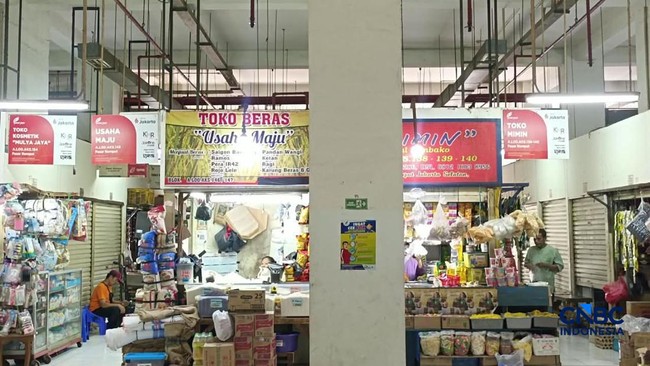
A number of rice traders at Pasar Rumput in South Jakarta say they do not sell rice under the Food Supply and Price Stabilisation (SPHP) programme run by state logistics company Perum Bulog. They cite several reasons, including what they regard as complicated purchasing requirements, the need for substantial capital and concerns about the quality of the rice supplied.
During a visit by CNBC Indonesia to Pasar Rumput on Friday (16 October 2026), traders said the SPHP sales mechanism needed to be improved to make it more accessible to small-scale retailers.
Bayu, a rice trader, said traders had to prepare considerable capital to buy SPHP rice. Purchasing in large quantities, he said, could impede cash turnover, particularly if the rice did not sell quickly.
“With SPHP, sales depend on whether people want to buy it. Yet we have to stock at least one tonne. Traders here need their money to keep circulating. If I use my money to buy SPHP, my capital can’t turn over,” Bayu told CNBC Indonesia.
Bayu added that the process of buying and selling SPHP rice was cumbersome. For example, customers wishing to buy it had to register their personal details through the Bulog app.
“The requirements are complicated. If someone wants to buy SPHP, they have to register their personal details on the Bulog app. We traders don’t want a hassle; if we have goods, we sell them. But under Bulog’s system, if I’m selling it, the buyer has to update their details with Bulog before I can serve them,” he said.
Bayu also criticised the pre-order (PO) system, which requires traders to order rice without first being able to inspect its quality. This could hinder sales if the rice delivered did not meet expectations, he said.
“Sometimes Bulog rice is sold on a pre-order basis. If I order one tonne, I can’t see the quality first. Once the goods arrive, whether they’re good or bad, I have to accept them,” Bayu said.
He said the quality of deliveries could vary. If the rice was poor, it was harder to sell, and traders could not return it.
“Sometimes it’s bad, sometimes it’s good. We can’t choose; it depends on what gets delivered. If it’s good, it’s easy to sell. But if the rice that arrives is poor, sales stall and it can’t be returned. That’s the dilemma for traders,” he said.
Another trader, Dedi, also said he did not sell SPHP rice because of the capital required and uncertainty about consumer demand.
“We don’t have SPHP. You have to buy a lot, while customers here may not necessarily be looking for that rice,” Dedi said.
Rena, another rice trader, said SPHP rice was difficult to sell because its packaging did not suit her shop’s sales model, which mainly involved selling loose rice.
“SPHP is hard to sell. It comes in five-kilogram sacks, whereas I mostly sell rice loose,” Rena said.
Traders call for clearer SPHP distribution
Although he does not sell SPHP rice, Bayu said the programme could still help the public. However, he urged the government and Bulog to clarify the purchasing process and widen retailers’ access to supplies.
“It does help to some extent with price intervention. But the rules for selling or buying from distributors for traders like me aren’t clear. At Bulog, you have to have a cooperative or a limited company to buy. The cooperative here doesn’t handle that kind of thing. So if I want to place an order, where do I order from?” Bayu said.
Bayu proposed making SPHP rice available at the Cipinang Rice Main Market (PIBC), so small-scale traders could obtain it more easily.
“Supply SPHP to the wholesale market. It can come in 50-kilogram or five-kilogram sacks; the important thing is to get it into the wholesale market first. At the moment, no stock is coming in there. Yet that could help curb rising rice prices,” he said.
Bayu said making SPHP distribution more accessible to traders could help contain rice-price volatility. He hoped purchases would not be restricted to traders with a registered business or cooperative, and that individual traders would also be able to buy under clear procedures.