
Trade Ministry's Export Coaching Programme Boosts Local Products to Global Markets
Here, Bank Jatim plays a major role because many business actors have taken part in the Export Coaching Programme.
Malang, East Java (ANTARA) — Deputy Minister of Trade Dyah Roro Esti Widya Putri stated that the Export Coaching Programme has created an impact by expanding marketing opportunities for local businesses, enabling them to penetrate international markets.
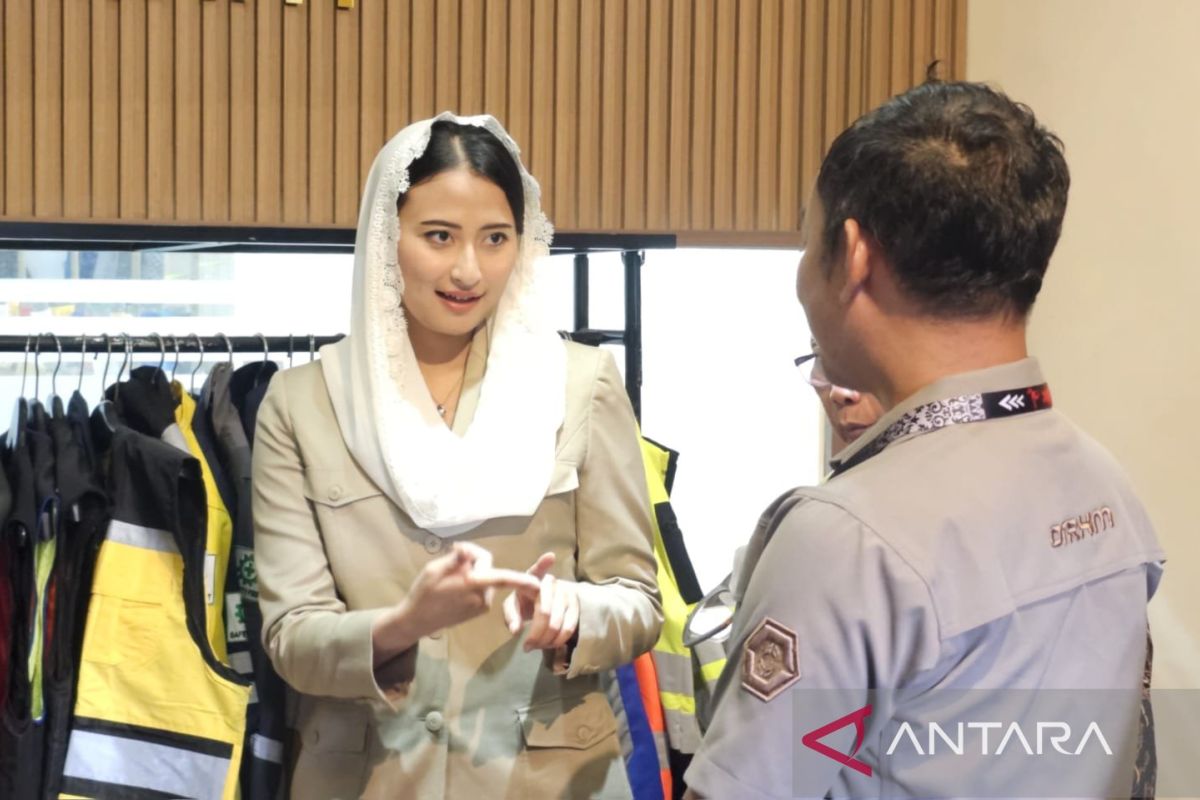
“We came to Malang City to review one of the businesses that we have trained through the Export Coaching Programme run by the Ministry of Trade’s PPEJP, namely Ayung Sportindo. Thank God it has been successful, as it has been able to increase export opportunities for its products,” said the Deputy Minister in Malang, East Java, on Friday.
The business, which produces occupational safety and health protective clothing, now exports to several countries, including Singapore, Malaysia, Thailand, the Philippines, Russia and Colombia.
Dyah Roro said the Export Coaching Programme is a concrete step and a form of state presence for business actors, particularly in enhancing the competitiveness of products from micro, small and medium enterprises (MSMEs) as well as small and medium enterprises (SMEs).
“Here, Bank Jatim plays a major role because many business actors have taken part in the Export Coaching Programme,” she said.
Through the programme, she said, each participant receives knowledge about the standards that must be met for export purposes. This process is a step to ensure products are competitive in international markets.
Participants are also equipped with knowledge about fulfilling administrative requirements, and are connected with Trade Attachés, Indonesia Trade Promotion Centres, and potential buyers from various countries.
“Looking at the overall export picture within the trade framework, we have maintained a surplus for more than five years, and on an annual basis, in 2024 trade recorded a surplus of US$31 billion, and in 2025, US$41 billion,” she said.
She expressed hope that more domestic products would be able to enter international markets so that Indonesia’s trade performance continues to move in a positive direction.
Meanwhile, the owner of Ayung Sportindo, Asrul Tesani, said the export programme has had a highly significant impact on the development of his business.
He said that in 2024 his business earned annual revenue of around Rp97 million, but after joining the programme in 2025, profits surged to more than Rp200 million.
“When I joined this programme, I didn’t just listen to the material — we practised directly how to find buyers, negotiate, onboard onto overseas platforms, right through to shipping, including knowledge about containers and the calculations involved. All of that was provided,” he said.
Not only that, he said he also gained knowledge on how to anticipate fraud or scams.
“For example, to check validity, there is a website profile listing importers — they are registered there, along with a list showing their annual import values. That’s why I say this programme is the most comprehensive,” he said.