
Trade Ministry Prepares Sanctions for Fortified Rice Violations
The Ministry of Trade has confirmed it will impose sanctions in accordance with the law if violations are found in the case of fortified rice that allegedly does not meet quality standards. However, the ministry is currently awaiting the results of coordination and verification with the Ministry of Agriculture before taking action.
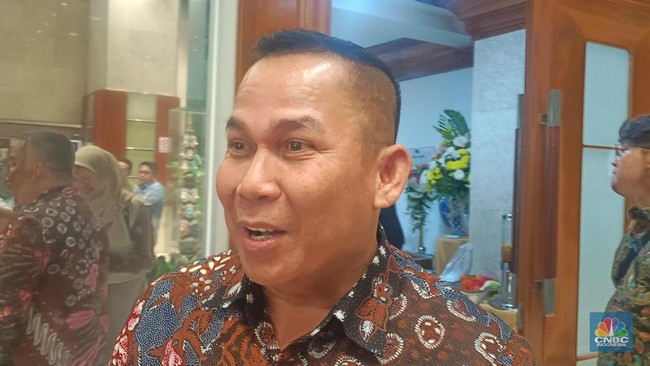
Director General of Consumer Protection and Trade Order Moga Simatupang stated that follow-up actions will be taken after the testing and examination process is complete. “Later, there will be sanctions according to the applicable laws and regulations if violations are found,” Moga told CNBC Indonesia on Tuesday.
Moga emphasised that the ministry has not yet taken enforcement steps as it is still waiting for the results of coordination with the Ministry of Agriculture. “So, I was in a meeting earlier. I asked the Director of Standardisation and Quality Control, Mr Sukoco, to coordinate with the Ministry of Agriculture first,” he said.
According to him, the coordination aims to verify the findings previously submitted by the National Food Agency (Bapanas), including checking product brands, nutritional content, and distribution locations. “Later, we will test the results, check what the brands are, what the contents are, and which stores they are in,” he said.
Moga noted that the process is still in its early stages, so no results can be shared with the public yet. “It’s just been coordinated. We just had the meeting,” he said.
Consequently, the Ministry of Trade cannot yet confirm the form of consumer protection to be provided, including the possibility of refunds if products are proven to be in violation. “We will see the test results later. We will see the test results first, then we will follow up. After all, the Minister of Agriculture just conveyed it in the media. So, I asked the Director of Standardisation and Quality Control to coordinate with the Ministry of Agriculture,” Moga said.
He also revealed that communication with the Ministry of Agriculture only began on Tuesday morning, so there is no basis for enforcement yet. “We just held a meeting this morning,” he said.
The fortified rice controversy arose after the National Food Agency found that the majority of supervised products did not meet quality requirements. The results of supervision in DKI Jakarta in June 2026 on 15 brands of fortified rice showed that only three brands met the requirements, while 12 other brands did not. These products were sold at prices ranging from Rp17,580 to Rp42,500 per kilogram.
Fortified rice is regulated under two standards, namely SNI 9314:2024 for fortified kernels and SNI 9372:2025 for fortified rice. In every 100 grams of product, fortified rice must contain vitamin B1 at a minimum of 0.25 milligrams, folic acid at 0.25-0.38 milligrams, vitamin B12 at 1.0-1.5 micrograms, iron at 3.50-5.25 milligrams, and zinc at 3.0-4.5 milligrams, with a mixing ratio of fortified kernels to milled rice of at least 1%.
Following these findings, the Head of Bapanas, who is also the Minister of Agriculture, Amran Sulaiman, previously ordered the revocation of distribution permits for several brands of fortified rice and rice with nutritional claims proven not to meet requirements based on laboratory tests. “I, as the Head of Bapanas, order the Primary Secretary and Deputies to revoke the permits. That is my authority. Revoke the permits and do not allow them to be distributed, because these are laboratory results,” Amran asserted some time ago.
In addition to revoking distribution permits, Amran also requested that the alleged violations be processed through the Food Task Force. He even mentioned that he would write to the National Police Chief to oversee the legal process against producers suspected of violating regulations.