
Trade Minister to Revise Three Regulations on Coal, Palm Oil and Ferroalloy Exports
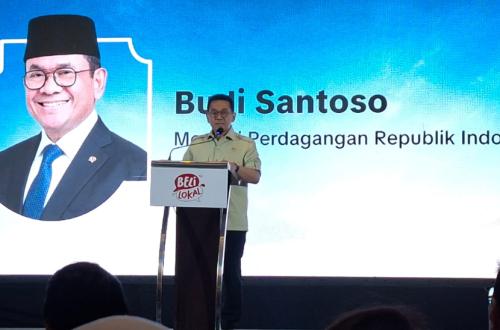
JAKARTA — Trade Minister Budi Santoso said his ministry was preparing revisions to three Minister of Trade regulations governing exports of coal, palm oil and ferroalloy. The changes are intended to support a new system for managing exports of strategic natural-resource commodities through PT Danantara Sumber Daya Indonesia (DSI), which is due to take effect on 1 January 2027.
Budi said the government had evaluated the implementation of its strategic natural-resource export policy several times since 1 June 2026. The evaluations provided the basis for plans to revise Government Regulation No. 24 of 2026, particularly regarding a change in DSI’s role to that of a sole intermediary in export activities.
“With this amendment to the government regulation, we will adjust Minister of Trade Regulations 15, 16 and 17,” Budi said at a socialisation event on the Natural Resource Export Proceeds (DHE SDA) policy and governance of strategic natural-resource exports at the Coordinating Ministry for Economic Affairs in Jakarta on Friday (6 November 2026).
The regulations to be amended are Minister of Trade Regulation No. 15 of 2026 on coal exports, No. 16 of 2026 on palm oil, and No. 17 of 2026 on ferroalloy, or iron alloys. They form the basis for regulating strategic commodity exports under the new mechanism involving DSI.
Coordinating Minister for Economic Affairs Airlangga Hartarto said Government Regulation No. 24 of 2026 had been in force since 1 June 2026, with a transition period running until 31 December 2026. The government is finalising amendments to the regulation so it can underpin the new export-governance system at the start of next year.
“All the main changes in this new policy will be incorporated into the regulation, or the draft amendment to Government Regulation No. 24 of 2026, which is currently being finalised and is expected to be completed in mid-November,” Airlangga said.
Airlangga said the amendments would clarify DSI’s position as the sole intermediary. Under the new mechanism, DSI will not take over exporters’ commercial transactions, but will examine and monitor documents and trading activities involving strategic commodities.
Budi likewise stressed that the changes would not remove exporters’ authority to negotiate and transact directly with buyers. Companies will continue trading as before, while meeting all export requirements set by the government.
“This means that you, as exporters, will continue your activities as you do now,” the trade minister said.
Budi said palm oil exporters would still have to meet the domestic market obligation (DMO), coal exporters would remain subject to the Work Plan and Budget (RKAB) requirements, and ferroalloy exporters would still have to comply with surveyor report (LS) rules. These obligations will remain the responsibility of the exporting companies, not DSI.
According to Budi, the procedure will change only after companies have completed all licensing processes at the Ministry of Trade. Exporters will then undergo clearance by DSI before their export documents are processed further.
Airlangga said DSI would examine trade contracts, draft Export Declaration (PEB) forms and other transaction documents. Once DSI has approved them, the PEB documents can be submitted to the Directorate General of Customs and Excise’s CEISA system.
The process will be conducted digitally through DSI’s NADI portal, which is connected to CEISA and the Indonesia National Single Window System (SINSW). DSI’s monitoring will cover checks both before and after customs processing, while exporters will remain responsible for meeting their export obligations.
DSI president director Luke Mahony said the company would not take ownership of exported goods or participate in commercial operations between sellers and buyers. Contracts, the movement of goods and payments will continue to take place directly between the two parties.
Luke said DSI had involved 100 exporting companies in testing the NADI portal. The companies represent around 50 per cent of the value of commodities covered by the policy, and about 340 contracts were used to test the system.
DSI plans to open registration through the NADI portal on 15 December 2026, ahead of the system’s official launch on 1 January 2027. The government is preparing regulatory and digital-system changes to strengthen oversight and transparency in coal, palm oil and ferroalloy exports while ensuring that trade transactions continue uninterrupted.
Source: jawawa.id (https://jawawa.id/newsitem/trade-minister-to-revise-three-regulations-on-coal-palm-oil-and-ferroalloy-exports-1793969445)
Originally published by Republika (https://ekonomi.republika.co.id/berita/to2xq9349/mendag-siapkan-revisi-tiga-permendag-terkait-ekspor-batu-bara-sawit-dan-ferroalloy), translated from Indonesian