
Trade Minister states G20 TMM rejects food as a tool for geopolitical pressure
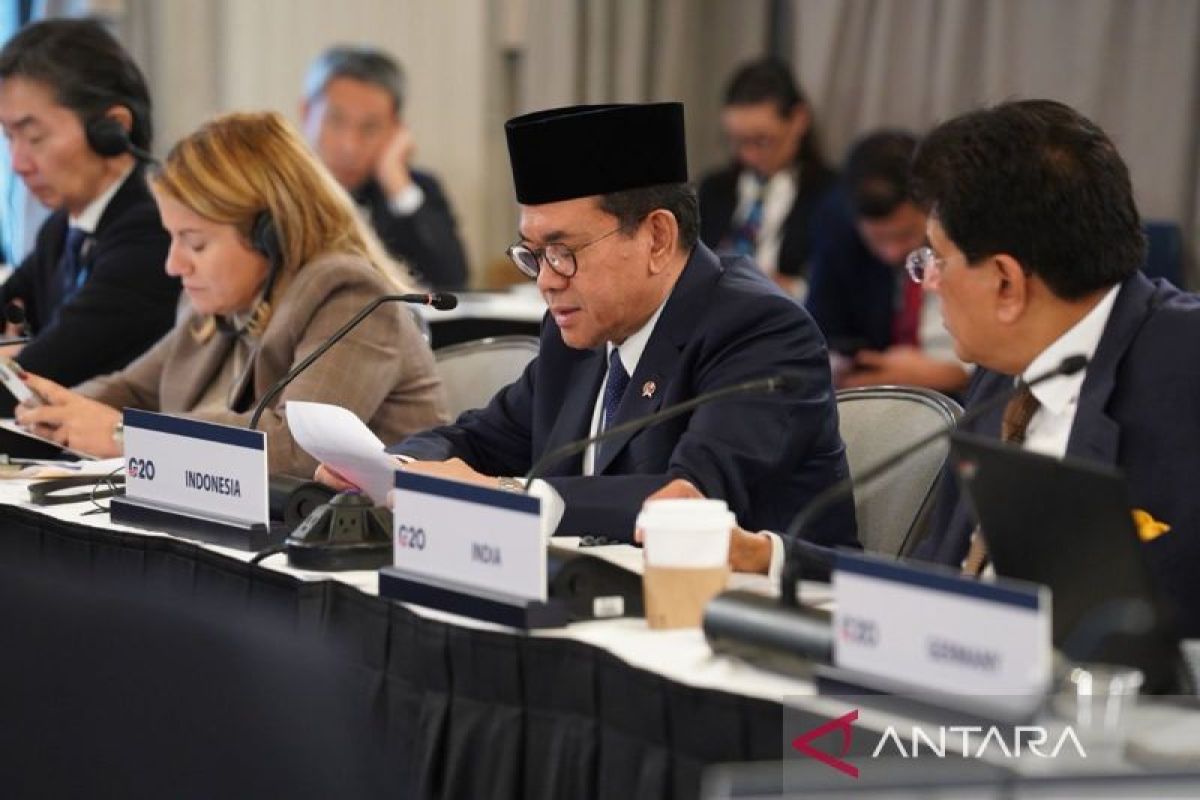
G20 Trade Ministers have rejected efforts to turn food into an instrument of geopolitical pressure.
Indonesian Trade Minister Budi Santoso stated that the outcome of the G20 Trade Ministers’ Meeting (TMM) in Milwaukee, Wisconsin, USA, was a collective rejection of using food as a tool for leverage in geopolitical relations. “G20 Trade Ministers reject efforts to make food an instrument of geopolitical pressure. Food is linked to survival, and attempts to use food as pressure cannot be justified,” Budi said in a statement in Jakarta on Saturday.
Budi noted that Indonesia, along with other G20 members, believes that resolving issues such as excess capacity, forced labour, and World Trade Organization (WTO) Most Favoured Nation (MFN) tariff rules requires collaboration and joint action, while still respecting the differing policy principles and economic orientations of each nation.
When discussing excess capacity, Budi emphasised the need to consider supply and demand dynamics, capacity utilisation levels, market behaviour, and the fundamental factors driving production. He argued that any assessment of excess capacity must be based on specific evidence for each sector, as every sector possesses different production cycles, supply chain structures, market coverage, and technologies.
“Excess capacity must refer to analytical and evidence-based findings, rather than political labels,” said Budi.
Regarding the MFN issue, Budi stated that the WTO needs to maintain and enforce the MFN principle within the multilateral trading system to ensure certainty and non-discriminatory practices in international trade. He also highlighted the vital role of MFN in simplifying tariff negotiations and maintaining the certainty and value of negotiated market access commitments. He assessed that the weakening of MFN could impact Special and Differential Treatment (SDT) within the trading system.
On the issue of forced labour, Budi stated that Indonesia reaffirmed its commitment to the eradication of forced labour as an essential part of protecting the rights and dignity of workers. Such protection efforts must be oriented towards legitimate goals and must not become political instruments to pressure other nations.
Indonesia has demonstrated its commitment to eradicating forced labour through the ratification of nine out of ten International Labour Organization (ILO) Fundamental Conventions. This commitment is also reflected in Minister of Trade Regulation Number 9 of 2026, which prohibits the import of goods produced through forced labour. Indonesia has shown similar commitment in the Comprehensive Economic Partnership Agreement with the European Free Trade Association (Indonesia-EFTA CEPA) and with the European Union (I-EU CEPA) by including provisions for the elimination of forced labour.
Source: jawawa.id (https://jawawa.id/newsitem/trade-minister-states-g20-tmm-rejects-food-as-a-tool-for-geopolitical-pressure-1791010579)
Originally published by Antara (Indonesian) (https://www.antaranews.com/berita/5769732/mendag-sebut-g20-tmm-tolak-pangan-sebagai-alat-tekanan-geopolitik), translated from Indonesian