
Trade Minister Reveals Strategy to Stabilise Food Prices, Partnering with MBG Free Nutritious Meal Programme
The Ministry of Trade (Kemendag) continues to monitor the price developments of basic necessities across various regions to ensure food price stability. This initiative is conducted through the Market and Basic Needs Monitoring System (SP2KP), which receives daily data from across Indonesia.
The government has noted that several commodities are currently trading either above or below the Maximum Retail Price (HET). This situation is a cause for concern as it has the potential to disadvantage both consumers and producers.
“We have contributors in 514 regencies, with 550 contributors across various departments who update basic necessity prices every day,” stated Minister of Trade Budi Santoso at the Ministry of Trade office on Monday (8/6/2026).
The government is undertaking various interventions when market price fluctuations occur. For commodities experiencing price increases, measures include monitoring distribution and ensuring that supply remains available.
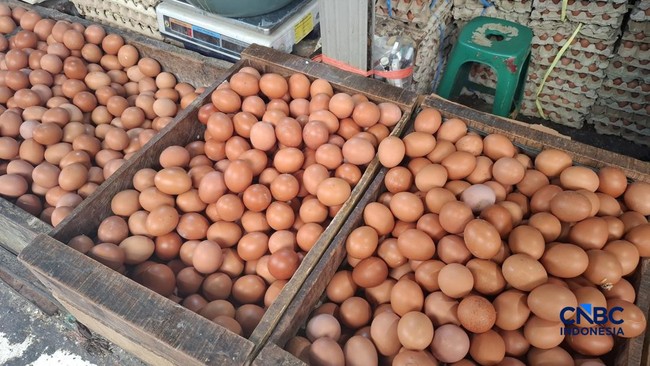
Meanwhile, the government is also preparing specific measures for when the prices of certain commodities fall below the HET. Such a situation recently occurred with chicken eggs, where prices dropped significantly at the farmer level.
“For prices below the HET, such as eggs recently, we immediately coordinated with the MBG [Free Nutritious Meal programme] so that eggs priced below the HET could be absorbed by the SPPG in local areas,” said Budi.
The Ministry of Trade believes that this absorption pattern can serve as a solution to maintain market equilibrium while simultaneously protecting farmers’ incomes. A similar scheme could potentially be applied to other commodities if they face downward price pressure.
“Our goal is to keep prices stable; we want no increases, but also no decreases, so that the public can afford all these goods,” Budi added.