
Trade Minister Proposes Eggs, Chicken, and Fish for Food Aid Scheme
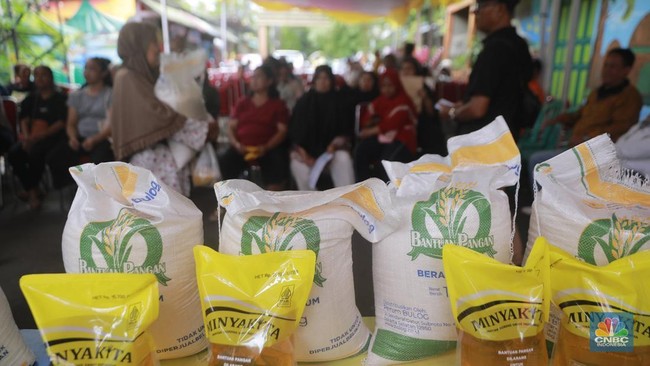
The government is exploring opportunities to modify food assistance schemes so they are not limited solely to rice or ‘Minyakita’ cooking oil. Moving forward, food assistance may be adjusted based on domestic production conditions and commodity prices, including eggs, fish, and chicken.
Minister of Trade Budi Santendo stated that this move is part of the government’s effort to absorb excess food commodity production while maintaining prices at the level of farmers and producers. He noted that because egg production is currently experiencing a surplus, leading to price drops in several regions, there is a push to include them in the Free Nutritious Meal (MBG) programme.
“Yesterday, there were several regions, particularly in East Java, such as Blitar, where egg prices have fallen. Therefore, we have coordinated with the National Nutrition Agency (BGN) and the new Head of BGN, ensuring that the Nutrition Fulfilment Service Units (SPPG) in those areas are required to absorb eggs. This is so that prices can approach or align with the Maximum Retail Price (HET),” Budi said during a press conference at his office in Jakarta on Thursday.
Through this absorption, the government hopes egg prices will recover so that poultry farmers can continue to earn a decent profit. “This way, farmers will receive good prices,” he added.
In addition to the Nutrition Fulfilment Service Units (SPPG) programme, the government is also preparing adjustments to the national food assistance scheme. Budi emphasised that food assistance could eventually consist of commodities currently experiencing market oversupply.
“Secondly, food assistance will also be adjusted. For example, when egg prices are falling, food assistance does not necessarily have to be Minyakita or rice, but could also be eggs. This is intended to absorb our food products or staple goods that are currently seeing increased production,” he explained.
He revealed that national egg production is currently experiencing a surplus of approximately 12%. This condition is viewed positively for the livestock sector, provided it is accompanied by adequate absorption.
“So, egg production is currently in surplus by 12%. This is good for farmers. The absorption capacity exists; we just need to manage the SPPG effectively so that eggs can be absorbed well,” said Budi.
Furthermore, he emphasised that this absorption concept does not only apply to eggs. The government is also considering other food commodities facing price pressure due to excess supply.
“Not just eggs. Basic necessities such as fish or chicken—if chicken meat prices fall below the HET, we will also ask the BGN to absorb them through the SPPG,” he concluded.