
Trade Minister: Government Committed to Maintaining Public Purchasing Power Stability
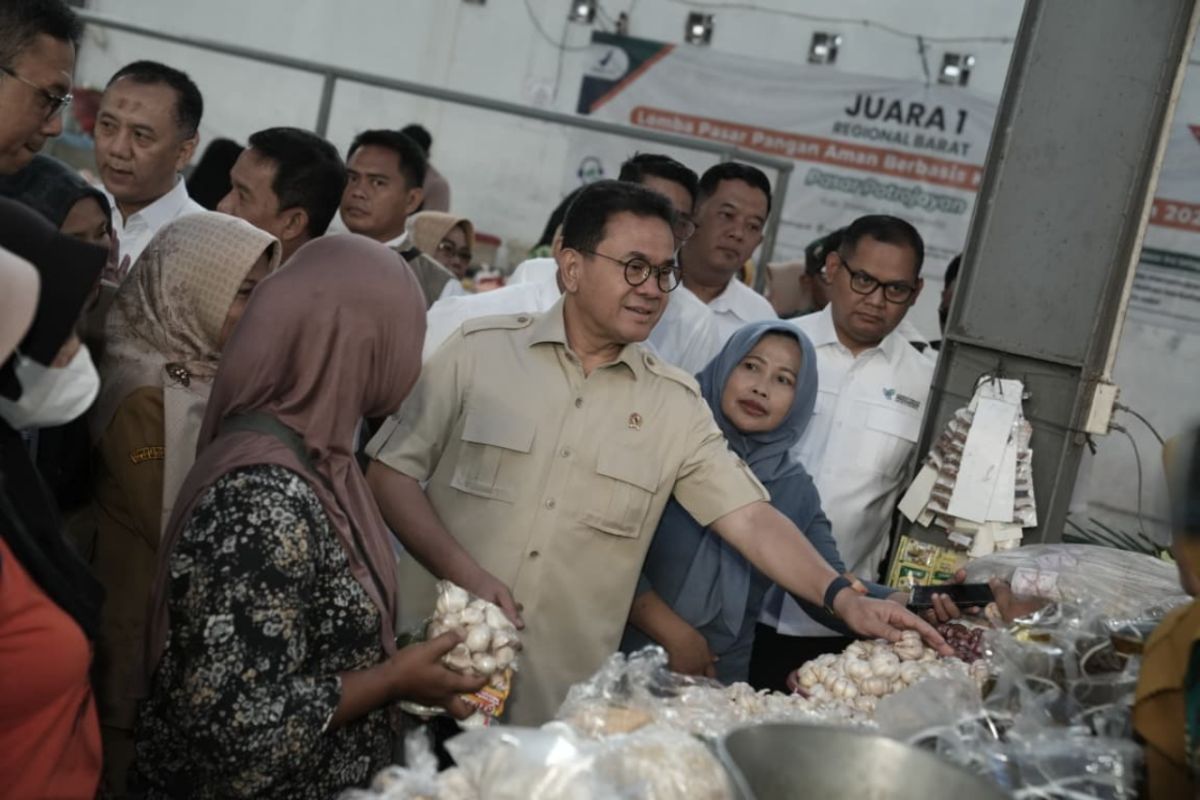
The Indonesian Minister of Trade, Budi Santoso, emphasised the government’s commitment to maintaining the stability of basic food prices and public purchasing power during a working visit to Potrojayan Market, Prambanan, Sleman Regency, Special Region of Yogyakarta, on Monday.
Accompanied by the Regent of Sleman, Harda Kiswaya, the Minister toured the market area to engage directly with traders and visitors to monitor price developments and the availability of supplies on the ground.
“The results of our monitoring show that most basic commodity prices are within normal and stable limits,” said Minister Budi Santoso following the inspection in Sleman on Monday.
He stated that supplies for the Food Supply and Price Stabilisation (SPHP) rice programme, shallots, and chicken meat were recorded as being sold at reasonable levels. Shallots were being sold in the range of Rp32,000 to Rp35,000 per kilogram, which is below the reference price of Rp39,000 per kilogram.
Nevertheless, the Minister noted an increase in the price of bird’s eye chilli, which reached Rp70,000 per kilogram against a reference price of Rp57,000 per kilogram.
Budi explained that the establishment of reference prices or Maximum Retail Prices (HET) is designed to create a fair middle ground between the interests of producers and consumers.
“The government is committed to keeping prices fair, as prices that are too low risk harming farmers and livestock breeders due to high production costs. Conversely, prices that surge beyond the reference limit will certainly burden public purchasing power,” he said.
Meanwhile, the Regent of Sleman, Harda Kisway, welcomed the inspection by the Ministry of Trade. He stated that although the price stability of major commodities in the market remains relatively secure, the local government continues to focus on the dynamics of public purchasing power and inflation control.
“The fulfilment of the community’s daily basic needs has remained smooth through the provision of various alternative supplies, ensuring that public purchasing power in the Sleman region can be maintained sustainably,” said Harda.