
Trade Minister: Free Nutritious Meal Programme Can Balance Supply and Demand of Basic Commodities
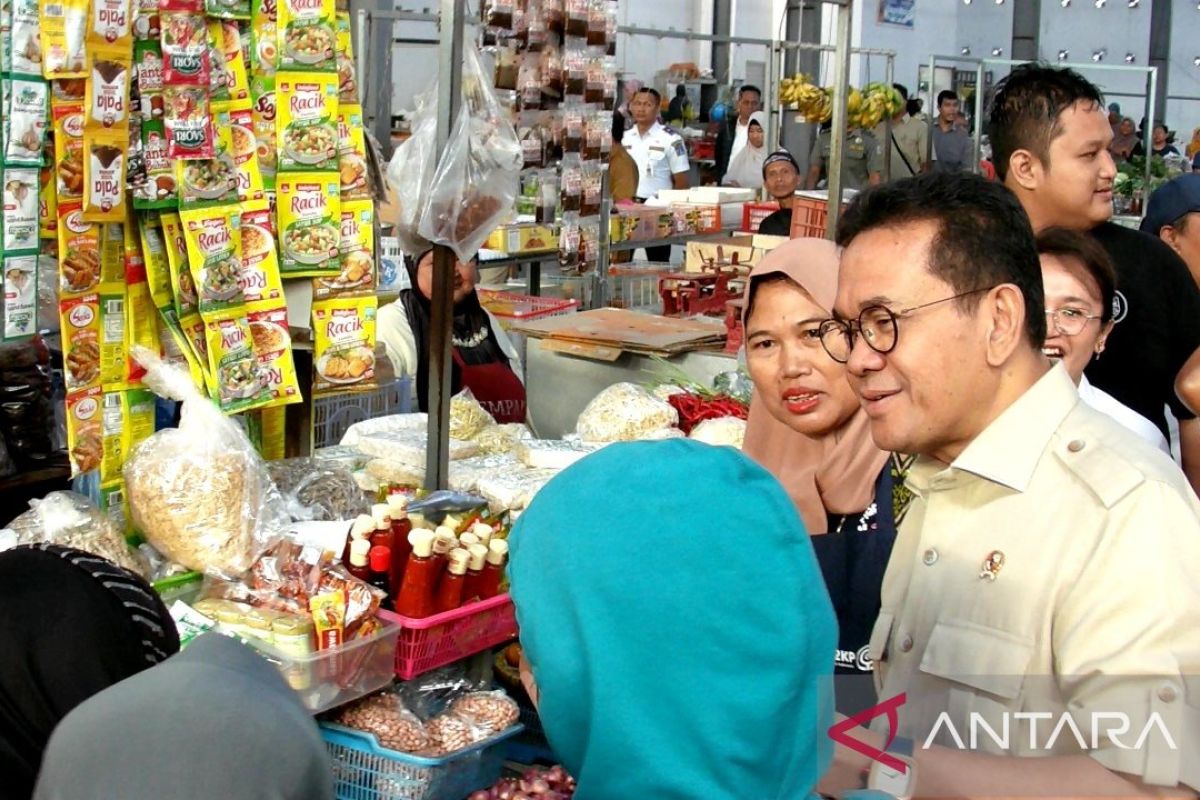
The Ministry of Trade (Kemendag) has stated that the government’s Free Nutritious Meal (MBG) programme has the potential to provide a positive impact in balancing the supply and demand of basic commodities in the market.
Minister of Trade Budi Santoso said the MBG programme could increase the absorption of basic commodities from farmers and livestock breeders, as the programme requires raw ingredients before they are processed into meals. “The absorption will actually be good. It will instead create a balance (between supply and the market),” Budi said during a working visit to Potrojayan Market, Sleman, Special Region of Yogyakarta (DIY), on Monday.
According to him, the MBG programme could also provide opportunities for livestock breeders, particularly as the national production of chicken eggs is currently recorded at a 12 per cent surplus. “Egg production is already at a 12 per cent surplus. It can be well-absorbed by the MBG, as current MBG menus also utilise eggs and chicken,” he said.
He assessed that the MBG programme could act as a balancer between market supply and demand, thereby creating a well-functioning market ecosystem. “So, the entire economic ecosystem will function well. When we produce, there is absorption,” he added.
Furthermore, he continued, the creation of a healthy market ecosystem will automatically affect the price stability of basic commodities because demand will be constant and production will remain balanced. “Therefore, prices will remain stable because the demand is continuous and does not fluctuate wildly,” he said.
He noted that the MBG programme does not contribute to price increases for basic commodities in the market, specifically in Potrojayan Market, Sleman, where commodity prices remain relatively stable. “It does not (cause high prices), as everything is still in accordance with the reference prices,” he concluded.