
Trade Minister: Egg Prices Remain Below Reference Price
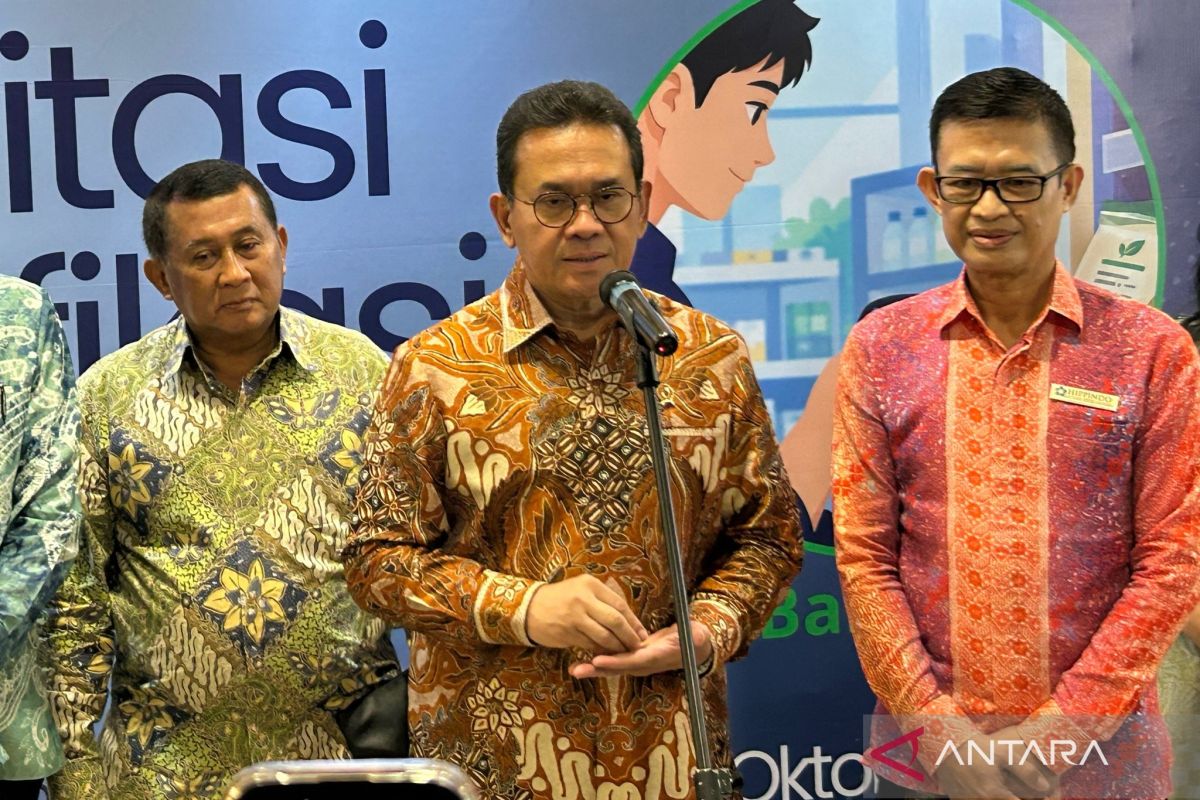
The Minister of Trade, Budi Santoso, has stated that the prices of several food commodities, including eggs, remain below the maximum retail price (HAP) at the consumer level.
Speaking at the Ministry of Trade office in Jakarta on Tuesday, Budi noted that price fluctuations should be assessed against the official reference price rather than merely compared to previous prices.
He cited the current price of chicken eggs, which is hovering around Rp26,200 per kilogram, as an example. This price remains below the established maximum retail price of Rp30,000 per kilogram.
“I checked the Basic Commodity Needs Market Monitoring System (SP2KP) earlier, and today it is approximately Rp26,200. The reference price is Rp30,000. This means it is still below the reference price,” Budi said in Jakarta on Tuesday.
Budi acknowledged that egg prices have indeed increased from previous levels of approximately Rp22,000 to Rp24,000 per kilogram. However, he noted that prices that are too low can make it difficult for poultry farmers to cover production costs, particularly for feed.
“When eggs are at Rp22,000 or Rp24,000, farmers cannot maintain production because they cannot afford feed and other necessities,” he explained.
According to Budi, a price approaching Rp30,000 per kilogram is ideal, as it serves as a meeting point between the interests of producers and consumers. At that level, farmers can sustain production while the price remains within the public’s purchasing power.
Budi stated that the government calculates several components before determining the reference price, including production and distribution costs.
“We first calculate the production costs, distribution costs, and so on. We calculate it, and we arrive at a specific figure,” Budi said.
He emphasised that the government is striving to maintain a balance in food prices so that producers can continue to produce while consumers can access food at prices consistent with their purchasing power.
Regarding rice prices, Budi noted a slight increase. However, the government has intervened through Perum Bulog by distributing rice via the Food Supply and Price Stabilisation (SPHP) programme.
As for premium rice, which was previously reported as scarce in several modern retail outlets, Budi confirmed that the situation has been addressed after Bulog replenished supplies to retail networks.
“Bulog has replenished the stock. Therefore, in modern retail, I believe there is no longer an issue. The stock is sufficient,” Budi concluded.