
Trade Minister: Cumulative surplus maintains Indonesia's trade resilience
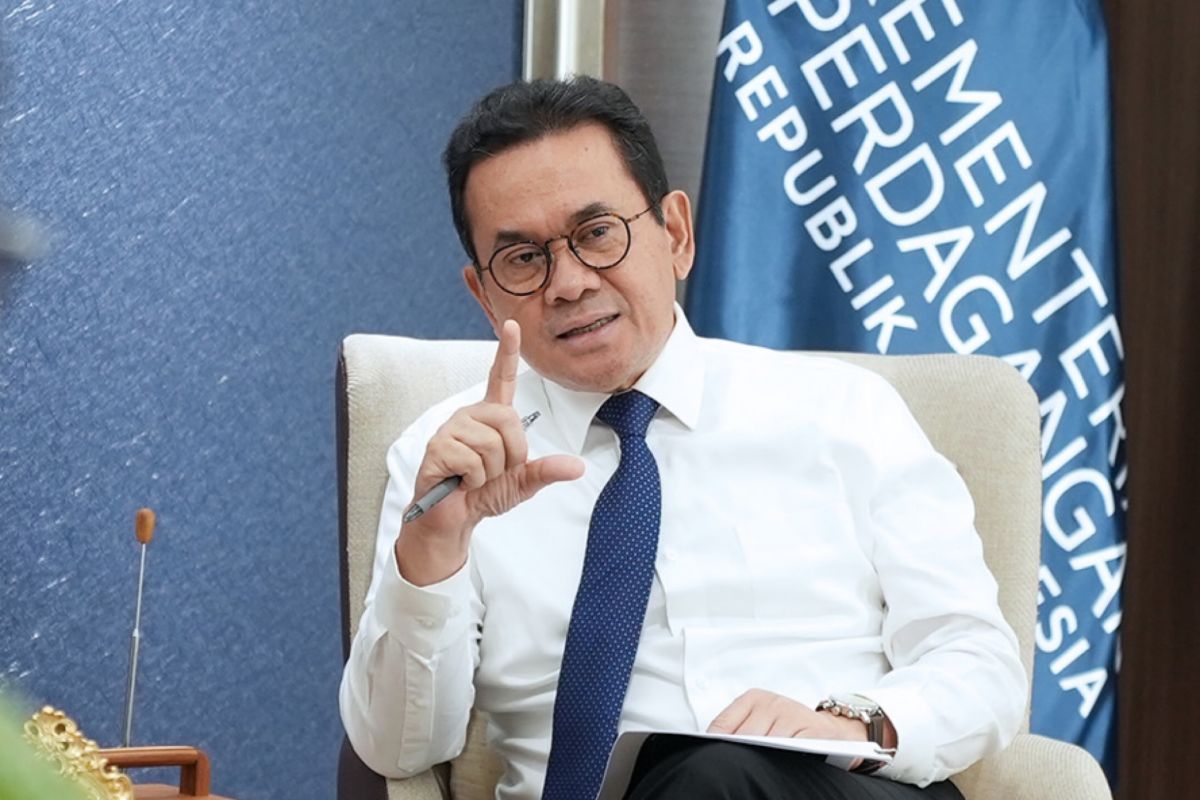
Trade Minister Budi Santoso stated that Indonesia’s foreign trade performance continued to show resilience in the first five months of 2026, even though the trade balance recorded a deficit in May 2026. He noted that non-oil and gas trade performance remains the main foundation of Indonesia’s foreign trade, despite the May trade balance recording a deficit of $1.61 billion due to an increase in the oil and gas sector deficit. “Although the May 2026 trade balance was in deficit, cumulatively, Indonesia’s trade performance still recorded a surplus. This proves that Indonesia’s non-oil and gas trade performance remains robust amidst global challenges,” Budi said in a statement in Jakarta on Thursday. Cumulatively, the trade balance performance for the January–May 2026 period was still recorded as a surplus of $4.03 billion. This surplus was supported by a non-oil and gas trade surplus of $16.31 billion, which was able to offset the oil and gas deficit of $12.28 billion. He explained that in May 2026, the trade deficit was mainly influenced by the increasing deficit in the oil and gas sector, which reached $3.76 billion. This deficit came from oil products worth $3.40 billion and crude oil worth $0.70 billion, while natural gas trade still recorded a surplus of $0.35 billion. Amidst the pressure on the oil and gas sector, non-oil and gas trade still recorded a surplus of $2.15 billion in May 2026. The three largest surplus-contributing commodities were mineral fuels worth $2.54 billion, animal and vegetable fats and oils worth $2.21 billion, and iron and steel worth $1.38 billion. Cumulatively from January to May 2026, the non-oil and gas surplus was mainly contributed by animal and vegetable fats and oils worth $13.92 billion, mineral fuels worth $10.88 billion, and iron and steel worth $7.09 billion. In terms of trading partners, the United States was the largest contributor to the non-oil and gas surplus with a value of $8.47 billion, followed by India with $5.34 billion, and the Philippines with $3.42 billion.