
Trade Minister and MSME Minister Discuss Import Products Disrupting Local Businesses
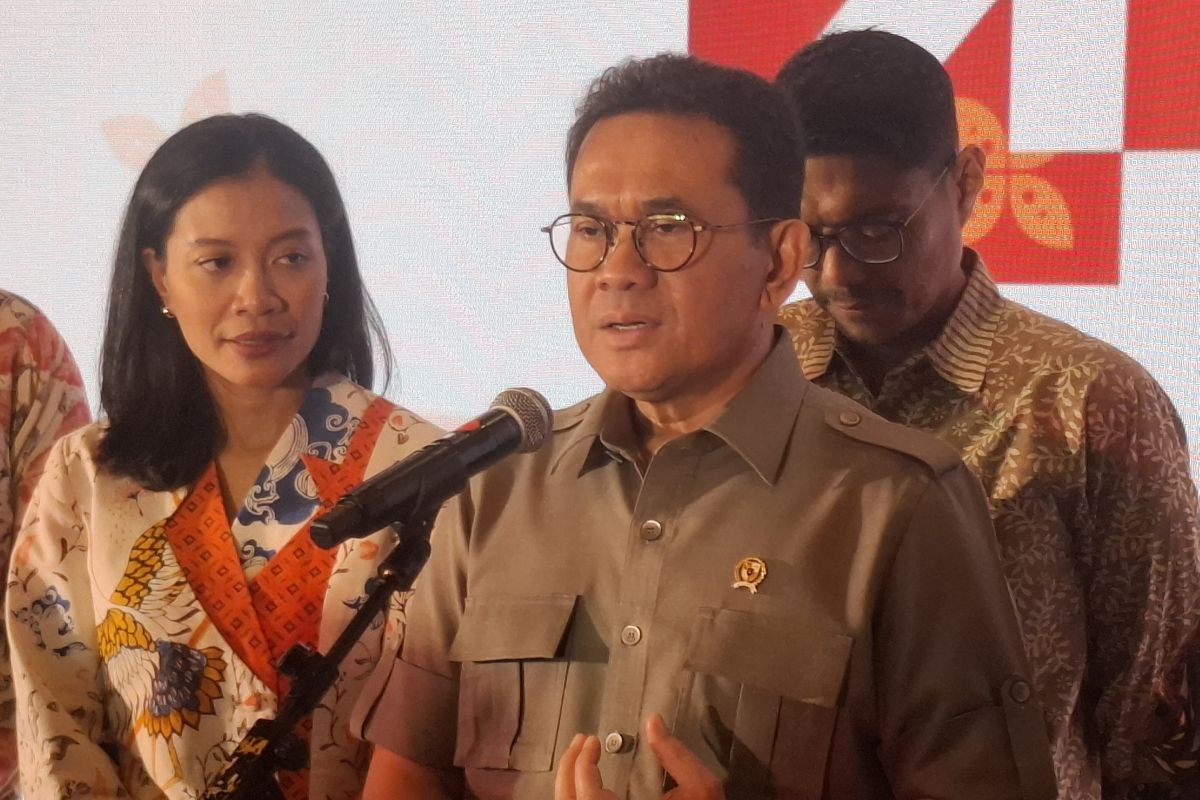
Trade Minister Budi Santoso has stated that he has been in discussions with Minister of Micro, Small, and Medium Enterprises (MSMEs) Maman Abdurrahman to identify imported products that are considered disruptive to UMKM, as a basis for formulating policy. “Yesterday I also frequently discussed with Mr Maman, what products are disrupting UMKM. Which imported products, we will later create a better policy,” said Budi in Jakarta on Thursday.
The Trade Minister explained that import policy cannot be uniform for all commodities, as there are goods that can be freely imported, goods that are prohibited from import, and goods whose import is regulated. “For imports, there are three types of policies. There are imports that are free. Then there are imports that are prohibited, meaning they cannot be imported at all, and there are those that are regulated,” he said.
He cited ready-to-wear clothing and textiles as examples of commodities whose imports are regulated, meaning their entry must meet requirements according to government regulations. Currently, the policy and regulation of textile and textile product imports are governed by Trade Minister Regulation Number 17 of 2025.
He explained that import regulation also involves the relevant technical ministries for each commodity to consider national needs, domestic production, and the shortfall that must be met through imports. “They know better what the national needs are, then what the production is, and the shortfall is then imported,” he added.
Previously, MSME Minister Maman Abdurrahman assessed in February 2026 that the issue of MSME growth is no longer solely about access to financing, but also about domestic market conditions. The realisation of People’s Business Credit (KUR) throughout 2025 was recorded at IDR 270 trillion for 4.58 million debtors. He discussed how cheap imported goods, including those entering illegally, make it difficult for MSME products to compete in the domestic market. He considered that financing support, training, and production facilitation must be accompanied by strengthening the market for MSME products.
The Central Statistics Agency (BPS) recorded that Indonesia’s import value from January to March 2026 reached 61.30 billion US dollars, or approximately IDR 1,095.74 trillion. Imports of raw materials and auxiliary materials were recorded at 43.17 billion US dollars, capital goods at 12.98 billion US dollars, and consumer goods at 5.15 billion US dollars. With this composition, raw materials and capital goods combined accounted for about 91.6 percent of the total import value, while consumer goods accounted for about 8.4 percent.
Furthermore, Budi said that further policy formulation regarding imported products must be carried out together with the relevant technical ministries for each commodity, considering national needs and domestic production capacity. “We sit together because imports are not solely our domain. Imports must involve the technical ministry that oversees the commodity, the industry supervisor, the product,” said Budi.
Source: jawawa.id (https://jawawa.id/newsitem/trade-minister-and-msme-minister-discuss-import-products-disrupting-local-businesses-1786615005)
Originally published by Antara (Indonesian) (https://www.antaranews.com/berita/5692605/mendag-menteri-umkm-bahas-produk-impor-dinilai-mengganggu-umkm), translated from Indonesian