
Trade Balance Deficit in May 2026, BI Takes Steps to Strengthen External Resilience
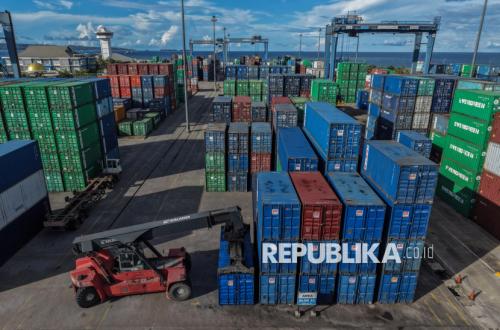
Indonesia’s trade balance experienced a deficit in May 2026 for the first time in the last six years. Bank Indonesia (BI) has confirmed that it will continue to undertake various efforts to strengthen external resilience.
“Bank Indonesia continues to strengthen policy synergy with the government and other authorities to further bolster external resilience and support sustainable national economic growth,” stated Ramdan Denny Prakable, Head of the BI Communication Department, in a statement on Thursday (2/7/2026).
According to data from the Central Bureau of Statistics (BPS), Indonesia’s trade balance in May 2026 recorded a deficit of US$1.61 billion. Export value was recorded at US$23.20 billion, which was lower than the import value, which reached US$24.81 billion.
The trade deficit in May 2026 marks the end of Indonesia’s trade surplus trend that had persisted consecutively from May 2020 to April 2026.
“This condition is influenced by the increasing deficit in the oil and gas trade balance, amidst a non-oil and gas trade balance that continues to record a surplus,” said Denny.
The oil and gas trade deficit increased to US$3.76 billion in May 2026. This condition was driven by a larger decline in oil and gas exports compared to the decline in oil and gas imports. Meanwhile, the non-oil and gas trade balance in May 2026 continued to record a surplus of US$2.15 billion, supported by strong non-oil and gas export performance, reaching US$22.44 billion.
“The positive performance of non-oil and gas exports is primarily supported by natural resource-based exports, such as mineral fuels, nickel, and their derivatives,” he added.
In terms of destination countries, non-oil and gas exports to China, the United States, and India remain the main contributors to Indonesia’s exports. Despite this development, Indonesia’s cumulative trade balance for the January–May 2026 period maintained a surplus of US$4.03 billion.
Regarding BI’s efforts to strengthen external resilience amidst the trade deficit, various policies are being pursued, particularly those affecting exports, imports, exchange rates, and foreign exchange reserves. These include stabilising the rupiah exchange rate through interventions in the foreign exchange and bond markets, the Export Proceeds (DHE) policy to support the government’s initiative to place export proceeds within the domestic financial system, and Local Currency Transactions (LCT) to expand the use of local currencies in trade with partner countries.
Furthermore, BI is also encouraging the digitalisation of cross-border payment systems through the use of the Quick Response Code Indonesian Standard (QRIS), benchmark interest rate policies that affect capital flows and exchange rates, and international cooperation to strengthen foreign exchange liquidity amidst global volatility to ensure that trading activities remain stable.
Source: jawawa.id (https://jawawa.id/newsitem/trade-balance-deficit-in-may-2026-bi-takes-steps-to-strengthen-external-resilience-1782993174)
Originally published by Republika (https://ekonomi.republika.co.id/berita/thjp1y490/neraca-dagang-mei-2026-defisit-bi-lakukan-langkah-perkuat-ketahanan-eksternal), translated from Indonesian