
Trade Agreements Must Open Export Opportunities for MSMEs
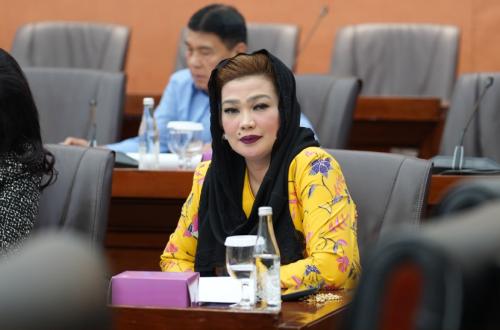
JAKARTA – Sarifah Suraidah Harum, a member of Commission VI of the Indonesian House of Representatives (DPR RI), believes the accelerated ratification of four international trade agreements should serve as momentum to broaden export opportunities for micro, small and medium enterprises (MSMEs). According to her, ratification must be followed by an implementation strategy so that its benefits can be felt by businesses and national industry.
Sarifah said the completion of the various trade agreements has the potential to enhance the competitiveness of Indonesian products, attract quality investment, and open new markets amid global economic dynamics and uncertainty.
“We hope that the results of the accelerated ratification of trade agreements between Indonesia and several partner countries will be followed by measurable implementation strategies, so that the benefits are truly felt by the business world, MSME players, and the wider public,” Sarifah said in a statement on Saturday (25 July).
Sarifah explained that strengthening trade cooperation with ASEAN countries, China, and the Eurasian Economic Union (EAEU) has the potential to expand market access for Indonesian products. According to her, the manufacturing, agricultural, fisheries and plantation sectors, as well as MSMEs, have opportunities to increase exports, strengthen foreign exchange reserves, and create jobs.
“On the other hand, the government must also anticipate rising competition from imported products through policies capable of safeguarding the competitiveness of national industry in the domestic market,” said the Golkar Party legislator, who represents the East Kalimantan electoral district.
Sarifah said the benefits of the trade agreements will be optimal if the government strengthens the foundations of domestic industry through improved productivity, logistical efficiency, simplified licensing, accelerated trade digitalisation, and assistance for MSMEs.
In addition, the government needs to broaden access to financing, certification, export promotion, and capacity building for businesses.
“So that MSMEs are not merely a complement in the international trade chain, but can emerge as competitive key players,” she said.
Sarifah urged the government to promptly draw up a comprehensive roadmap for implementing the trade agreement ratifications, involving the relevant ministries, state-owned enterprises (BUMN), regional governments, business associations, and industry players. According to her, the success of trade agreements should be measured not only by the speed of ratification, but also by the scale of benefits received by national businesses.
“The ratification of the four international trade agreements must be a starting point for strengthening Indonesia’s economic competitiveness in the global market,” she said.
Sarifah said the government must ensure that every opportunity opened up can be optimally exploited through strengthening national industry, empowering MSMEs, simplifying regulations, improving logistical efficiency, and collaboration between government and the business world.
“With targeted and sustainable implementation, I am optimistic these trade agreements will become a driving force for increased exports, investment, industrial growth, and inclusive and competitive national economic growth,” she said.
The four trade agreements being prepared for ratification comprise the Indonesia-EAEU Free Trade Agreement, and the Upgraded ASEAN Trade in Goods Agreement (Upgraded ATIGA).
They also include the ASEAN-China Free Trade Area 3.0 Upgrade Protocol (ACFTA 3.0 Upgrade Protocol), and the ASEAN Framework Agreement on Food Security Reserve Arrangement (AFSRFA).
The four agreements are being prepared to broaden Indonesia’s trade opportunities while strengthening the country’s position in regional and global supply chains.